Intelligentsia: The History and Evolution of the Intellectual Status Class
The intelligentsia is a distinct status class comprising university-educated individuals who perform the complex mental labor required to critique, shape, and lead the politics, policies, and culture of their society. This group typically includes scholars, academics, teachers, journalists, and literary writers. Unlike traditional social classes defined by wealth or birth, the intelligentsia is defined by its intellectual engagement and its role as a moral and cultural compass for the nation.
Key Facts
- Origin: The term was coined in 19th-century Poland by Bronisław Trentowski as inteligencja.
- Composition: Primarily consists of university-educated professionals such as lawyers, engineers, doctors, and artists.
- Social Role: Acts as a bridge between high culture and political leadership, often operating independently of government or military interests.
- Regional Variations: In Poland, it was tied to nationalism and resistance; in Russia, it often involved opposition to traditional values in favor of reason and progress.
- Modern Evolution: The concept has expanded into the "mass intelligentsia," referring to educated adults who pursue intellectual interests through cultural associations.
Origins and Conceptual Framework
While educated elites have existed since antiquity, the specific conceptualization of the intelligentsia as a status class emerged in the late 18th century during the Partitions of Poland (1772–1795). Bronisław Trentowski coined the term inteligencja to describe the patriotic, university-educated bourgeoisie whose intellectualism provided the moral and political leadership necessary to oppose the cultural hegemony of the Russian Empire.
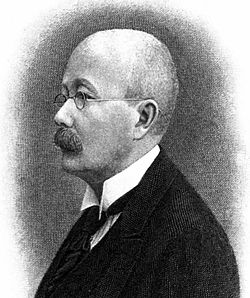
The political economist Max Weber further analyzed the term in his 1921 work, Economy and Society. Weber noted that the intelligentsia originated as a social class of educated people created for the greater benefit of society, citing the influence of Greek education on the formulation of dogmas in Antiquity.
In the late 20th century, sociologist Pierre Bourdieu refined the definition by identifying two types of intellectual workers: those who create practical and theoretic knowledge, and those who create cultural capital (the social assets, such as education and style, that promote social mobility).
The Intelligentsia in Poland
In Poland, the intelligentsia was viewed as a native urban class that drove the cultural development of cities and the dissemination of printed knowledge. Philosopher Karol Libelt argued in 1844 that this class—composed of scholars, teachers, lawyers, and engineers—was responsible for providing the moral leadership needed to resolve societal problems.
![The Polish philosopher Karol Libelt identified the social contradiction inherent in the intelligentsia being politically progressive, whilst also willing to work for the status quo of the State.[citation needed]](/images/10/e6/10e6f455bf6b56d4b515f8470fb717cf5e33e8b75529ea34d4042cf37d1a974a.png)
Libelt emphasized that the Polish intelligentsia had a duty to preserve the Polish language, educate the youth with nationalist objectives, and work toward restoring the Republic of Poland. However, this view was not without critics; writers like Stanisław Brzozowski and Tadeusz Boy-Żeleński argued that such a messianic representation was rooted in reactionary conservatism that hindered socio-economic progress.
Tragedies of the Second World War
The Polish intelligentsia was specifically targeted for extermination during World War II. Following the 1939 invasion, Nazi Germany launched several operations, including the AB-Aktion and Intelligenzaktion, to eliminate the Polish intellectual elite. Simultaneously, the Soviet Union carried out the Katyn massacre in 1940, murdering thousands of professors, physicians, lawyers, and journalists.
The Intelligentsia in Russia
In Russia, the term intelligentsiya was popularized in the 1860s by journalist Pyotr Boborykin. He defined the group as university-educated professionals in law, medicine, engineering, and the arts who produced the dominant ideology and culture of the society.
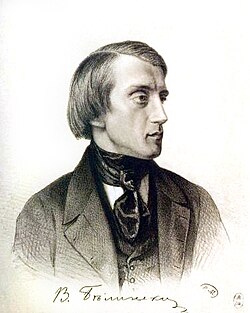
Philosopher Sergei Bulgakov attributed the creation of the Russian intelligentsia to Peter the Great, describing them as a "window to Europe" that brought both vivifying and toxic Western influences. Vissarion Belinsky is often regarded as the spiritual father of this movement.
The demographic makeup of the class shifted over time. In 1833, nearly 79% of secondary students were children of nobles; by 1885, this dropped to 49.1%, as raznochintsy (classless people) and commoners increased their presence. Despite this growth, the Tsars remained suspicious; Nicholas II famously expressed his repulsion for the word "progress."
From Bolsheviks to the Soviet Era
The 1917 Russian Revolution fractured the intelligentsia. While some joined the Bolsheviks, others emigrated or joined the White movement. The Bolsheviks viewed non-party intellectuals as class enemies, leading to forced labor in the gulag, summary executions, or deportation via "Philosophers' steamers."
During the later Soviet period, the state adopted a formal definition of the intelligentsia as "mental and cultural workers," splitting them into the "scientific-technical intelligentsia" and the "creative intelligentsia." Following the collapse of the Soviet Union, the influence of this class declined, leading many to feel nostalgia for the perestroika era.
!["Evening Company" by Vladimir Makovsky (1897). Three generations of Russian intelligentsia discuss current issues.[1]](/images/76/55/76554ca6623781e299f94584a7cb64d0edd3d08670507166d73dc5d817e3373d.jpg)
Modern Sociological Perspectives
In the 20th century, the term evolved into the mass intelligentsia. Popularized by writer Melvyn Bragg, this describes educated adults with discretionary income who engage in intellectual pursuits, such as book clubs and literary festivals, regardless of their professional status.
Additionally, Alfred Weber and Karl Mannheim developed the concept of the free-floating intelligentsia. This refers to an intellectual class that operates independently of specific social class constraints, allowing them to maintain a critical, unbiased, and autonomous perspective on society.
| Region/Era | Primary Focus | Key Characteristics |
|---|---|---|
| 19th Century Poland | Nationalism & Moral Leadership | Opposing Russian hegemony; preserving language. |
| Imperial Russia | Progress & Westernization | Shift from nobility to raznochintsy. |
| Soviet Union | Technical & Creative Labor | State-defined categories; proletarianization. |
| Modern Global | Cultural Consumption | Mass intelligentsia; discretionary intellectualism. |
Frequently Asked Questions
What is the difference between an intellectual and the intelligentsia?
While an intellectual is an individual who engages in critical thinking, the intelligentsia refers to a status class—a social stratum of university-educated people who collectively influence the politics and culture of their society.
Who coined the term intelligentsia?
The term was coined as inteligencja by the 19th-century Polish intellectual Bronisław Trentowski to describe the university-educated patriotic bourgeoisie.
What is the "mass intelligentsia"?
The mass intelligentsia refers to a broad population of educated adults who pursue intellectual interests, such as attending literary festivals or joining book clubs, as a leisure activity rather than a professional vocation.
How did the Bolsheviks treat the intelligentsia?
The Bolsheviks viewed the bourgeois origins of the intelligentsia with distrust. Many were treated as class enemies and faced deportation, forced labor in the gulag, or execution, though the state still recognized their managerial importance for Soviet development.
What is a "free-floating intelligentsia"?
Coined by Alfred Weber and elaborated by Karl Mannheim, this term describes intellectuals who are not tied to a specific social class, enabling them to provide an unbiased and critical perspective on societal issues.