Cults and New Religious Movements: Sociological Perspectives and Global Impacts
Cults are social groups characterized by unusual, and frequently extreme, religious, spiritual, or philosophical beliefs and rituals. Often defined by an intense devotion to a specific person, object, or goal, the term "cult" carries heavy weight. Depending on whether it is used in popular culture or academic circles, the word can be a neutral descriptor or a pejorative label, making it a subject of ongoing contention among scholars across various fields.
These groups vary wildly in scale, ranging from small, localized circles to international organizations boasting millions of members. Because of their diverse nature, understanding them requires a look at both the sociological theories that define them and the social movements that oppose them.
Key Facts
- Academic Origin: The sociological study of cults draws heavily from Max Weber's theories on charismatic authority and the distinction between churches and sects.
- Conversion Drivers: Research by John Lofland suggests that personal relationships, rather than proselytization efforts, are often the primary driver for joining such groups.
- Opposition Movements: Two distinct anti-cult movements exist: the Christian countercult movement (focused on unorthodox beliefs) and the secular anti-cult movement (focused on psychological manipulation).
- Global Variation: Governmental responses vary from the United States and Western Europe to more restrictive policies in Russia and China.
The Scholarly Study of New Religious Movements
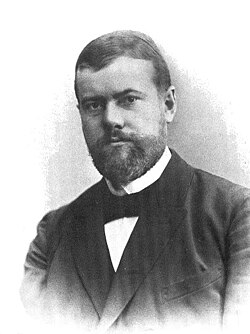
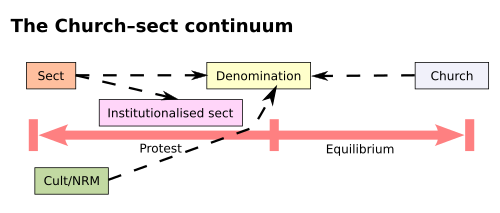
Since the 1930s, sociologists have analyzed new religious movements (NRMs) to understand religious behavior. Much of this academic foundation was laid by Max Weber, who explored the concept of charismatic authority—the power derived from a leader's perceived extraordinary qualities—and the structural differences between established churches and smaller sects.
This framework was expanded by German theologian Ernst Troeltsch, who introduced a "mystical" category to account for individual or personal religious experiences. Later, Howard P. Becker developed a typology based on Troeltsch's work to further classify the relationships between cults, sects, and churches.
The Process of Conversion
In the 1960s, sociologist John Lofland conducted a landmark study on the Unification Church in California. His research, published in 1964 and 1966, revealed that most recruitment efforts were actually ineffective. Instead, he found that individuals typically joined because of existing personal or family relationships with current members. This work remains one of the most cited studies on the process of religious conversion.
The Rise of Anti-Cult Movements
While academics studied NRMs, other groups formed to oppose them. The Christian countercult movement emerged in the 1940s, primarily targeting groups with beliefs deemed unorthodox from a traditional Christian perspective.
By the late 1960s and 1970s, a secular anti-cult movement (ACM) emerged. This movement was largely a reaction to a wave of nontraditional religiosity and high-profile tragedies, most notably the Jonestown Massacre, where nearly 1,000 people died under the leadership of Jim Jones.

The secular ACM often represented the families of converts, arguing that their loved ones had been subjected to brainwashing—a term used by some psychologists and sociologists to describe techniques used to maintain absolute loyalty to a group.
Global Governmental Responses
Different nations have adopted vastly different legal and social approaches to managing groups labeled as cults.
Russia and China
In Russia, anti-cultism gained momentum after the dissolution of the Soviet Union. By 2008, the Interior Ministry identified "extremist groups," including non-traditional Islamic groups and pagan cults. In 2009, a government council listed 80 large sects—including the Jehovah's Witnesses and the Church of Jesus Christ of Latter-day Saints—as "potentially dangerous." Similarly, the Chinese government has taken aggressive action against groups like Falun Gong, often involving the symbolic and physical destruction of their literature.

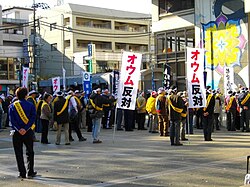
Other examples of state-level tension include the protests against Aum Shinrikyo in Japan, reflecting the societal backlash against groups perceived as violent or destructive.
Western Europe and the United States
In Western Europe, responses are mixed. For example, Germany maintains a list of "sekten" (cults) and psychological groups through Berlin city authorities, a practice upheld by court decisions. In contrast, other nations have moved away from such distinctions; Austria, for instance, stopped distinguishing sects as a separate group in its International Religious Freedom Reports starting in 2011.
Summary of Cult Classifications and Perspectives
| Perspective | Primary Focus | Key Driver/Concern | Typical View of Members |
|---|---|---|---|
| Sociological | Religious behavior and structure | Charismatic authority & conversion | Individuals seeking meaning or community |
| Christian Countercult | Theological orthodoxy | Deviation from scripture | Misguided believers |
| Secular Anti-Cult | Psychological impact | Brainwashing & manipulation | Victims of coercion |
| Governmental (Restrictive) | State security & stability | Extremism & social danger | Potential threats to society |
Frequently Asked Questions
What is the difference between a church, a sect, and a cult?
In sociological terms, these distinctions often relate to how the group interacts with society. Churches are generally established, mainstream institutions. Sects are often break-away groups from a church. Cults (or NRMs) are typically newer movements with unconventional beliefs, often centered around a charismatic leader.
How do people typically join cults?
Contrary to popular belief that people are "tricked" into joining, research by John Lofland indicates that personal relationships—such as friends or family members already in the group—are the most common catalysts for joining.
What is the secular anti-cult movement?
The secular anti-cult movement (ACM) arose in the late 1960s and 1970s. It focuses on the psychological dangers of certain groups, often accusing them of using brainwashing techniques to control members, and frequently advocates on behalf of the families of converts.
How do different governments handle cults?
Approaches vary by region. Some countries, like Russia and China, use legal frameworks to label groups as "extremist" or "dangerous" to restrict their activity. Other regions, like parts of Western Europe and the US, balance the tension between religious freedom and the protection of citizens from harm.