Inflorescence: The Architecture and Diversity of Flower Clusters
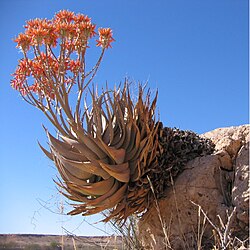
In the world of botany, an inflorescence is more than just a bunch of flowers; it is a specialized group or cluster of flowers arranged on a plant's stem. This structure consists of a main branch or a complex system of branches designed to optimize the plant's reproductive success. Morphologically, an inflorescence is a modified shoot where flowers form on the plant's axis, involving variations in internode length, phyllotaxis (the arrangement of leaves or flowers on a stem), and the compression or swelling of the axes.
Whether it is the towering bloom of a tropical giant or the delicate spike of a garden herb, the pattern of an inflorescence provides critical clues about a plant's growth habits and genetic makeup.
Key Facts
- Peduncle: The primary stem that supports the entire inflorescence.
- Rachis: The main axis above the peduncle that bears the flowers or secondary branches.
- Pedicel: The individual stalk of a single flower within the cluster.
- Floret: A term used for small individual flowers in a tight cluster.
- Infructescence: The stage of an inflorescence after flowering, when it bears fruit.
Growth Patterns: Determinate vs. Indeterminate
Plant organs grow according to two primary schemes: monopodial (racemose) and sympodial (cymose). In the context of inflorescences, these are categorized by whether a terminal flower is formed.
Indeterminate Inflorescence
Also known as racemose growth, an indeterminate inflorescence occurs when the terminal bud continues to grow and produce lateral flowers. Because the tip keeps growing, a terminal flower is never formed.
Determinate Inflorescence
Known as cymose growth, a determinate inflorescence occurs when the terminal bud develops into a flower and then ceases growth. Subsequent flowers must then grow from lateral buds.
The timing of flower maturation also varies. Acropetal maturation occurs when flowers mature from the base upward. Conversely, basipetal maturation occurs when flowers mature from the top downward, and divergent maturation occurs when the central flower matures first.
Simple Inflorescences
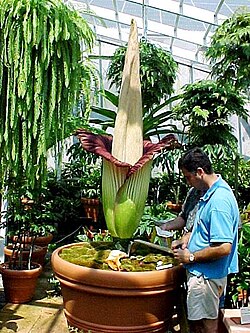
Simple inflorescences are categorized based on their growth pattern into two main groups: racemose and cymose.
Racemose (Indeterminate) Types
- Raceme: An unbranched axis with flowers on short stalks (pedicels).
- Spike: Similar to a raceme, but the flowers are sessile, meaning they lack a pedicel.
- Corymb: A flat-topped or convex cluster where outer pedicels are longer than inner ones.
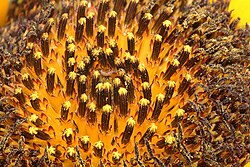
- Capitulum (Flower Head): A highly contracted raceme where sessile flowers sit on an enlarged stem.
- Catkin (Ament): A scaly, typically drooping spike or raceme.
Cymose (Determinate) Types
Cymes are further divided by the number and position of secondary axes:
- Monochasium: Only one secondary axis is present. This includes the helicoid cyme (buds on one side) and the scorpioid cyme (buds alternating sides).
- Dichasium: Two secondary axes develop, common in the Caryophyllaceae family.
- Pleiochasium: More than two secondary axes are present.
Compound Inflorescences
Compound inflorescences, or synflorescences, occur when the individual flowers of a simple inflorescence are replaced by other simple inflorescences. This creates complex, branched structures.
- Panicle: A compound raceme that is irregularly branched from top to bottom.
- Compound Umbel: An umbel where the flowers are replaced by smaller "umbellets" attached by rays.
- Thyrse: A raceme where the individual flowers are replaced by cymes.
Botanical Summary Table
| Type | Growth Pattern | Key Characteristic |
|---|---|---|
| Raceme | Indeterminate | Unbranched axis with pedicellate flowers |
| Spike | Indeterminate | Unbranched axis with sessile flowers |
| Cyme | Determinate | Terminal flower forms first, stopping axis growth |
| Panicle | Compound | Branched raceme structure |
| Capitulum | Indeterminate | Contracted axis forming a head |
Development and Genetics
The transition from vegetative growth to the reproductive phase involves the development of an inflorescence meristem, which then generates floral meristems. This process is heavily regulated by specific genes, many of which have been studied in Arabidopsis.
The LEAFY (LFY) and APETALA1 (AP1) genes promote floral meristem identity. Mutations in these genes can cause flowers to revert into shoots. In contrast, the terminal flower (TFL) gene acts as an inhibitor, preventing flowers from growing at the apex to maintain the identity of the inflorescence meristem. These genetic interactions follow the ABC model of flower development.
Frequently Asked Questions
What is the difference between a raceme and a spike?
The primary difference is the presence of a stalk. In a raceme, each flower has a small stalk called a pedicel. In a spike, the flowers are sessile, meaning they are attached directly to the main axis without a stalk.
What does "indeterminate growth" mean in botany?
Indeterminate growth refers to a pattern where the terminal bud continues to grow and produce new lateral flowers indefinitely, meaning no single terminal flower ever caps the growth of the main axis.
What is a pseudanthium?
A pseudanthium is a reduced inflorescence that mimics a single large flower. It is composed of many small florets packed tightly together, making it difficult to distinguish the cluster from an individual flower.
How does a panicle differ from a simple raceme?
A raceme is a simple, unbranched axis of flowers. A panicle is a compound inflorescence where the main axis branches, and those branches themselves bear flowers or further branches.
What role does the LEAFY gene play in plants?
The LEAFY (LFY) gene is essential for promoting floral meristem identity, effectively signaling the plant to stop producing leaves and start producing the structures necessary for an inflorescence.