Indonesia National Football Team: A Legacy of Passion and Perseverance
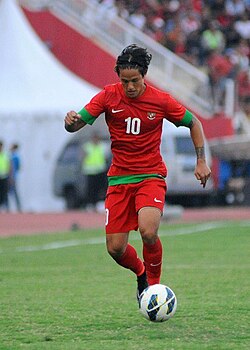
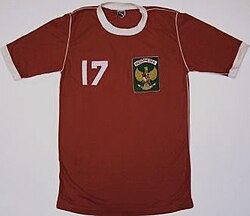
Known affectionately as Tim Garuda (the Garuda Team) or Merah Putih (The Red and White), the Indonesia national football team is a cornerstone of the nation's sporting identity. Governed by the Football Association of Indonesia (PSSI) and competing within the Asian Football Confederation (AFC) and the ASEAN Football Federation (AFF), the team represents a deep-rooted passion for the beautiful game that spans nearly a century.
From its early days as a colonial representative to its modern pursuit of global recognition, the team has experienced dramatic highs and challenging lows, always fueled by some of the most fervent supporters in world football.
Key Facts
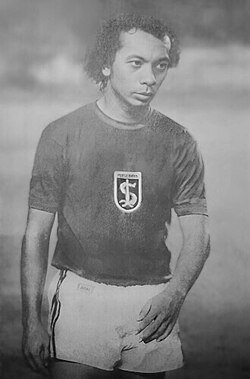
- All-Time Legend: Abdul Kadir holds the record for both most caps (111) and most goals (70).
- World Cup Pioneer: Indonesia was the first Asian nation to participate in the FIFA World Cup (1938).
- Regional Success: Six-time runners-up in the ASEAN Championship.
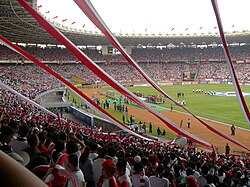
- Home Ground: The iconic Gelora Bung Karno Stadium serves as the primary home venue.
- Current Leadership: The team is currently led by head coach John Herdman.
Historical Journey
Colonial Era and World Cup Debut (1921–1945)
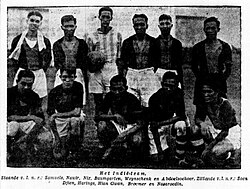
The team's origins date back to the colonial era, competing as the Dutch East Indies. This period was marked by a historic milestone in 1938 when the squad became the first representative from Asia to appear in the FIFA World Cup, reaching the Round of 16.
Independence and Growth (1949–1995)
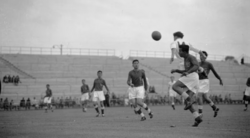
Following independence, the team entered a period of regional consolidation. The 1950s and 60s saw significant achievements, including a bronze medal at the 1958 Asian Games. The era from 1985 to 1995 is often viewed as a renaissance for Indonesian football, laying the groundwork for future continental competitions.
Continental Presence and Modern Era (1996–Present)
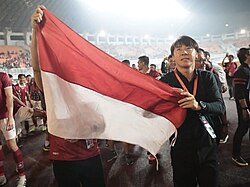
Since 1996, Indonesia has become a regular fixture in the AFC Asian Cup and the ASEAN Championship. Despite facing periods of instability and FIFA suspensions between 2012 and 2016, the team has consistently rebuilt. The tenure of Shin Tae-yong brought a new level of tactical discipline, guiding the team to the 2020 AFF Championship final and the 2023 AFC Asian Cup.
Performance and Records

Indonesia's competitive history is a mix of dominant regional victories and steep learning curves on the global stage. Their biggest international win remains a staggering 13–1 victory over the Philippines in 2002, while their toughest defeat was a 10–0 loss to Bahrain in 2012.
| Competition | Best Result | Notable Years |
|---|---|---|
| FIFA World Cup | Round of 16 | 1938 |
| AFC Asian Cup | Round of 16 | 2023 |
| ASEAN Championship | Runners-up | 2000, 2002, 2004, 2010, 2016, 2020 |
| Asian Games | Bronze Medal | 1958 |
| SEA Games | Gold Medal | 1987, 1991 |
Recent Form and Future Outlook
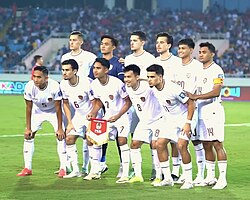
Under the current guidance of John Herdman, the team continues to evolve. Recent fixtures have shown a blend of promising victories and challenging qualifiers. Notable recent results include a 3–0 win against Vietnam in March 2024 and a 2–0 victory over the Philippines in June 2024.
Frequently Asked Questions
Who is the most successful player in Indonesia's history?
Abdul Kadir is the most decorated player, holding the records for both the most appearances (111 caps) and the most goals scored (70) for the national team.
When did Indonesia first play in the FIFA World Cup?
Indonesia first participated in the FIFA World Cup in 1938, competing as the Dutch East Indies. They achieved a Round of 16 finish in that tournament.
What is the team's best result in the ASEAN Championship?
The team has finished as runners-up on six separate occasions: 2000, 2002, 2004, 2010, 2016, and 2020.
Who is the current head coach of the national team?
The current head coach of the Indonesia national football team is John Herdman.
Which stadium is the primary home for the national team?
The Gelora Bung Karno Stadium is the primary home venue for the national team's matches.