2014 FIFA World Cup Qualification: The Road to Brazil
The journey to the 2014 FIFA World Cup was a massive global undertaking, involving a series of tournaments organized by the six FIFA confederations. With Brazil automatically qualifying as the host nation, the remaining 31 spots were contested by 207 national teams in a grueling process that spanned over two years.
The qualification cycle officially began on June 15, 2011, with a match between Montserrat and Belize, where Belizean striker Deon McCaulay scored the first goal of the campaign. The process concluded on November 20, 2013, when Uruguay eliminated Jordan to secure the final place in the tournament. In total, 23 of the world's top 24 ranked countries successfully qualified for the finals.
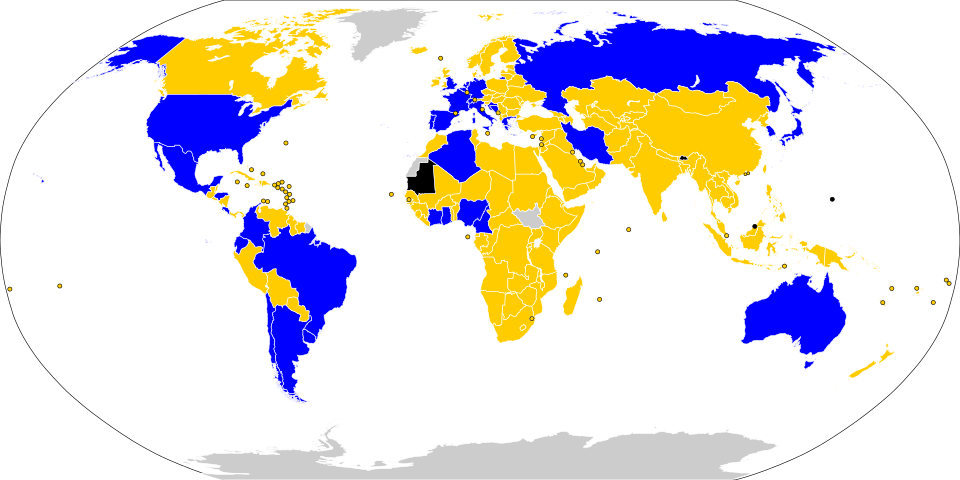
Key Facts
- Total Teams: 203 teams from six confederations competed for 31 available slots.
- Match Volume: 820 matches were played, featuring 2,344 goals.
- Attendance: A total of 17,854,160 fans attended the qualifying matches.
- Top Scorers: Deon McCaulay, Robin van Persie, and Luis Suárez led the scoring with 11 goals each.
- Host Nation: Brazil qualified automatically.
The Qualification Process
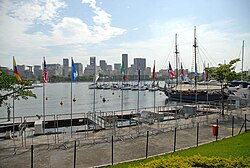
To ensure confederations had ample time to organize their competitions, the FIFA Executive Committee moved the preliminary draw six months earlier than usual. The draw took place on July 30, 2011, at the Marina da Glória in Rio de Janeiro.
Slot Distribution and Play-offs
While UEFA (Europe) and CAF (Africa) had guaranteed numbers of slots, other regions faced variable allocations based on inter-confederation play-offs. These high-stakes matches determined the final spots for the AFC (Asia), CONCACAF (North, Central American and Caribbean), CONMEBOL (South America), and OFC (Oceania).
| Confederation | Available Slots | Teams Started | Teams Qualified | Start Date | End Date |
|---|---|---|---|---|---|
| AFC | 4 or 5 | 43 | 4 | 29 June 2011 | 20 Nov 2013 |
| CAF | 5 | 52 | 5 | 11 Nov 2011 | 19 Nov 2013 |
| CONCACAF | 3 or 4 | 35 | 4 | 15 June 2011 | 20 Nov 2013 |
| CONMEBOL | 4+1 or 5+1 | 9+1 | 5+1 | 7 Oct 2011 | 20 Nov 2013 |
| OFC | 0 or 1 | 11 | 0 | 22 Nov 2011 | 20 Nov 2013 |
| UEFA | 13 | 53 | 13 | 7 Sept 2012 | 19 Nov 2013 |
Tiebreaker Regulations
To maintain fairness, FIFA implemented strict tiebreaker rules for different tournament formats.
League Format Tiebreakers
When teams were level on points in a group, the following criteria were applied in order:
- Goal difference in all group matches.
- Total goals scored in all group matches.
- Points obtained in matches between the tied teams.
- Goal difference in matches between the tied teams.
- Goals scored in matches between the tied teams.
- Away goals scored in matches between the tied teams (if only two teams were tied).
If teams remained equal, a single play-off at a neutral venue was held, potentially leading to extra time and a penalty shoot-out.
Knockout Format Tiebreakers
For home-and-away knockout stages, the team with the higher aggregate score progressed. If scores were level, the away goals rule (where goals scored away from home count more) was applied. If still tied, 30 minutes of extra time were played, followed by the away goals rule again, and finally a penalty shoot-out if necessary.
Confederation Highlights
AFC and OFC
In Asia, Japan, Australia, Iran, and South Korea qualified directly. Jordan reached the inter-confederation play-off but was eliminated by Uruguay. In Oceania, New Zealand dominated the third round but was defeated 9–3 on aggregate by Mexico in their play-off tie.
CAF and CONCACAF
CAF saw 52 nations compete, with the final five decided through two-legged knockout ties. In CONCACAF, the process culminated in the "Hexagonal," a six-team final group. The United States, Costa Rica, and Honduras qualified directly, while Mexico advanced via the play-off against New Zealand.
CONMEBOL and UEFA
South American teams (excluding Brazil) played a double round-robin. Argentina, Colombia, Chile, and Ecuador qualified automatically, while Uruguay secured their spot via the play-off. In Europe, 53 nations competed in groups; nine group winners and four play-off winners (Portugal, France, Greece, and Croatia) earned their places.
Frequently Asked Questions
Which teams failed to qualify for the 2018 finals despite qualifying for 2014?
Twelve teams that qualified for 2014 failed to reach the 2018 finals: Algeria, Bosnia and Herzegovina, Cameroon, Chile, Ecuador, Ghana, Greece, Honduras, Italy, Ivory Coast, Netherlands, and the United States.
Who were the top scorers during the qualification phase?
The top scorers were Deon McCaulay, Robin van Persie, and Luis Suárez, each netting 11 goals.
Why did some teams not participate in the qualification?
Bhutan, Brunei, Guam, and Mauritania did not enter the competition. Additionally, South Sudan could not participate because they joined FIFA after the qualification process had already begun.
How was the final spot for the AFC and CONMEBOL decided?
The fifth-placed team from the AFC (Jordan) played the fifth-placed team from CONMEBOL (Uruguay) in an inter-confederation play-off, which Uruguay won 5–0 on aggregate.
What happened to the Bahamas during the CONCACAF qualification?
The Bahamas withdrew from the qualification process because their stadium was not completed in time for the competition.