Men's National Football Teams: Global Structure and FIFA Membership
Association football is the most widely represented sport in the world, boasting a larger number of national teams than any other athletic discipline. The global landscape of the sport is primarily governed by the Fédération Internationale de Football Association (FIFA), which oversees the international game and organizes the World Cup to determine the world champion.
The vast majority of national teams are members of FIFA or one of its affiliated continental confederations. While most represent sovereign states recognized by the United Nations (UN), the structure also accommodates dependent territories, autonomous areas, and states with limited international recognition.
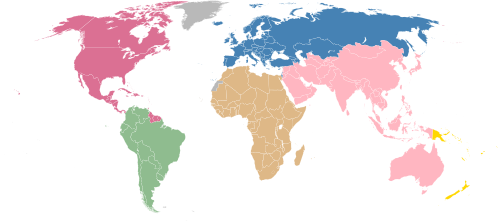
Key Facts
- FIFA Membership: There are 211 men's national teams affiliated with FIFA.
- Global Reach: 188 of the 195 UN member and observer states hold FIFA membership.
- Confederations: The world is divided into six primary continental confederations.
- Non-FIFA Teams: Some teams belong to confederations but not FIFA, meaning they cannot compete in the World Cup.
- Alternative Governance: Organizations like CONIFA provide a platform for teams not recognized by FIFA.
The Structure of Global Football
To manage the sport's immense scale, FIFA operates through six affiliated continental confederations. These bodies organize their own championships to determine the best team within their respective regions.
The Six Continental Confederations
- AFC (Asian Football Confederation): Covers Asia with 47 member associations, subdivided into five sub-federations. Its top tournament is the AFC Asian Cup.
- CAF (Confederation of African Football): Covers Africa with 54 member associations, divided into five regional federations. Its top tournament is the Africa Cup of Nations.
- CONCACAF (Confederation of North, Central American and Caribbean Association Football): Comprises 41 member associations divided into three regional federations, including the Caribbean Football Union (CFU). Its top tournament is the CONCACAF Gold Cup.
- CONMEBOL (South American Football Confederation): Comprises 10 member associations. Its top tournament is the Copa América.
- OFC (Oceania Football Confederation): Has 13 member associations (11 full and 2 associate). Its top tournament is the OFC Men's Nations Cup.
- UEFA (Union of European Football Associations): Comprises 55 national associations. Its top tournament is the UEFA European Championship.
Additionally, the Union of Arab Football Associations (UAFA) organizes competitions for Arab League member nations. All 22 UAFA governing bodies are also members of FIFA and either the AFC or CAF.
Membership Categories and Eligibility
Not every team that represents a territory or state has the same status. Membership is generally divided into three categories:
- FIFA and Confederation Members: This includes 211 FIFA members and 11 teams that belong to a confederation but not to FIFA.
- Unaffiliated UN States: Six teams represent UN member or observer states but lack FIFA or confederation membership. For example, Nauru is the only UN member state that has never fielded a national association-organized team.
- Unaffiliated Non-UN States: Seven teams represent states or territories that are not members of the UN and lack FIFA/confederation affiliation.
In 2016, FIFA updated its statutes to define a "country" as an independent state recognized by the international community, making membership more restrictive for aspirant teams. Consequently, many non-affiliated teams compete through the Confederation of Independent Football Associations (CONIFA) or the International Island Games Association (IIGA).
Summary of Global Football Governance
| Confederation | Region | Primary Championship | Membership Type |
|---|---|---|---|
| AFC | Asia | AFC Asian Cup | FIFA Affiliated |
| CAF | Africa | Africa Cup of Nations | FIFA Affiliated |
| CONCACAF | North/Central America & Caribbean | CONCACAF Gold Cup | FIFA Affiliated |
| CONMEBOL | South America | Copa América | FIFA Affiliated |
| OFC | Oceania | OFC Men's Nations Cup | FIFA Affiliated |
| UEFA | Europe | UEFA European Championship | FIFA Affiliated |
Evolution of National Teams
The list of national teams is dynamic, reflecting geopolitical changes. Many current teams are successors to former states. For example, the Czech Republic and Slovakia succeeded Czechoslovakia in 1993, while the CIS (Commonwealth of Independent States) briefly represented former Soviet republics in 1992 before they formed individual teams.
Other transitions include the reunification of East and West Germany in 1990 and the dissolution of the Socialist Federal Republic of Yugoslavia into several independent nations, including Croatia, Slovenia, and Bosnia and Herzegovina.
Frequently Asked Questions
Can a team be part of a confederation but not FIFA?
Yes. There are 11 such teams. While they can compete in confederation-level and subregional tournaments, they are not permitted to participate in the FIFA World Cup.
How does the United Kingdom participate in FIFA?
The United Kingdom is not a member of FIFA as a single entity. Instead, it is represented by the four constituent countries: England, Scotland, Wales, and Northern Ireland.
What is CONIFA?
The Confederation of Independent Football Associations (CONIFA) is an organization that facilitates representative football for states, minorities, and territories that are not recognized by FIFA.
Why are some teams suspended from international play?
Teams may be suspended by FIFA or their respective confederations due to political or regulatory reasons. For instance, the Russian national team was suspended from FIFA and UEFA competitions following the 2022 invasion of Ukraine.
What happened to the team representing the Soviet Union?
Following the dissolution of the Soviet Union in 1991, the CIS team competed briefly in 1992. Subsequently, individual nations such as Russia, Ukraine, and Kazakhstan established their own FIFA memberships.