Indigenous Peoples of South America
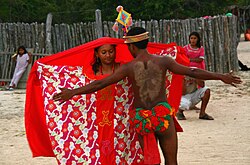
The Indigenous peoples of South America comprise the Pre-Columbian peoples (those living in the Americas before European contact) and their descendants. These diverse populations are distinct from people of European ancestry and those of African descent. Across the continent, terminology varies by region: in Spanish, they are known as pueblos indígenas or pueblos nativos. In Argentina, the term aborigen is common, while pueblos aborígenes is frequently used in Colombia. In the Guianas, the English term Amerindian is often preferred.
The social fabric of the region also includes populations of mixed ancestry. Those of mixed European and Indigenous descent are referred to as mestizos (Spanish) or mestiços (Portuguese), while those of mixed African and Indigenous ancestry are known as zambos.
Key Facts
- Total Population: Approximately 18 million people.
- Majority Population: Bolivia is the only South American country with a majority-Indigenous population (62%).
- Earliest Evidence: Human habitation in South America dates back 14,000 years at the Monte Verde site in Chile.
- Major Languages: Includes Quechua, Aymara, Guarani, and Mapuche.
- Diverse Lifestyles: Ranges from hunter-gatherers in the Amazon to advanced agriculturalists in the Andes.
Origins and Early Habitation
The arrival of the first human populations in South America is a subject of scientific study, with two primary theories. Some evidence suggests they migrated from Asia into North America via the Bering Land Bridge and moved southwards. An alternative theory proposes a migration from Polynesia across the Pacific Ocean.
The most widely accepted archaeological evidence for early habitation is found at the Monte Verde site in southern Chile, which dates back approximately 14,000 years. The descendants of these early pioneers formed the various Indigenous groups found across the continent today.
Cultural and Economic Diversity
Indigenous societies developed varied ways of life based on their environments. In the Amazon rainforest, many groups lived as hunter-gatherers, a lifestyle that some communities maintain to this day.
In contrast, the Andean cultures developed highly sophisticated civilizations. These groups practiced advanced agriculture, utilized complex irrigation systems, and domesticated livestock, most notably llamas and alpacas.
Demographics and Distribution
Indigenous populations are spread across every nation in South America, with the highest concentrations found in the Andean and Amazonian regions. Peru and Bolivia hold the largest populations, while smaller communities exist in the Guianas and the Southern Cone.
| Country | Population | Data Year |
|---|---|---|
| Peru | 5.9 million | 2017 |
| Bolivia | 4.1 million | 2012 |
| Chile | 2.4 million | 2017 |
| Colombia | 1.9 million | 2018 |
| Brazil | 1.7 million | 2022 |
| Argentina | 1.3 million | 2022 |
| Ecuador | 1.3 million | 2023 |
| Venezuela | 724,592 | 2011 |
| Uruguay | 223,964 | 2023 |
| Paraguay | 117,150 | 2012 |
| Guyana | 78,492 | 2012 |
| Suriname | 20,344 | 2012 |
| French Guiana | approx. 19,000 | N/A |
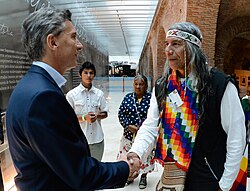
Political activism remains a vital part of Indigenous life as communities seek to protect their rights and territories. This often involves direct engagement with national governments to ensure the preservation of their heritage and land.
Frequently Asked Questions
Which South American country has the highest percentage of Indigenous people?
Bolivia is the only country in South America where Indigenous peoples form a majority, with 62% of the population identifying as members of an Indigenous group.
What are the primary languages spoken by Indigenous peoples in the region?
Some of the most prominent Indigenous languages include Quechua, Aymara, Guarani, and Mapuche.
How did the first humans arrive in South America?
It is believed they either migrated from Asia through the Bering Land Bridge into North America and then south, or arrived from Polynesia by crossing the Pacific.
What is the difference between a mestizo and a zambo?
A mestizo is a person of mixed European and Indigenous descent, whereas a zambo is a person of mixed African and Indigenous ancestry.
What was the nature of early Andean civilizations?
Andean cultures were characterized by sophisticated agriculture, the use of advanced irrigation, and the domestication of animals like alpacas and llamas.