Indigenous Languages of the Americas: A Survey of Diversity and Distribution
The Americas possess some of the most complex and diverse linguistic landscapes in the world. From the Arctic reaches of Canada and Alaska to the tip of Argentina, the continent was home to thousands of distinct tongues before European contact. This linguistic variety is not merely a collection of different words, but a reflection of thousands of years of migration, cultural evolution, and social organization.
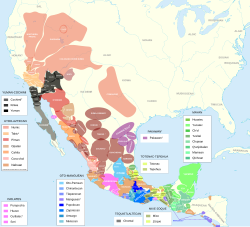
Linguists categorize these languages into language families—groups of languages related through descent from a common ancestral tongue. While some families, such as Uto-Aztecan or Arawakan, span vast geographic distances, others are highly localized, representing unique cultural pockets.
Key Facts
- North America features approximately 54 distinct language families.
- South America is even more diverse, with over 100 distinct language families identified.
- The Uto-Aztecan family is one of the most widespread in North and Central America, comprising 33 languages.
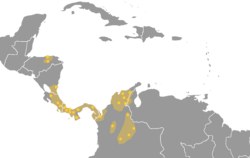
- The Arawakan family is among the most widespread in South America, with an estimated 65 to 80 languages.
- Many indigenous languages are now extinct or endangered, though some continue to be used by millions, such as Quechua and Mayan languages.
Linguistic Landscapes of North America
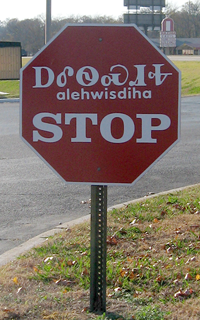
North American indigenous languages are characterized by a high degree of fragmentation. The region is home to several major families, including the Algic (30 languages), Na-Dené (39 languages), and Siouan (19 languages). The Na-Dené family is particularly notable for its distribution across the United States, Canada, and into Mexico.
In the Western United States and Mexico, the Uto-Aztecan family dominates, while the Salishan (23 languages) and Wakashan (7 languages) families are prominent along the Pacific Northwest coast.
Central America and Mexico
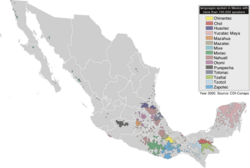
Mexico and Central America serve as a linguistic bridge. The Mayan family, consisting of 31 languages, remains a powerhouse of cultural and linguistic identity in the Yucatán Peninsula, Guatemala, and Belize. Other significant groups include the Oto-Manguean (27 languages) and Mixe-Zoquean (19 languages) families.
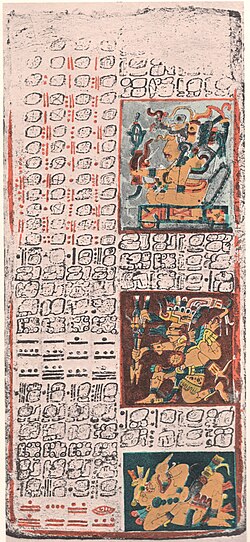
Historically, these regions saw the rise of sophisticated writing systems, such as those used by the Maya, which allowed for the recording of history and astronomy long before the arrival of Europeans.
The Vast Diversity of South America
South America exhibits an extraordinary level of linguistic variety, with over 100 distinct families. The Quechuan family, with roughly 23 languages, is one of the most spoken, stretching across Colombia, Ecuador, Peru, Bolivia, and Argentina. Similarly, the Tukanoan family (~29 languages) is prominent in the Amazon basin across Colombia, Ecuador, Peru, and Brazil.
The Amazonian region is particularly dense with unique languages, including the Pano-Takanan (~39 languages) and Macro-Jê (~33 languages) families. Some of these languages are spoken by very small populations, making them highly vulnerable to extinction.
In the far west, the Mapudungun language remains a vital symbol of identity for the Mapuche people in Chile and Argentina.
Comparative Speaker Populations
The distribution of speakers varies wildly. While some languages maintain millions of speakers, others have dwindled to a handful of individuals. The following table highlights some of the most prominent indigenous languages and their primary regions of influence.
| Language/Family | Approx. Speaker Range/Count | Primary Regions |
|---|---|---|
| Quechuan | Millions | Peru, Bolivia, Ecuador, Colombia, Argentina |
| Mayan | Millions | Mexico, Guatemala, Belize |
| Aymaran | 1.7 Million+ | Bolivia, Peru, Chile |
| Uto-Aztecan | Various (33 languages) | USA, Mexico |
| Arawakan | Various (65-80 languages) | Widespread South America |
Frequently Asked Questions
What is a language family?
A language family is a group of languages that are related because they descended from a single common ancestor, known as a proto-language.
Which indigenous language family is the most widespread in South America?
The Arawakan (or Maipurean) family is among the most widespread, with an estimated 65 to 80 languages distributed across the continent.
How many language families are found in North America?
There are approximately 54 distinct language families identified in North America.
What are some examples of extinct or undeciphered languages?
The Epi-Olmec language of Mexico remains undeciphered, while others, such as the Chimakuan and Coosan families, are now extinct.
What is the difference between a language and a pidgin?
While a language is a native tongue of a community, a pidgin is a simplified mixed language that develops as a means of communication between two or more groups that do not have a common language, such as American Indian Pidgin English.