Incertae Sedis: Navigating the Enigmas of Biological Classification
In the vast effort to map the tree of life, scientists occasionally encounter organisms that simply do not fit into any known category. When a species, genus, or family defies clear classification, taxonomists use the Latin term incertae sedis, which translates to "of uncertain placement." These organisms are often referred to as "enigmatic taxa" because their broader evolutionary relationships remain unknown or undefined.
To maintain precision, the system of open nomenclature allows researchers to specify exactly where the uncertainty lies. For example, if a group's family is unknown, it is labeled incertae familiae; if its order is unknown, it is incerti ordinis. This ensures that scientific naming remains honest about the limits of current knowledge.
Key Facts
- Definition: Incertae sedis is used for taxonomic groups whose broader relationships are undefined.
- Scope: It can be applied at various levels, including kingdom, phylum, order, and family.
- Causes: Common reasons for this designation include poor specimen descriptions, missing genetic data, or scientific controversy.
- Fungal Scale: As of 2022, approximately 3,185 fungal genera are classified as incertae sedis.
- Distinction: It refers to phylogenetic uncertainty (evolutionary position), not nomenclatural uncertainty (naming errors).
Examples of Enigmatic Taxa
The application of incertae sedis spans the entire spectrum of life, from single-celled organisms to complex animals.
In the realm of microbiology, Parakaryon myojinensis is a unique single-celled organism that appears distinct from both prokaryotes and eukaryotes, leaving its position in the tree of life completely unknown. Similarly, "biological dark matter" refers to genetic material from unidentified microorganisms that matches no known species.
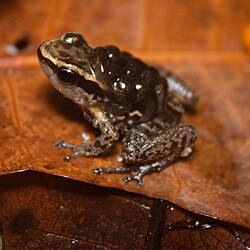
Among animals, the frosted phoenix moth (Titanomis sisyrota) is so rare and obscure that it cannot be placed in any family within the order Lepidoptera. In the amphibian world, the frog "Colostethus" ruthveni is currently placed incertae sedis within the family Dendrobatidae.
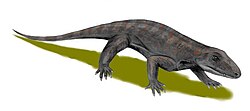
Paleontology frequently relies on this term due to the fragmentary nature of fossils. The varanopids, a family of tetrapods, have been variously classified as eupelycosaurian synapsids or basal neodiapsids; a compromise is to list them as Amniota incertae sedis. Another example is Plumalina plumaria, which workers assign to either hydrozoans or gorgonarians, though incertae sedis is considered the safest designation.
![Plumalina plumaria Hall, 1858 (6.3 cm tall), Upper Devonian of western New York State, US. Workers usually assign this organism to the hydrozoans (phylum Cnidaria, class Hydrozoa) or the gorgonarians (phylum Cnidaria, class Anthozoa, order Gorgonaria), but it is probably safest to refer to it as incertae sedis.[1]](/images/6e/3f/6e3ff7e214e1dcaec70854791ba88ef25bcc07ac6a4c02b1d5be9ca50f3e783a.jpg)
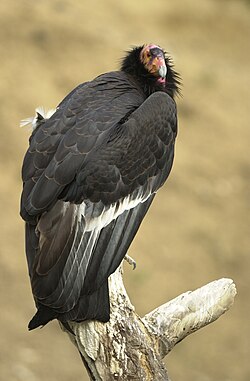
Some taxa eventually find their place through new research. New World vultures (family Cathartidae) were once Aves incertae sedis until the creation of the order Cathartiformes.
Why Taxa are Placed in Incertae Sedis
Poor or Inadequate Descriptions
Many genera are moved to incertae sedis when original descriptions are found to be vague or based on invalid characters. This complexity is often increased by homoplasies (traits shared by species but not present in their common ancestor), character state reversals, and convergent evolution, which can mislead researchers.
Exclusion from Phylogenetic Analysis
When scientists conduct a formal phylogenetic analysis (the study of evolutionary relationships), they may label a taxon incertae sedis if it cannot be included in the data set. This happens frequently with rare organisms where tissue for molecular analysis is unavailable, or with fossils known only from a single tooth or fragment that lacks the characters used in the rest of the study.
Scientific Controversy
When researchers disagree on the relationship between organisms or when different analyses yield conflicting results, the taxon remains incertae sedis until a consensus is reached.
Disciplinary Differences in Nomenclature
Botanical and Fungal Taxonomy
The International Code of Nomenclature for algae, fungi, and plants stipulates that while species must be assigned to genera, ranks higher than genus may be assigned incertae sedis. In fungi, DNA-based systematics has caused massive rearrangements, yet thousands of genera remain unplaced due to limited sampling or missing links between sexual and asexual forms.
Zoological Nomenclature
In zoology, incertae sedis is not a formal nomenclatural term but a descriptive tool used by taxonomists. Some paleontologists use a system of "open nomenclature," employing question marks (e.g., Agenus ? album) to denote questionable assignments, though this is not part of the official International Code of Zoological Nomenclature.
Phylogenetic vs. Nomenclatural Uncertainty
It is important to distinguish incertae sedis (uncertain evolutionary position) from other types of uncertainty:
- Nomen dubium: A name of unknown or doubtful application, often because the type specimen was lost.
- Species inquirenda: A species that requires further investigation.
- cf. (confer): Used when a specimen is compared to a known species but its exact identity is not certain.
Summary of Taxonomic Uncertainty Terms
| Term | Meaning | Primary Focus |
|---|---|---|
| Incertae sedis | Of uncertain placement | Phylogenetic position |
| Nomen dubium | Doubtful name | Application of the name |
| Species inquirenda | Species to be inquired into | Need for further research |
| Open Nomenclature | Use of symbols (e.g., ?) | Questionable assignment |
Frequently Asked Questions
What is the difference between incertae sedis and nomen dubium?
Incertae sedis refers to a taxon whose place in the evolutionary tree is unknown, whereas nomen dubium refers to a scientific name that cannot be confidently applied to any specific organism, often because the original type specimen is missing.
Can a species move out of incertae sedis?
Yes. As new evidence emerges—such as DNA sequencing or the discovery of more complete fossils—taxonomists can assign the organism to a specific family, order, or other rank. An example is the New World vultures, which moved from Aves incertae sedis to the order Cathartiformes.
Why are so many fungi listed as incertae sedis?
Fungal classification is challenging due to old or fragmentary type materials, strict quarantine rules that limit the loan of specimens, and a lack of living cultures for DNA sequencing. Additionally, some fungi do not match any currently recognized family or order.
What is "biological dark matter"?
Biological dark matter refers to genetic material sequenced from environmental samples that does not match any known species, meaning the organisms producing this DNA have a completely unknown position in the tree of life.