Incandescent Light Bulbs: History, Technology, and Evolution
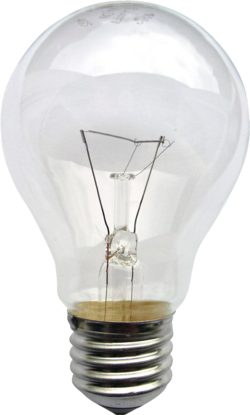
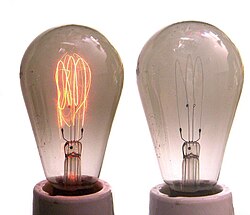
The incandescent light bulb is a classic piece of electrical engineering that produces light through a process called Joule heating. In simple terms, an electric current passes through a thin wire, known as a filament, heating it to such an extreme temperature that it begins to glow with visible light. To prevent the filament from burning up instantly, it is enclosed in a glass bulb that is either vacuum-sealed or filled with an inert gas to block oxidation.
From the early laboratories of the 19th century to the ubiquitous household lamps of the 20th century, these bulbs revolutionized how humans live and work. While they are now being replaced by more efficient technologies, their design remains a fundamental example of physics in action.
Key Facts
- Mechanism: Produces light by heating a filament until it glows (incandescence).
- Efficiency: Very low; less than 5% of energy is converted to visible light, with the rest lost as heat.
- Materials: Early bulbs used carbon; modern versions primarily use tungsten due to its high melting point.
- Versatility: Works on both alternating current (AC) and direct current (DC) without external regulators.
- Voltage Range: Manufactured for a wide variety of needs, typically from 1.5V to 300V.
The Evolution of the Filament
Carbon Filaments and Early Vacuum Research
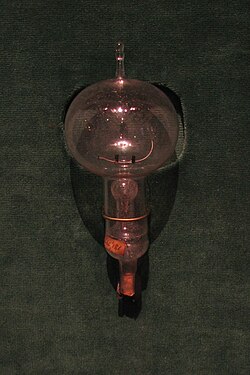
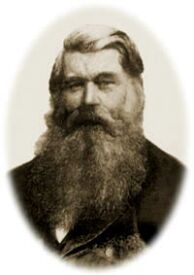
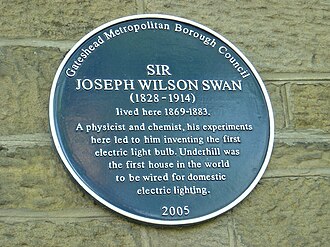
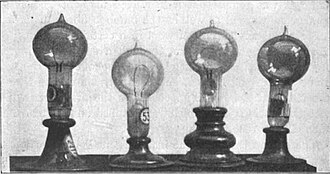
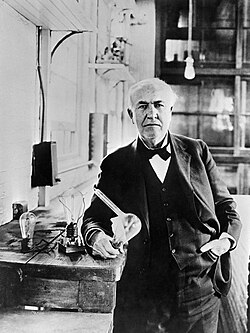
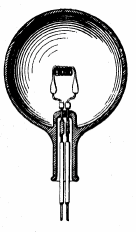
The quest for a commercially viable light bulb began with carbon. While various inventors experimented with the concept, Thomas Edison and Sir Joseph Wilson Swan are among the most prominent figures in the commercialization of the carbon-filament lamp. These early bulbs relied on a high vacuum to protect the carbon from burning out.
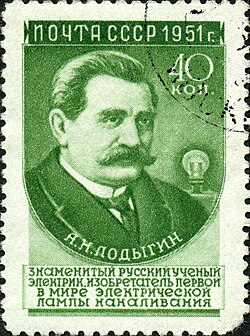
Other early contributors included Alexander Lodygin and Heinrich Göbel, though some claims regarding Göbel's early inventions have been disputed by later research. During this era, the carbon filament was the industry standard, though it often led to the darkening of the glass bulb over time.

The Shift to Metal Filaments
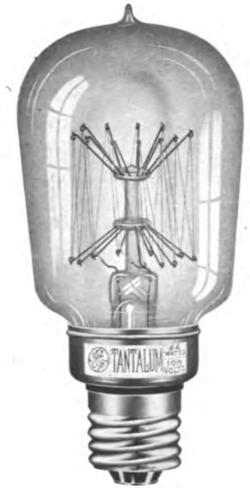
As the industry grew, researchers sought materials that could withstand higher temperatures and last longer. Between 1898 and 1905, osmium was used by Carl Auer von Welsbach, though its high cost made it impractical for mass market use. Tantalum later emerged as a viable metal filament option around 1902, marking a significant step toward modern lighting.
The Tungsten Revolution
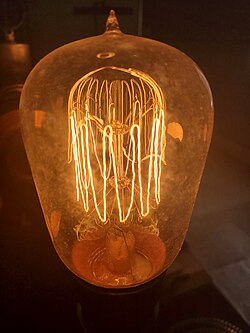
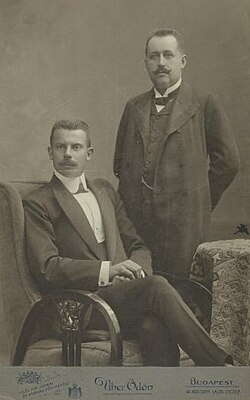
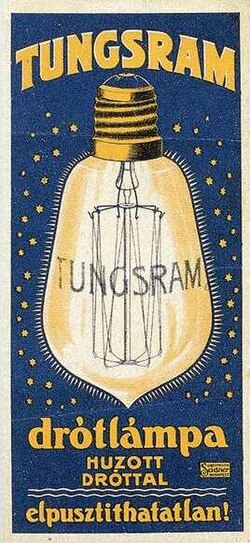
The most significant breakthrough came with tungsten. In 1904, Sándor Just and Franjo Hanaman were granted a patent for a tungsten filament lamp, which was subsequently marketed by the Hungarian company Tungsram. Tungsten was the ideal choice because it possesses the highest melting point of any metal (3,695 K), allowing it to glow more brightly and last longer than carbon.
To further improve longevity, manufacturers began filling bulbs with inert gases like argon or nitrogen. This slowed the evaporation of the tungsten, allowing for higher operating temperatures and better efficacy.
Technical Construction and Design
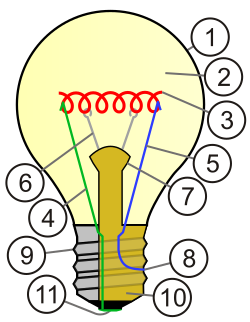
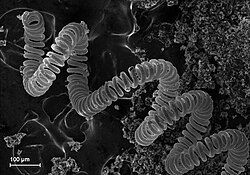
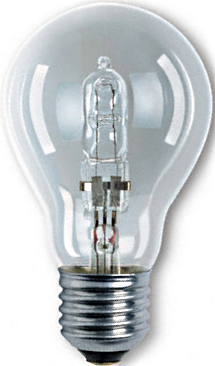
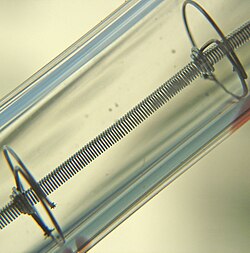
A standard incandescent lamp consists of several critical components: the glass bulb, the tungsten filament, support wires, and the base (or cap) that connects to the electrical socket. The glass can reach temperatures between 200 and 260 °C, while high-power lamps often use fused quartz to withstand even greater heat.
Halogen Lamps
A specialized version of the incandescent bulb is the halogen lamp. These use a halogen gas to redistribute evaporated tungsten back onto the filament, extending the bulb's life and allowing it to operate at higher temperatures for increased brightness.
Bases and Shapes
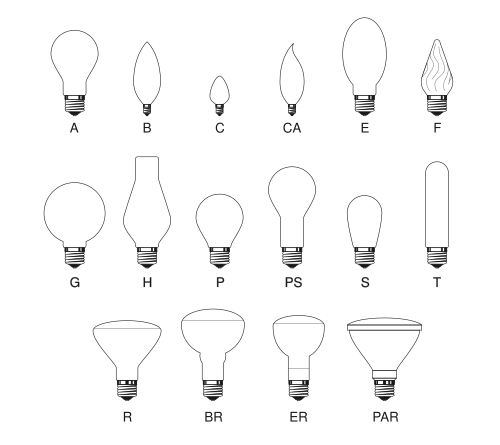
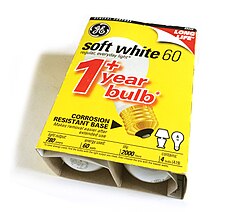
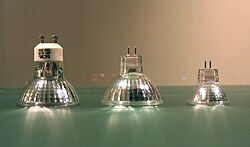
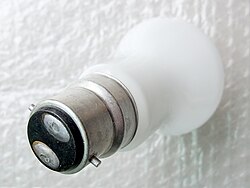
Incandescent bulbs are produced in numerous shapes and base types to fit different applications. Common bases include the Edison screw (E27, E14, E10) and the bayonet cap. Shapes range from the standard "A" series pear shape to candle-flame (CA) and reflector (R or PAR) bulbs used in spotlights.

Efficiency and Energy Performance
The primary drawback of incandescent lighting is its poor luminous efficacy—the measure of how well a light source produces visible light per watt of power. Most of the energy consumed is emitted as invisible infrared light (heat) rather than visible light.
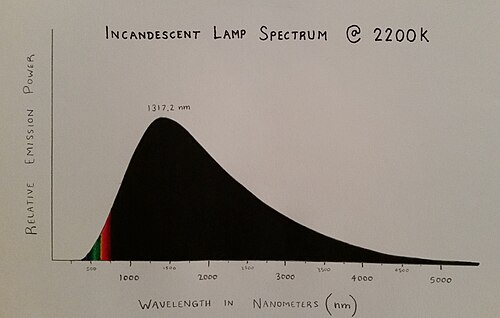
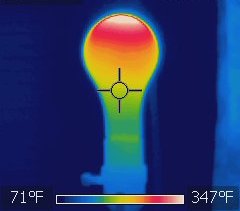
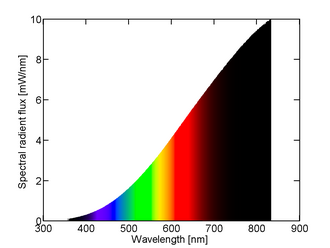
Because they are so inefficient, many governments have implemented bans on incandescent bulbs to reduce energy consumption, accelerating the transition to LED (Light Emitting Diode) and CFL (Compact Fluorescent Lamp) technologies.
| Lamp Type | Overall Luminous Efficiency | Luminous Efficacy (lm/W) |
|---|---|---|
| 40 W Tungsten Incandescent | 1.9% | 12.6 |
| 60 W Tungsten Incandescent | 2.1% | 14.5 |
| 100 W Tungsten Incandescent | 2.6% | 17.5 |
| Glass Halogen | 2.3% | 16 |
| Quartz Halogen | 3.5% | 24 |
| Theoretical Max (Tungsten) | 7.6% | 52 |
Frequently Asked Questions
Why are incandescent bulbs less efficient than LEDs?
Incandescent bulbs rely on heat to produce light. Because they must heat a filament to thousands of degrees, the vast majority of the electrical energy is wasted as heat (infrared radiation) rather than being converted into visible light.
What is the purpose of the gas inside the bulb?
Inert gases like argon or nitrogen are used to slow down the evaporation of the tungsten filament. This allows the filament to operate at higher temperatures—increasing brightness—without burning out as quickly as it would in a vacuum.
Why was tungsten chosen over carbon?
Tungsten has the highest melting point of all metals (3,695 K). This allows it to be heated to much higher temperatures than carbon, resulting in a brighter light and a longer operational lifespan.
What is a halogen bulb?
A halogen bulb is an advanced incandescent lamp that uses a halogen gas to recycle tungsten that evaporates from the filament, depositing it back onto the wire. This prevents the bulb from darkening and extends its life.
How does voltage affect the life of a bulb?
The lifetime of an incandescent bulb is approximately proportional to the supply voltage. Operating a bulb at a voltage higher than its rated value will significantly shorten its lifespan by increasing the filament temperature beyond its design limit.