Sound Recording and Reproduction: From Mechanical Cylinders to Digital Audio
Sound recording and reproduction is the process of inscribing and later re-creating sound waves—such as the human voice, musical instruments, or sound effects—using electrical, mechanical, electronic, or digital means. At its core, this technology allows us to capture a moment in time and replay it with fidelity, evolving from crude mechanical scratches on wax to complex binary code.
Modern audio technology is divided into two primary categories: analog recording and digital recording. Analog systems capture sound as a continuous physical representation of the sound wave, while digital systems convert those waves into discrete numerical data.
Key Facts

- Analog Recording: Uses a physical medium (like a record groove or magnetic tape) to mirror the shape of sound waves.
- Digital Recording: Uses sampling to convert audio into binary numbers (zeros and ones).
- First Practical Device: The mechanical phonograph cylinder, invented by Thomas Edison in 1877.
- The Disc Revolution: Emile Berliner's gramophone record (1887) replaced cylinders due to easier mass production and storage.
- Electrical Era: The 1920s introduction of microphones and amplifiers eliminated horn resonances and expanded frequency range.
- Magnetic Tape: Enabled multitrack recording and high-fidelity stereo sound in the mid-20th century.
The Mechanics of Sound Capture
Analog Recording
Acoustic analog recording relies on a microphone diaphragm that senses changes in atmospheric pressure. In early phonographs, this diaphragm moved a stylus that cut physical grooves into a medium. In magnetic tape recording, the diaphragm converts sound into a varying electric current, which an electromagnet then transforms into magnetized areas on a plastic tape coated with magnetic material.
Reproduction is simply the reverse: a loudspeaker diaphragm converts these physical or magnetic signals back into atmospheric pressure changes that our ears perceive as sound.
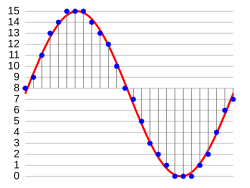
Digital Recording
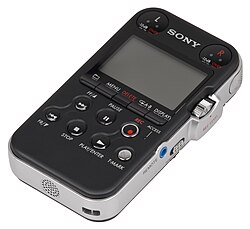
Digital recording converts analog signals into a digital format through sampling. This process captures the amplitude of the audio signal at equal time intervals. To ensure the sound is accurate to the human ear, the sample rate must be high enough to convey all audible frequencies. This data is stored as binary numbers and must be reconverted to analog form during playback before it reaches a loudspeaker.
Early History and Mechanical Innovations
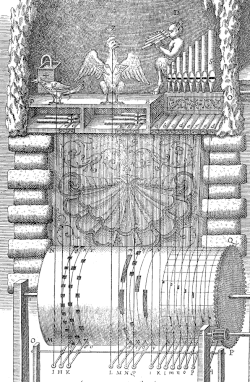
Before the phonograph, early attempts at sound storage were purely mechanical. The fairground organ (1892) used punched cardboard books, and the player piano (1876) used punched paper scrolls. By 1904, technology allowed for "hand-played" rolls, which recorded a live performer's actual timing and expression rather than a transcription of sheet music.
The Era of the Cylinder
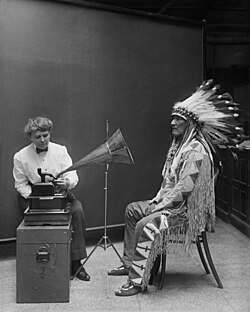
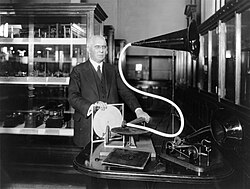
Thomas Edison's phonograph cylinder (1877) was the first practical device for both recording and reproduction. By 1901, a molding process allowed for mass production, making cylinders the dominant consumer format until roughly 1910.
The Rise of the Disc
The gramophone record, patented by Emile Berliner in 1887, shifted the industry toward discs. Discs were louder, easier to store, and simpler to manufacture than cylinders. By the end of World War I, the double-sided shellac disc (typically 78 rpm) became the global standard, a dominance that lasted in various forms until the end of the 20th century.
The Electrical and Magnetic Revolution
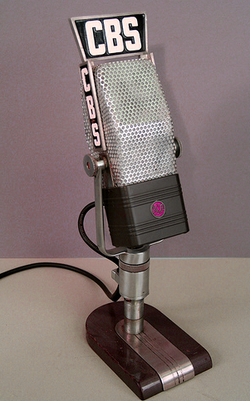
Until the 1920s, recording was purely mechanical. The introduction of electrical recording changed everything by using microphones to convert sound into electrical signals that could be amplified. This removed the "horn sound" of acoustic recording and allowed for the capture of quieter, more distant sounds.
A pivotal moment occurred in 1906 when Lee De Forest invented the Audion triode vacuum tube, which could amplify weak signals. This technology underpinned all electronic sound systems until the transistor arrived in the mid-1950s.
Stereophonic Sound and High Fidelity
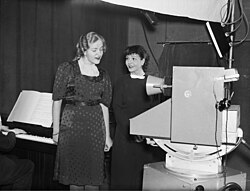
The 1930s and 40s saw the birth of stereophonic sound (stereo), which uses multiple channels to create a sense of space. Bell Laboratories demonstrated a practical two-channel system in 1937. Disney's Fantasia (1940) was the first commercial film with a stereo soundtrack, utilizing the complex Fantasound system.
By the late 1940s, Ampex introduced commercial two-track tape recorders, making stereo recording feasible for music. While mono remained the standard for popular music until the mid-1960s, the industry eventually shifted to releasing recordings in both formats.
The Impact of Magnetic Tape and Modern Components
Magnetic tape revolutionized the studio. It allowed for multitrack recording and overdubbing, where artists could record layers of sound independently. Les Paul pioneered this in 1951, and later, artists like The Beatles and Brian Wilson used these techniques to create complex sonic landscapes.
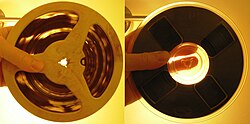
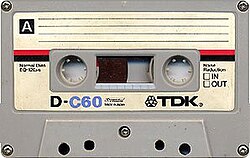
In the consumer market, the 8-track tape provided the first affordable car hi-fi systems in the 1960s. However, the Compact Cassette soon became the dominant portable format due to its durability and the ability for users to record their own music at home.
The Transistor and Home Audio
The replacement of vacuum tubes with transistors in the 1960s led to smaller, more reliable high-fidelity (hi-fi) components. Modular systems—consisting of separate turntables, pre-amplifiers, and graphic equalizers—became popular. Japanese companies like Sony eventually led the world in producing affordable, high-quality transistorized audio gear.
Summary of Sound Recording Evolution
| Era/Technology | Key Medium | Primary Characteristic | Major Milestone |
|---|---|---|---|
| Mechanical | Wax Cylinder / Disc | Acoustic/Physical grooves | Edison's Phonograph (1877) |
| Electrical | Shellac Disc | Amplified electrical signals | Vacuum Tube (1906) |
| Magnetic | Plastic Tape | Magnetic fields / Multitracking | Ampex 2-track (Late 1940s) |
| Digital | Binary Data | Sampling and quantization | Commercial digital (Early 1970s) |
Frequently Asked Questions
What is the difference between analog and digital recording?
Analog recording captures sound as a continuous physical wave on a medium like tape or vinyl. Digital recording converts sound into a series of binary numbers (zeros and ones) through a process called sampling.
Why did discs replace cylinders?
Discs, popularized by the gramophone, were easier to manufacture in mass quantities, simpler to transport and store, and generally produced a louder sound than cylinders.
How did electrical recording improve sound quality?
Electrical recording used microphones and amplifiers to capture sound, which eliminated the distorted resonances of the acoustic horns used in earlier mechanical systems and expanded the range of frequencies that could be recorded.
What is multitrack recording?
Multitrack recording, enabled by magnetic tape, allows different instruments or vocals to be recorded on separate tracks. This allows artists to overdub parts and mix them independently during production.
What role did the transistor play in audio history?
The transistor replaced the fragile and hot vacuum tube, allowing for the creation of smaller, more efficient, and more affordable home hi-fi components and portable audio devices.