Immigration: Global Trends, Economic Impacts, and Social Integration
Immigration is the international movement of people to a destination country where they are not usual residents or do not possess nationality, with the intent to settle as permanent residents. While often conflated with general travel, immigration is distinct from short-term stays; commuters and tourists do not fall under this definition, although individuals who overstay travel visas may eventually become immigrants. In some contexts, seasonal labor is also included in the scope of immigration.
The movement of people across borders is a complex phenomenon driven by a variety of geopolitical, economic, and environmental pressures. From the historical barriers of the Cold War to modern climate-driven displacement, the act of migrating reshapes both the societies people leave behind and the ones they join.
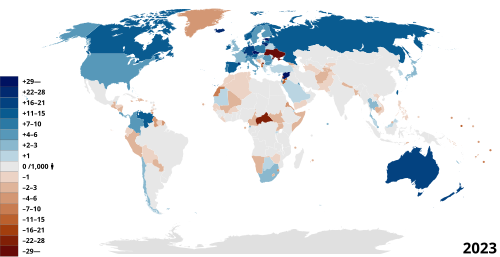
![The global population of immigrants has grown since 1990 but has remained constant at around 3% of the world's population.[23]](/images/89/02/8902bbe4a4b63a223fcd4fac9fbf5acf56a2087772724253d608cc0e7667bc1d.jpg)
Key Facts
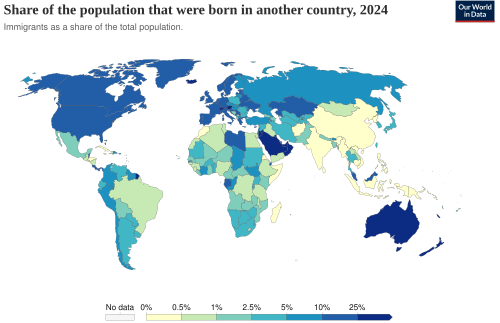
- Global Prevalence: The immigrant population has grown since 1990 but has remained relatively constant at approximately 3% of the world's total population.
- Economic Impact: Research suggests that migration can provide mutual economic benefits to both the receiving and sending countries.
- Assimilation: While the speed and depth of integration vary by country of origin, there is significant overall assimilation for both first- and second-generation immigrants.
- Climate Drivers: A 2012 survey indicated that 68% of respondents prefer lower wages if it means living with less climate risk, compared to 32% who prefer higher wages despite higher climate risk.
Drivers of Migration: Push and Pull Factors
Migration is typically driven by "push factors" (conditions that force people to leave their home) and "pull factors" (attractions that draw people to a new location). These drivers can be categorized into several primary types:
Economic Migrants
Economic migration occurs when individuals move to improve their standard of living, seeking better employment opportunities or higher wages. This often leads to human capital flight, where skilled professionals leave their home countries, potentially impacting the development of their origin nations.
Environmental Migration
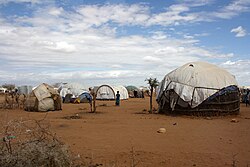
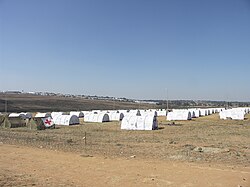
Environmental migration is increasingly common as climate change renders certain regions uninhabitable. This includes displacement due to natural disasters, such as the 2011 Horn of Africa drought, or long-term environmental degradation.
Economic and Social Impacts
The integration of immigrants into a host society affects various sectors of public life. The results of these interactions are often multifaceted:
Institutional and Economic Effects
Immigration influences the quality of institutions, education, and health systems. In the labor market, immigrants fill critical gaps, though they may face discrimination in hiring decisions. Economically, the impact on housing markets can be significant, often influencing local house prices.
Education and Health
The presence of immigrant children in schools can affect the academic environment. While some studies examine the impact on native students' performance, others highlight the challenges and successes of non-native speakers in the classroom.
Crime and Justice
Academic literature provides mixed findings regarding the relationship between immigration and crime worldwide. Some research focuses on the criminalization of immigrants within the justice system rather than the propensity for crime itself.
Integration and Discrimination
Integration is the process by which immigrants become part of the social and economic fabric of their new home. This process is often hindered by discrimination in business, the criminal justice system, and the housing market.
Regional Examples of Integration
- United Kingdom: Cities like London have become highly multiethnic. For example, in 2008, Black British and British Asian children outnumbered white British children in government-run schools by a ratio of approximately 3 to 2.
- Czech Republic: The presence of ethnic enclaves, such as "Little Hanoi" in Prague, demonstrates how immigrant communities maintain cultural identity while contributing to the local economy.
![London has become multiethnic as a result of immigration.[27] In London in 2008, Black British and British Asian children outnumbered white British children by about 3 to 2 in government-run schools.[28]](/images/a3/65/a365f7081186e65c63d2c40e58d72d70738b169347b154d24356e6c426df6763.jpg)
![The largest Vietnamese market in Prague, also known as "Little Hanoi". In 2009, there were about 70,000 Vietnamese in the Czech Republic.[26]](/images/5e/4d/5e4dfe6a7f88c16558599e4509d1a40fa14e0ac08e0129c569e60bb45a4a4b37.jpg)
Border Control and Political Barriers
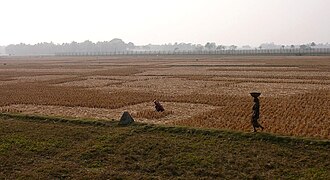
Governments often implement measures to regulate or prevent immigration. These range from administrative border controls to physical barriers. Historically, the Iron Curtain in Europe served as a means to prevent emigration from communist regimes. In more recent times, barriers like the 4,000-kilometre Indo-Bangladeshi border have been constructed to prevent illegal immigration.
![The Iron Curtain in Europe was designed as a means of preventing emigration. "It is one of the ironies of post-war European history that, once the freedom to travel for Europeans living under communist regimes, which had long been demanded by the West, was finally granted in 1989/90, travel was very soon afterwards made much more difficult by the West itself, and new barriers were erected to replace the Iron Curtain." —Anita Böcker[46]](/images/6d/a7/6da7460b1bbc14a37cd3b81a6ca2cec9f25c4c50be071dcaee193c59a627a261.jpg)
Global Migration Summary
The following table summarizes the key dynamics of international migration based on available data.
| Category | Key Detail / Statistic | Primary Driver/Impact |
|---|---|---|
| Global Population Share | ~3% | Consistent since 1990 |
| Climate Risk Preference | 68% prefer lower risk | Environmental stability over wage |
| Wage Risk Preference | 32% prefer higher wage | Economic gain over climate risk |
| Economic Effect | Mixed/Positive | Benefit to both sending and receiving nations |
Frequently Asked Questions
What is the difference between immigration and migration?
Immigration specifically refers to the movement of people into a destination country to settle as permanent residents. Migration is a broader term that encompasses any movement of people, including internal migration within a country or emigration (leaving a country).
Do immigrants increase crime rates?
Academic research on this topic has produced mixed findings globally, suggesting that there is no simple or universal correlation between immigration and increased crime.
What are "push and pull factors" in migration?
Push factors are negative conditions in a home country—such as war, drought, or poverty—that force people to leave. Pull factors are positive attributes of a destination country—such as higher wages, political stability, or better education—that attract immigrants.
How does immigration affect the economy of the receiving country?
Research suggests that immigration can be economically beneficial, providing a source of labor and innovation, although it can also impact local housing markets and put pressure on public institutions.
What is human capital flight?
Human capital flight, often called "brain drain," occurs when highly skilled or educated individuals emigrate from their home country, which can lead to a loss of expertise and economic potential for the country of origin.