Husni al-Za'im: The Man Who Launched Syria's First Military Coup
The political landscape of modern Syria was irrevocably altered in 1949. At the center of this shift was Husni al-Za'im, a career military officer whose brief but impactful tenure as head of state marked the end of the country's early democratic experiment. From his roots in the Ottoman Empire to his sudden rise and violent fall, al-Za'im's life reflects the volatility of a region struggling with post-colonial identity and geopolitical pressure.
Born in Aleppo in 1897, al-Za'im's military journey spanned three different regimes. He began his service in the Ottoman Army, transitioned to the French Army during the colonial mandate over Syria, and eventually rose through the ranks of the Syrian Army after the republic gained independence. By the time of the 1948 Arab-Israeli War, he had attained the rank of Brigadier General.
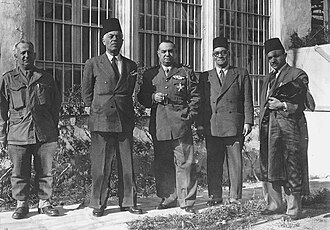
The Rise to Power
The catalyst for al-Za'im's ascent was the 1948 Arab-Israeli War. Following early defeats led by Abdullah Atfeh, al-Za'im was appointed Chief of Staff. The overall failure of the Arab League forces during the conflict severely damaged public confidence in Syria's unstable parliamentary democracy, creating a power vacuum that al-Za'im was eager to fill.
The 1949 Coup d'état
On March 30, 1949, al-Za'im executed a bloodless coup d'état, overthrowing the democratic government. While some allegations suggest the Central Intelligence Agency (CIA) engineered the event, available evidence indicates the decision was primarily al-Za'im's, though he likely received some American assistance in planning. The U.S. embassy viewed the move favorably as a means to curb far-left, anti-democratic elements within the Syrian government.
In the immediate aftermath, the former president, Shukri al-Quwatli, was imprisoned and later exiled to Egypt. Al-Za'im also detained various political rivals, including Munir al-Ajlani. This event was a watershed moment; as the first military coup in Syrian history, it shattered the nation's fragile democratic rule and established a precedent for a series of violent military revolts.
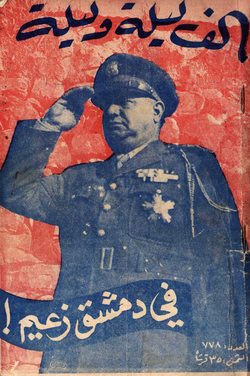
Presidency and Controversial Policies
Al-Za'im's presidency lasted only 137 days, yet he attempted sweeping social and political changes. He was a proponent of secularism and pushed for the emancipation of women, advocating for women's suffrage and suggesting that women abandon the Islamic practice of veiling. While women's right to vote was not fully realized until the later administration of Hashim al-Atassi, al-Za'im is credited as the first leader to openly support the cause.
His domestic agenda also included a campaign to abolish the wearing of the fez, which he dismissed as an outdated relic of the Ottoman era. However, his governance was not without cruelty; he famously ordered bakers who produced low-quality bread to walk barefoot on gravel until they bled.
Foreign Policy and Economic Deals
Internationally, al-Za'im's tenure was defined by his relationship with the West and Israel. Four days after his coup, his government ratified the Trans-Arabian Pipeline (Tapline) deal, a controversial agreement with U.S. oil companies. He also attempted a peace overture to Israel, offering to settle 300,000 Palestinian refugees in Syria in exchange for border modifications and half of Lake Tiberias, provided there was sufficient international economic aid. This proposal was largely ignored by Tel Aviv.
The Fall of al-Za'im
Al-Za'im's rapid reforms and foreign deals alienated key power bases. Religious leaders were offended by his secularism, businessmen were angered by tax hikes, and Arab nationalists were outraged by the Tapline deal and the ceasefire with Israel. Lacking a popular mandate, he became vulnerable to the very military mechanisms he had used to seize power.
On August 13, 1949, his former co-conspirators, Adib al-Shishakli and Sami al-Hinnawi, staged a counter-coup. Al-Za'im was arrested and taken to Mezze prison in Damascus. The following day, August 14, 1949, he and Prime Minister Muhsin al-Barazi were executed by a firing squad.
Key Facts
- First Military Coup: Al-Za'im led the first military coup in Syrian history on March 30, 1949.
- Brief Tenure: He served as head of state for only 137 days.
- Social Reform: He was the first Syrian leader to advocate for women's suffrage and the removal of the veil.
- Economic Impact: He ratified the Trans-Arabian Pipeline (Tapline) deal shortly after taking power.
- Violent End: He was executed by firing squad on August 14, 1949, following a coup by his own colleagues.
| Role | Term Start | Term End | Preceded By | Succeeded By |
|---|---|---|---|---|
| Prime Minister | March 30, 1949 | June 26, 1949 | Khalid al-Azm | Muhsin al-Barazi |
| President | June 26, 1949 | August 14, 1949 | Shukri al-Quwatli | Sami Hilmy al-Hinnawi (acting) |
Frequently Asked Questions
Did the CIA orchestrate Husni al-Za'im's coup?
While there are controversial allegations of CIA involvement, most evidence suggests the decision to launch the coup was al-Za'im's own, though he likely received some planning assistance from the United States.
What was the Trans-Arabian Pipeline (Tapline) deal?
The Tapline was a controversial agreement with U.S. oil companies to build a pipeline across the region, which al-Za'im's government ratified shortly after he seized power.
How did al-Za'im view women's rights?
Al-Za'im was a supporter of women's emancipation, advocating for their right to vote and run for public office, and suggesting they stop wearing the veil.
Who eventually overthrew Husni al-Za'im?
He was overthrown by his former colleagues and fellow officers, specifically Sami al-Hinnawi and Adib al-Shishakli, in a coup on August 13, 1949.
What was al-Za'im's military background?
He served as a Brigadier General and had been an officer in the Ottoman Army, the French Army, and finally the Syrian Army, serving as Chief of Staff during the 1948 Arab-Israeli War.