Hurricane Isaac: The Impact and Legacy of the 2012 Storm
In August 2012, the Atlantic basin witnessed the development of Hurricane Isaac, a powerful tropical cyclone that left a trail of destruction across the Caribbean and the United States Gulf Coast. While it reached the status of a Category 1 hurricane, its significance lay not just in its wind speed, but in its immense size and the widespread flooding it triggered.
Isaac's journey began on August 21, 2012, and lasted until its final dissipation on September 3. Throughout its lifespan, the storm challenged emergency responders and disrupted major political events, serving as a stark reminder of the vulnerability of coastal regions to tropical systems.
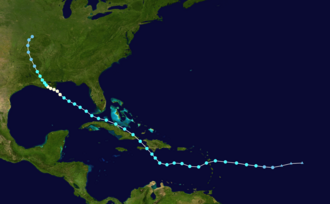
Key Facts
- Peak Intensity: Category 1 hurricane with maximum sustained winds of 80 mph (130 km/h).
- Lowest Pressure: 965 mbar (hPa).
- Human Toll: 41 total fatalities.
- Financial Impact: Approximately $3.84 billion (2012 USD) in damages.
- Timeline: Formed August 21; became extratropical September 1; dissipated September 3, 2012.
Meteorological History and Path
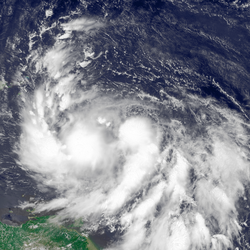
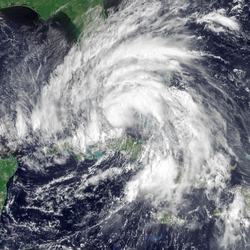
Hurricane Isaac formed as a tropical system on August 21, 2012. As it moved through the Atlantic, it gradually intensified, first impacting the Lesser Antilles and then moving toward the Greater Antilles. The storm's slow movement increased the duration of rainfall and wind exposure for the regions it traversed.
By the time it reached the Gulf of Mexico, Isaac had developed into a significant threat. It eventually reached its peak strength as a Category 1 hurricane—a classification on the Saffir-Simpson scale, which categorizes hurricanes based on their sustained wind speed—before making landfall along the U.S. Gulf Coast.
Impact on the Caribbean
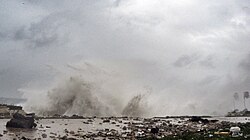
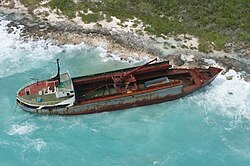
The storm's early stages were devastating for the Caribbean. Haiti was the hardest hit, reporting 24 deaths and $250 million in damages. The Dominican Republic saw 5 fatalities and over $30 million in losses. In Puerto Rico, the storm caused significant maritime incidents, including the grounding of the MV Jireh on Mona Island.
United States Landfall and Effects
As Isaac approached the United States, it first brushed the Florida Keys and the Florida peninsula. The storm's presence was so disruptive that it delayed the start of the Republican National Convention in Tampa, forcing officials to cancel first-day activities.
The Gulf Coast Crisis
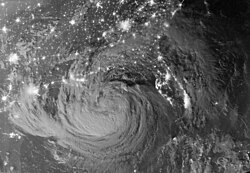
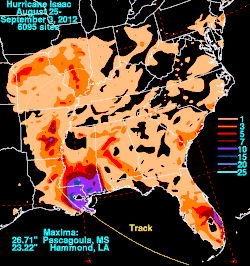
The most severe impacts occurred in Louisiana, Mississippi, and Alabama. Isaac was noted for being one of the largest-diameter hurricanes to hit the U.S. Gulf Coast. While a large diameter does not necessarily mean higher wind speeds, it increases the number of people exposed to hazards like storm surges and heavy rain.
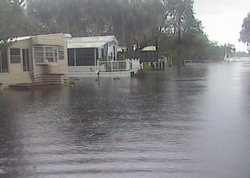
Louisiana bore the brunt of the storm, with damages exceeding $612 million and multiple fatalities. New Orleans experienced hurricane-force winds; however, it avoided the catastrophic flooding seen in other parts of southeast Louisiana. In Florida, flooding was significant in Sarasota County, particularly at the Ramblers Mobile Home Park.
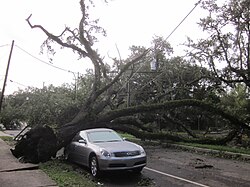
![Hurricane Isaac was one of the largest-diameter US Gulf Coast hurricanes.[97] Though large size does not imply strength—which is based on sustained wind measurements—it can mean that more people are exposed to its hazards.[97]](/images/3d/3e/3d3e0635b87381fd832eea8e950be2a24d38e2dfdce5e024a1f26060f6297545.webp)
Summary of Damages and Fatalities
The following table provides a detailed breakdown of the human and financial costs associated with Hurricane Isaac across the affected regions.
| Country/State | Total Deaths | Damage (USD) |
|---|---|---|
| Haiti | 24 | $250 million |
| Dominican Republic | 5 | > $30 million |
| Cuba | 0 | $30 million |
| Louisiana | 3 (2 indirect) | > $612 million |
| Florida | 0 (2 indirect) | $83.2 million |
| Mississippi | 2 | $24.3 million |
| Alabama | 0 | $9.4 million |
| Total | 34 (7 indirect) | ~ $3.84 billion |
Frequently Asked Questions
What was the maximum wind speed of Hurricane Isaac?
Hurricane Isaac reached maximum sustained winds of 80 mph (130 km/h), classifying it as a Category 1 hurricane.
Which country suffered the highest number of fatalities?
Haiti suffered the highest number of fatalities, with 24 deaths reported as a result of the storm.
How did Isaac's size affect its impact?
Isaac was one of the largest-diameter hurricanes to hit the U.S. Gulf Coast. Although size does not dictate strength, the large diameter meant a greater number of people were exposed to the storm's hazards.
Did Hurricane Isaac affect any major political events?
Yes, the storm caused delays to the start of the Republican National Convention in Tampa, Florida, and led some governors to cancel their trips to the event.
What was the total financial damage caused by the storm?
The total estimated damage caused by Hurricane Isaac was approximately $3.84 billion (2012 USD).