Hurricane Flossy: The 1956 Storm That Impacted Gulf Oil Refining
Hurricane Flossy was a significant tropical cyclone that struck the United States in September 1956. While it peaked as a Category 1 hurricane, its legacy extends beyond wind and rain; it was the first hurricane to cause major disruptions to the oil refining industry in the Gulf of Mexico, prompting a new era of meteorological research for the energy sector.
Key Facts
- Peak Intensity: Category 1 hurricane with maximum sustained winds of 90 mph (140 km/h).
- Lowest Pressure: 974 mbar (hPa).
- Fatalities: 15 deaths.
- Economic Impact: $24.9 million (1956 USD) in damages.
- Primary Areas Affected: Yucatán Peninsula, U.S. Gulf Coast, and the U.S. East Coast.
Meteorological History
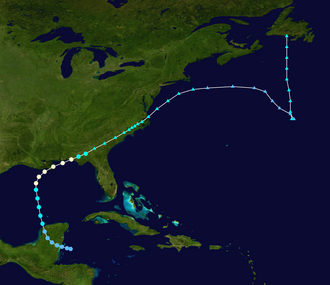
The system began as a tropical disturbance in the eastern Pacific Ocean. Between September 20 and 21, 1956, it moved northward across Guatemala and entered the northwest Caribbean Sea. Shortly after emerging into the Caribbean, it developed into a tropical cyclone.
The storm crossed the Yucatán Peninsula as a tropical depression before intensifying into a tropical storm on September 22 and reaching hurricane status on September 23. On September 24, Flossy turned sharply east-northeast, striking the central Gulf Coast of the United States as a minor hurricane. After making landfall in Florida east of Pensacola, the system transitioned into an extratropical cyclone—a storm that loses its tropical characteristics but still brings heavy rain and wind—on September 25.
The remnants of the storm hugged the Atlantic Seaboard toward the Virginia Capes before moving slowly through the shipping lanes between Canada and Bermuda, where it was eventually blocked by a high-pressure system in southeast Canada. It finally dissipated on October 3, 1956.
Preparations and Warnings
Meteorologists issued hurricane watches for the upper Texas and Louisiana coasts by the morning of September 22. By September 24, hurricane warnings were active from Grand Isle, Louisiana, to Fort Walton Beach, Florida. To protect military assets, 15 aircraft were evacuated from Florida to the Ardmore Air Force Base in Oklahoma.
Impact on the Gulf of Mexico Oil Industry
Hurricane Flossy marked a turning point for the energy industry as the first hurricane to significantly disrupt oil refining in the Gulf of Mexico. The storm forced several hundred active wells out of service and halted drilling operations for several days.
One notable incident involved a tender from the Humble company; three-quarters of its mooring chains failed, causing the vessel to swing into an adjacent oil platform and resulting in $200,000 in damages (1956 USD). However, the financial loss from production downtime far exceeded the physical damage to the rigs.
In response to these vulnerabilities, the American Petroleum Institute established the Fundamental Research on Weather Forecasting committee. This group sought to use mathematical models and historical data to improve the prediction of hurricane paths and formation, though reliable forecast mechanisms remained elusive through 1962.
Regional Impacts Across the United States
Louisiana and Mississippi
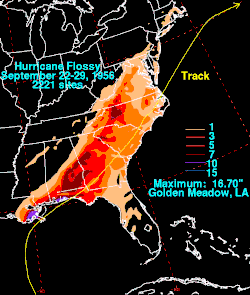
Louisiana bore the brunt of the storm's moisture and surge. Golden Meadow recorded 16.70 inches (424 mm) of rainfall, and a significant storm surge submerged Grand Isle. In New Orleans, portions of the seawall were overtopped, flooding approximately 2.5 square miles. The storm caused extensive coastal erosion across the Mississippi Delta and destroyed crops including sugar cane, citrus, and pecans.
In Mississippi, coastal areas experienced winds up to 66 mph (106 km/h), and Gulf Shores recorded 16.30 inches (414 mm) of rain.
Alabama, Florida, and Georgia
In Alabama, the storm destroyed a tent used by the Eastern Hills Baptist Church in Montgomery. In Florida, the Pensacola Naval Air Station recorded the storm's lowest pressure at 28.93 inches (979.8 hPa). A storm tide of 7.4 feet (2.3 m) at Laguna Beach caused severe beach erosion and damaged piers.
The storm also triggered at least three tornadoes in northern Florida, with the most significant damage occurring in Gulf County. Conversely, the heavy rains were considered beneficial in southern Alabama, northern Florida, and Georgia, as they helped break a prevailing drought.
The East Coast and Mid-Atlantic
As the system moved northeast, it continued to provide drought relief to the Carolinas. However, it brought destructive winds and flooding to Virginia. The gas screw vessel Mary Anne was lost at Naval Station Norfolk, and high tides flooded sections of the city. Notably, the 127-year-old Back River Light collapsed despite the presence of 500 short tons of protective rock at its base.
Summary of Hurricane Flossy
| Metric | Detail |
|---|---|
| Formation Date | September 20, 1956 |
| Peak Wind Speed | 90 mph (150 km/h) |
| Lowest Pressure | 974 mbar |
| Total Fatalities | 15 |
| Total Damages | $24.9 million (1956 USD) |
| Max Rainfall | 16.70 inches (Golden Meadow, LA) |
Frequently Asked Questions
What was the most significant industrial impact of Hurricane Flossy?
Hurricane Flossy was the first hurricane to cause major disruptions to oil refining in the Gulf of Mexico, leading to the shutdown of hundreds of wells and the creation of a specialized weather forecasting committee by the American Petroleum Institute.
How did the storm affect the eastern United States?
While it caused flooding and structural damage in Virginia—including the collapse of the Back River Light—the storm's rains were largely beneficial as they broke a drought across the Carolinas, Georgia, Alabama, and northern Florida.
What were the peak wind speeds of Hurricane Flossy?
The hurricane reached maximum sustained winds of 90 mph (140 km/h), classifying it as a Category 1 hurricane on the Saffir-Simpson scale.
Where did Hurricane Flossy originate?
The storm originated from a tropical disturbance in the eastern Pacific Ocean before moving across Central America and Guatemala into the Caribbean Sea.
How many people died as a result of the storm?
The total death toll attributed to Hurricane Flossy was 15 people.