Hummingbirds: Nature's High-Energy Aviators
Hummingbirds are among the most remarkable creatures in the avian world, known for their iridescent plumage, extraordinary agility, and high-speed metabolism. Belonging to the family Trochilidae, these birds have evolved specialized biological mechanisms that allow them to perform feats of flight impossible for most other birds, including the ability to hover in mid-air and fly backward.
From the tiny bee hummingbird to the larger species of the Andes, these birds play a critical role in their ecosystems as primary pollinators for many flower species. Their existence is a masterclass in evolutionary adaptation, blending extreme physical capabilities with precise foraging behaviors.
Key Facts
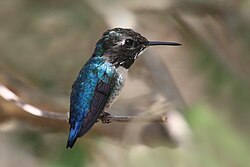
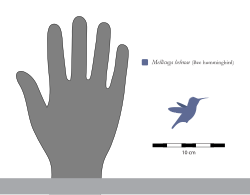
- Smallest Bird: The bee hummingbird (Mellisuga helenae) is the smallest bird species in the world.
- Extreme Speed: Top flight speeds can exceed 15 m/s (54 km/h), with courtship dives reaching approximately 23 m/s (83 km/h).
- Unique Flight: They are the only birds capable of sustained hovering by generating wake vortices under each wing.
- Specialized Feeding: Their tongues act as micropumps, splitting into fringed tips to efficiently collect nectar.
- Energy Conservation: To survive the night or cold weather, many species enter torpor, a state of decreased physiological activity.
Morphology and Physical Adaptations
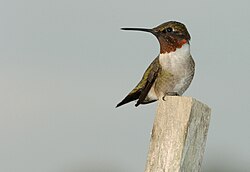
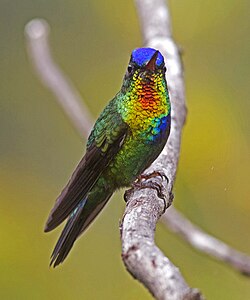
The physical structure of a hummingbird is finely tuned for its high-energy lifestyle. Their size varies significantly across the family, but all share a compact build that minimizes drag. One of the most striking features is their plumage; males often possess iridescent feathers on their crowns and gorgets (the colorful throat patches), which they use in courtship displays.
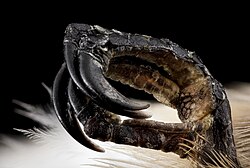
Their feet are small and adapted for perching rather than walking, typically featuring three claw-like toes facing forward and one facing backward.
Visual and Sensory Systems
Hummingbirds possess a highly developed visual system that allows them to discriminate nonspectral colors and stabilize visual motion, which is essential for maintaining a steady hover while feeding from swaying flowers. Some species also have proportionally large eyes relative to their head size to enhance their field of vision.
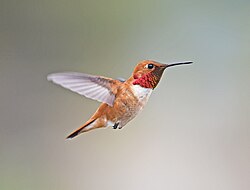
The Mechanics of Flight
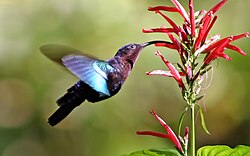
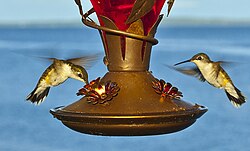
Flight in hummingbirds is fundamentally different from that of other birds. While most birds generate lift primarily on the downstroke, hummingbirds generate lift on both the forward and backward strokes of their wings. This creates a trail of wake vortices that allows them to remain stationary in the air.
![Hummingbirds generate a trail of wake vortices under each wing while hovering.[159][160]](/images/4f/56/4f56bfdc2d384de24dd06e0f155cebf93c06657ef0235d07b25203931f7c905e.webp)
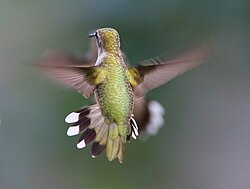
This agility is most evident during courtship, where males may dive from heights of 30 meters (100 ft) to impress females. The sound associated with their flight—the "hum" that gives them their name—is produced by the rapid vibration of their wing feathers.
Diet and Foraging Specializations
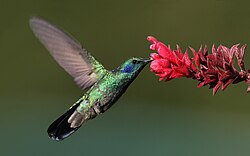
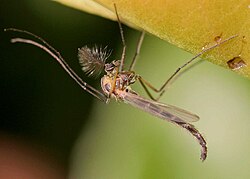
While nectar is their primary energy source, hummingbirds are not exclusively nectarivores. They also consume invertebrates, such as nonbiting midges (family Chironomidae) and other small flies, to obtain necessary proteins and vitamins.
The Micropump Tongue
The hummingbird's tongue is a biological marvel. Upon entering a flower, the tongue splits into two opposing tips fringed with lamellae (small plate-like structures) and grooves. These fill with nectar and then retract into a cylindrical shape as the tongue pulls back into the bill, effectively pumping the liquid into the bird's throat.
![Drawing of a hummingbird tongue; 1874, unknown artist. Upon reaching nectar in a flower, the tongue splits into opposing tips fringed with lamellae and grooves, which fill with nectar, then retracts to a cylindrical configuration into the bill to complete the drink.[211][212]](/images/ee/cb/eecbcd54a2f813de50b09b01f1bdd1d3733f399763a96d834fa1e337d18777c7.jpg)
Coevolution with Flowers
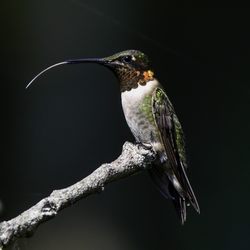
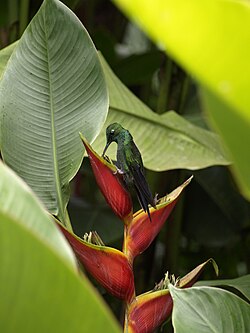
Hummingbirds have a symbiotic relationship with ornithophilous (bird-pollinated) flowers. Over millions of years, the beak shapes of various hummingbird species have evolved to match the shapes of the flowers they frequent, ensuring efficient nectar extraction and successful pollination for the plant.
Metabolism and Survival Strategies
Maintaining such a high heart rate and wing-beat frequency requires an immense amount of energy. Hummingbirds have one of the highest metabolic rates of any vertebrate. To manage this, they have evolved specialized hemoglobin adaptations to survive at high altitudes in the Andes and efficient heat dissipation methods through their eyes and feet.
To avoid starving during the night when they cannot feed, hummingbirds enter torpor. This is a state of suspended animation where their body temperature and heart rate drop significantly, conserving vital energy stores.
Summary of Hummingbird Characteristics
| Feature | Description | Biological Purpose |
|---|---|---|
| Wing Motion | Figure-eight pattern | Enables hovering and backward flight |
| Tongue | Bifurcated with lamellae | Acts as a micropump for nectar |
| Metabolism | Extremely high | Powers rapid wingbeats and flight |
| Survival State | Torpor | Energy conservation during sleep/cold |
| Diet | Nectar and Insects | Balance of sugars and proteins |
Frequently Asked Questions

Can hummingbirds walk?
No, hummingbirds cannot walk. Their feet are designed almost exclusively for perching and gripping branches; they lack the leg musculature and joint structure required for walking.
How do hummingbirds survive the winter?
Some species migrate to warmer climates, while others stay in colder regions by utilizing torpor to save energy and feeding on available nectar sources or insects.
Why are hummingbirds attracted to red colors?
Many ornithophilous flowers are red to attract hummingbirds, as these birds have a strong visual sensitivity to the red end of the spectrum, which helps them locate food sources quickly.
What is the fastest a hummingbird can fly?
While their normal flight speed exceeds 15 m/s (54 km/h), some males can reach speeds of approximately 23 m/s (83 km/h) during specialized courtship dives.
Do hummingbirds eat anything besides nectar?
Yes, they eat small insects and spiders, particularly nonbiting midges, to get the protein and minerals that nectar lacks.