Humboldt Bay Coast Guard History and Evolution
For over 160 years, the United States Coast Guard (USCG) has maintained a steadfast presence on and around Humboldt Bay. Since 1856, the service has provided uninterrupted life-saving assistance, evolving from basic coastal patrols to a sophisticated multi-agency support system that protects the North Coast, the open sea, and remote inland terrains.
The Foundation of Coastal Safety
The early years of maritime safety in the region were centered on the Humboldt Bay Life-Saving Station. Located on the Samoa Peninsula, this historic facility has served as a continuous base of operations since at least 1878, anchoring the Coast Guard's commitment to the local waters.
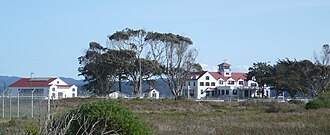
While the service began with a focus on the bay and coastline, its mission expanded over time. The USCG now assists other agencies in diverse environments, including rivers, lakes, forests, and mountainous terrain on both private and park lands.
The Shift to Aviation Search and Rescue
For decades, the region's maritime assets were split. While cutters—specialized Coast Guard vessels—were based in Eureka and Crescent City, air support was managed from San Francisco. During the summer, an aviation detachment from San Francisco provided seasonal coverage, but this arrangement had a critical flaw: response times often exceeded two hours.
In the cold waters of the North Coast, where temperatures typically range between 40 and 50 degrees Fahrenheit, such delays were often fatal for victims. This urgency sparked a multi-year initiative by local residents and community groups to secure a permanent, year-round aviation Search and Rescue (SAR) facility for Northern California.
The Establishment of Air Station Humboldt Bay
The efforts of the community culminated on June 24, 1977, with the commissioning of Coast Guard Air Station Arcata at the Arcata–Eureka Airport in McKinleyville, California. This new facility brought essential assets and rapid response capabilities to the region.
In May 1982, the facility was re-designated as Air Station Humboldt Bay. To further streamline operations, a $3.5 million facility was constructed at the airport. This investment allowed the USCG to relocate boat station command and control from the historic Samoa site to the airport, creating a centralized hub for all regional assets.
Key Facts
- Continuous Presence: Coast Guard operations on Humboldt Bay began in 1856.
- Historic Base: The Humboldt Bay Life-Saving Station has been active since at least 1878.
- Critical Water Temps: North Coast waters average 40–50 degrees Fahrenheit, making rapid rescue essential.
- Aviation Milestone: Air Station Arcata was commissioned on June 24, 1977.
- Centralized Command: A $3.5 million facility at Arcata–Eureka Airport now manages both air and boat assets.
| Year/Date | Event/Milestone | Significance |
|---|---|---|
| 1856 | Initial Presence | Start of uninterrupted service on Humboldt Bay. |
| 1878 | Life-Saving Station | Establishment of the historic Samoa Peninsula facility. |
| June 24, 1977 | Air Station Arcata Commissioned | Introduction of year-round aviation SAR in Northern California. |
| May 1982 | Re-designation | Air Station Arcata becomes Air Station Humboldt Bay. |
Frequently Asked Questions
When did the Coast Guard begin operating on Humboldt Bay?
The Coast Guard has maintained an uninterrupted presence on Humboldt Bay since 1856.
Why was a local air station necessary for Northern California?
Before 1977, air support came from San Francisco with response times over two hours. Because North Coast waters are only 40–50 degrees Fahrenheit, victims often could not survive the wait for rescue.
Where is the historic Life-Saving Station located?
The historic Humboldt Bay Life-Saving Station is located on the Samoa Peninsula.
What is the current command structure for regional assets?
Command and control for both boat and air assets are centralized at a $3.5 million facility located at the Arcata–Eureka Airport in McKinleyville.
Does the Coast Guard operate anywhere other than the water?
Yes, the USCG provides assistance in remote interior locations, including rivers, lakes, forests, and mountainous terrain on private and park lands.