Coast Guards of the World: Roles, Structures, and Maritime Security
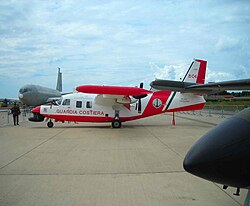
Coast guards serve as the primary guardians of a nation's maritime frontiers. While their core missions—protecting coastlines and ensuring safety at sea—are universal, the way these organizations are structured varies wildly from one country to another. Some operate as military branches, others as civilian agencies, and some as hybrid paramilitary forces.
From managing the world's longest coastlines to policing complex geopolitical waters, these agencies handle everything from Search and Rescue (SAR)—the process of locating and recovering people in distress—to enforcing laws within a nation's Exclusive Economic Zone (EEZ), the sea zone over which a state has special rights regarding the exploration and use of marine resources.
Key Facts
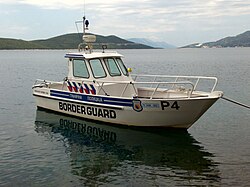
- Largest Force: The United States Coast Guard (USCG) is the world's largest coast guard.
- Longest Coastline: The Canadian Coast Guard manages the world's longest coastline, spanning 243,042 km.
- Diverse Structures: Agencies range from purely civilian (Canada) to military (USA, Turkey) and paramilitary (Bangladesh, Greece).
- Core Missions: Common duties include anti-smuggling, piracy prevention, environmental protection, and maritime SAR.
Global Coast Guard Models and Operations
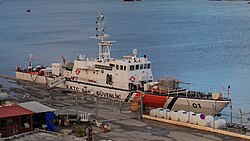
North American Agencies
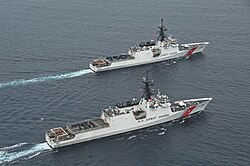
The United States Coast Guard (USCG) is a unique entity, serving as a military service, law enforcement agency, and regulatory body. Formed in 1915, it operates under the Department of Homeland Security during peacetime but can report to the Secretary of the Navy during wartime. As of 2022, it employed over 40,000 active-duty personnel and maintained a massive fleet of 243 cutters and 1,650 smaller boats.
In contrast, the Canadian Coast Guard (CCG) is a civilian service under the Department of National Defence, focusing on the immense logistical challenge of patrolling Canada's vast coastline.
European and Mediterranean Forces
European nations often split maritime duties between different agencies. Spain, for example, uses the Sociedad de Salvamento y Seguridad Marítima (SASEMAR) for rescue and environmental protection, while the Civil Guard handles border protection and the Servicio de Vigilancia Aduanera manages customs.
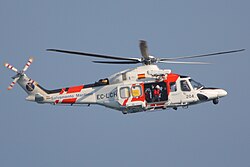
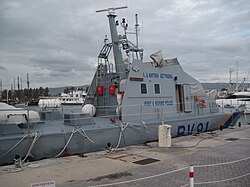
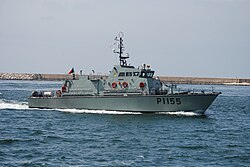
The Hellenic Coast Guard of Greece is a paramilitary organization that supports the navy during wartime but remains under civilian control during peace. In Cyprus, the Port and Marine Police handle complex duties including anti-terrorism and anti-piracy, often coordinating with the Cyprus Police Aviation Unit since they do not operate their own helicopters.
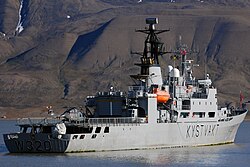
Other European examples include Norway's Nordkapp-class vessels patrolling the Arctic and the UK's HM Coastguard, which relies heavily on a network of 4,000 volunteers and commercial helicopter leases for SAR operations.
Asian and Pacific Maritime Security
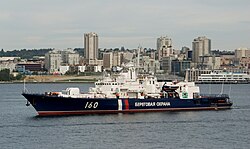
In Asia, coast guards often play a critical role in territorial disputes and resource protection. The China Coast Guard (CCG), formed in 2013, is under the leadership of the People's Armed Police and the Central Military Commission. India's Coast Guard (ICG), under the Ministry of Defence, utilizes over 182 vessels and 78 aircraft to protect the Indian Ocean region.
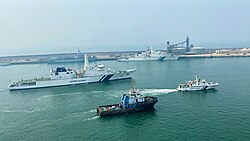
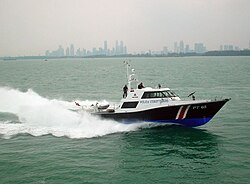
The Philippine Coast Guard (PCG) operates under the Department of Transportation, patrolling 36,289 km of coastline. Similarly, Singapore's Police Coast Guard is unique for combining water policing and coast guard duties within a single policing unit.
Other Regional Operations
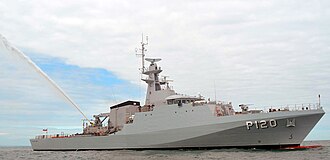
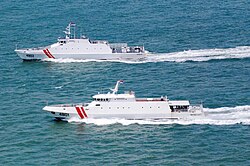
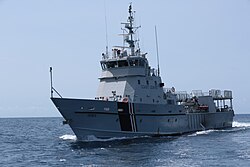
Across the globe, specialized units manage diverse needs. Brazil and Indonesia maintain significant patrol presence to secure their vast archipelagos and coastlines, while the Kenya Coast Guard Service (KCGS) utilizes offshore patrol vessels like the MV Doria to secure East African waters.
Comparative Summary of Selected Coast Guards
| Country | Agency Name | Primary Status | Key Focus/Feature |
|---|---|---|---|
| United States | USCG | Military/Law Enforcement | World's largest coast guard force |
| Canada | CCG | Civilian | World's longest coastline (243,042 km) |
| India | ICG | Ministry of Defence | Indian Ocean regional security |
| Spain | SASEMAR / Civil Guard | Mixed (Civilian/Police) | Split between rescue and law enforcement |
| Philippines | PCG | Dept. of Transportation | Archipelagic law enforcement |
| Bangladesh | BCG | Paramilitary | Ministry of Home Affairs jurisdiction |
Frequently Asked Questions
What is the difference between a Navy and a Coast Guard?
While both operate at sea, a Navy is primarily focused on national defense and warfare against foreign militaries. A Coast Guard typically focuses on law enforcement, search and rescue, environmental protection, and border security within a nation's own territorial waters.
Which country has the largest coast guard?
The United States Coast Guard is the world's largest, with tens of thousands of active-duty personnel, reservists, and a massive fleet of cutters and aircraft.
Do all coast guards have law enforcement powers?
No. For example, the Royal Volunteer Coastal Patrol and Australian Volunteer Coast Guard are auxiliary SAR services with no law enforcement powers. Similarly, Spain's SASEMAR focuses on rescue and safety rather than law enforcement.
How are coast guards structured in different countries?
Structures vary by nation: some are military branches (USA), some are civilian agencies (Canada), some are paramilitary (Bangladesh, Greece), and others are specialized units within a national police force (Singapore, Cyprus).
What are the primary duties of a coast guard?
Primary duties generally include maritime search and rescue (SAR), preventing illegal fishing and smuggling, protecting the marine environment from pollution, and securing maritime borders.