Hull Daily Mail: A History of Local Journalism in Kingston upon Hull
The story of the Hull Daily Mail is a reflection of the evolving media landscape in East Yorkshire. From its roots as a modest weekly gazette in the 18th century to its modern digital incarnation as Hull Live, the publication has served as a primary record of local events, politics, and community life for over two centuries.
The Early Foundations: From Packet to Daily
The lineage of the publication begins with the Hull Packet and Humber Gazette, a weekly newspaper established on May 29, 1787. Printed on Scale Lane in what is now part of Hull's Old Town, the paper underwent several name changes in its early decades, becoming The Hull Packet in 1788, The Hull Packet and Humber Mercury in 1827, and returning to The Hull Packet in 1833.
During this era, a typical issue of the Hull Packet consisted of four pages, each containing eight columns of text, and was sold for 7d (approximately £0.03). The publication expanded its reach in 1857 with the launch of a Saturday edition titled the Hull and North Lincolnshire Times.
The Birth of the Hull Daily Mail
A significant shift occurred in 1885 when a consortium of local businessmen, including Frederick Brent Grotrian—the Conservative Member of Parliament for Kingston upon Hull East—purchased the Hull Packet. On September 29, 1885, the first edition of the Hull Daily Mail was published from a printing house on Whitefriargate.
The original Hull Packet continued to run alongside the new daily until February 26, 1886, closing with its 5,288th issue. By March 8, 1886, the two titles merged to become The Hull Daily Mail And Hull Packet. While the paper adopted a stance of defensive and aggressive conservatism in its editorial outlook, it maintained a policy of reporting local news and affairs without the influence of national Conservative Party politics.
Growth, Competition, and Modernization
Throughout the 1910s, the Daily Mail faced stiff competition from other Whitefriargate-based publications, such as the Eastern Morning News, Hull Evening News, and the weekly Hull News. While competitors operated from the north side of the street, the Daily Mail and its weekly titles remained on the south side.
In 1926, the newspaper moved to the 'Mail Buildings' on Jameson Street. This four-floor city center facility provided essential space for 24 Linotype machines (keyboard-operated typesetting machines) and printing presses located in the basement.
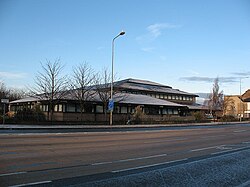
The late 20th century brought further structural changes. In 1986, the paper adopted the tabloid format and formally rebranded as the Hull Daily Mail. By 1989, the company vacated the Jameson Street offices for a new complex at 'Blundell's Corner', located at the junction of Spring Bank and Beverley Road.
The Digital Transition and Corporate Evolution
The turn of the millennium marked the paper's entry into the digital age. The Hull Daily Mail launched its website in 1998, followed by the UK's first online video journalism service for a local newspaper in 2006. In 2007, the sports-focused website Sportshull was introduced.
A visual overhaul occurred in 2015, introducing a new logo and design for both print and digital platforms, alongside the launch of weekend supplements and 'The View', a TV and entertainment guide.
Corporate restructuring under Trinity Mirror (which rebranded as Reach plc in May 2018) led to expanded editorial roles. In February 2016, editor Neil Hodgkinson became editor-in-chief for the Humber and Lincolnshire regions, overseeing the Grimsby Telegraph, Scunthorpe Telegraph, and Lincolnshire Echo. His portfolio expanded further in March 2018 to include North East titles such as the Chronicle, Journal, and Teesside Gazette.
Following the Trinity Mirror takeover in 2017, the website's banner head was changed to Hull Live, marking the current era of the publication's digital-first strategy.
Key Facts
- Founded: May 29, 1787 (as Hull Packet and Humber Gazette).
- Daily Launch: September 29, 1885.
- Original Price: 7d per issue for the early Hull Packet.
- Digital Milestone: Launched the first local newspaper online video journalism service in the UK (2006).
- Current Branding: The website operates as Hull Live under Reach plc.
| Year | Event/Change | Key Detail |
|---|---|---|
| 1787 | Establishment | Founded as Hull Packet and Humber Gazette |
| 1885 | Daily Launch | First Hull Daily Mail edition published |
| 1926 | Relocation | Moved to 'Mail Buildings' on Jameson Street |
| 1986 | Format Change | Adopted tabloid format |
| 1989 | Relocation | Moved to 'Blundell's Corner' |
| 1998 | Digital Launch | Official website launched |
| 2017 | Rebranding | Website banner changed to Hull Live |
Frequently Asked Questions
What was the original name of the Hull Daily Mail?
The publication originated as the Hull Packet and Humber Gazette, established on May 29, 1787.
When did the newspaper transition to a daily format?
The first edition of the Hull Daily Mail was published on September 29, 1885, after a consortium of businessmen purchased the Hull Packet.
What is the relationship between the Hull Daily Mail and Hull Live?
Hull Live is the current digital branding of the Hull Daily Mail website, following the company's takeover by Trinity Mirror (now Reach plc) in 2017.
Where were the newspaper's offices located before 1989?
Prior to moving to Blundell's Corner in 1989, the newspaper was based in the 'Mail Buildings' on Jameson Street, where it had been located since 1926.
Did the Hull Daily Mail have a political bias?
In its early years, the paper declared an editorial stance of defensive and aggressive conservatism, although it maintained that local news reporting was not influenced by national Conservative Party policy.