Daily Mirror History: From Women's Paper to Tabloid Giant
The Daily Mirror stands as one of the most influential names in British journalism. Since its inception in the early 20th century, it has evolved from a niche publication for women into a mass-market powerhouse, mirroring the social and political shifts of the United Kingdom for over a century.
The Early Years: 1903–1913
Launched on November 2, 1903, by Alfred Harmsworth (later known as Lord Northcliffe), the Daily Mirror began as a newspaper specifically for women, run by women. Harmsworth envisioned the publication as a "mirror of feminine life," aiming to be serious without being dull and entertaining without being frivolous. At launch, it cost one penny (approximately 44p in 2025 value).
The initial concept struggled to find an audience. In 1904, Harmsworth pivoted, transforming the paper into a pictorial publication with a broader focus. This transition involved appointing Hamilton Fyfe as editor and dismissing the paper's female journalists. For a brief period between January and April 1904, the masthead was changed to The Daily Illustrated Mirror before reverting to its original name.
The strategy shifted again when the price was lowered to a halfpenny and the masthead was updated to "A paper for men and women." This approach proved successful; circulation grew rapidly, reaching 200,000 copies by issue 269 and eventually hitting 466,000, making it the second-largest morning newspaper of its time.
Expansion and Political Shifts: 1913–1939
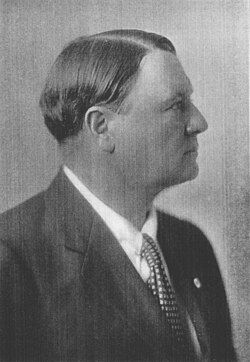
In 1913, Alfred Harmsworth sold the newspaper to his brother, Harold Harmsworth (later Lord Rothermere). Under Rothermere's ownership, the paper continued its ascent, with some issues selling over a million copies a day by 1919. The paper also engaged in high-profile sponsorships, such as the 1924 Women's Olympiad at Stamford Bridge.
During the early 1930s, the Mirror's editorial direction reflected Lord Rothermere's personal friendships with Benito Mussolini and Adolf Hitler. In January 1934, the paper explicitly urged readers to join Sir Oswald Mosley's British Union of Fascists. However, this era was also marked by a circulation war with the Daily Herald and Daily Express, which left the Mirror struggling financially.
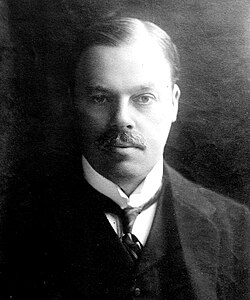
A turning point occurred in 1935 when Rothermere sold the paper to Harry Guy Bartholomew and Hugh Cudlipp. With Cecil King managing finances, the Mirror underwent a radical transformation. It shifted from a conservative, middle-class publication to a left-wing paper catering to the working class. Influenced by New York tabloids, the Mirror adopted larger headlines, shorter stories, and more illustrations. By 1939, daily sales reached 1.4 million copies.
The Golden Age and Market Dominance
During World War II, the Mirror positioned itself as the voice of the ordinary soldier and civilian. While it faced threats of closure due to controversial cartoons that offended Winston Churchill and Herbert Morrison, it remained a powerful force. In the 1945 general election, the paper strongly backed the Labour Party, contributing to their landslide victory.
By the late 1940s, circulation soared to 4.5 million copies daily. The paper reached its absolute peak in the mid-1960s, selling over 5 million copies a day and dominating the British market. Its success served as a model for the German tabloid Bild, founded in 1952.
In 1960, the Mirror acquired the Daily Herald via the purchase of Odhams, leading to the creation of the International Publishing Corporation (IPC). In 1964, the Mirror relaunched the Herald as a mid-market paper called The Sun. When this failed, it was sold to Rupert Murdoch, who transformed it into a sensationalist tabloid and the Mirror's primary competitor.
Modern Era: Crisis and Controversy (1978–2004)
The tide turned in 1978 when The Sun overtook the Mirror in circulation. The paper was sold to Robert Maxwell in 1984 and introduced color printing in 1988. Following Maxwell's death in 1991, the company faced a period of instability and cost-cutting under CEO David Montgomery, eventually merging with Trinity to form Trinity Mirror in 1999.
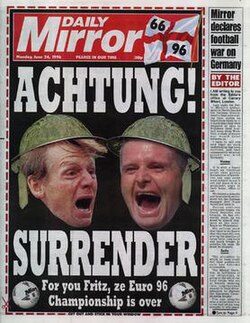
The editorship of Piers Morgan (1995–2004) was marked by high-profile controversies. These included a provocative headline regarding the Euro 96 football championships and a financial scandal involving the "City Slickers" column and shares in the company Viglen.
In 2002, the Mirror attempted to move toward a mid-market identity, changing its logo from red to black to distance itself from the "red top" (sensationalist tabloid) image. During this time, the paper strongly opposed the 2003 invasion of Iraq. However, Morgan was fired in May 2004 after the paper published fake photographs allegedly showing British soldiers abusing Iraqi prisoners.
The 21st Century and Digital Transition
Following the departure of Piers Morgan, Richard Wallace took over as editor in 2004. The paper continued to navigate a declining circulation market shared by all tabloids. In 2012, Trinity Mirror merged the Daily Mirror and Sunday Mirror into a single seven-day title under editor Lloyd Embley.
In 2018, Reach plc acquired Northern & Shell, leading to further restructuring. Alison Phillips was appointed editor of the Daily Mirror, while Lloyd Embley became editor-in-chief of the group. Expanding its global reach, MGN Ltd and Reach plc launched The Mirror US in August 2023, based in New York City.
Key Facts
- Founded: November 2, 1903, by Alfred Harmsworth.
- Peak Circulation: Over 5 million copies per day in the mid-1960s.
- Major Pivot: Shifted from a women's paper to a working-class, left-wing tabloid in the 1930s.
- Key Competitor: The Sun, which overtook the Mirror in circulation in 1978.
- Current Parent Company: Reach plc.
| Era | Primary Focus/Stance | Key Figure | Notable Milestone |
|---|---|---|---|
| 1903–1913 | Women's interests $\rightarrow$ Pictorial | Alfred Harmsworth | Launch and price drop to halfpenny |
| 1913–1935 | Conservative/Pro-Fascist | Lord Rothermere | Reached 1 million daily copies (1919) |
| 1935–1970s | Left-wing/Working Class | Guy Bartholomew | Peak circulation of 5 million+ |
| 1984–1999 | Corporate Transition | Robert Maxwell | Introduction of color (1988) |
| 1995–2004 | Sensationalist/Anti-War | Piers Morgan | Iraq War opposition; fake photo scandal |
| 2012–Present | Digital/Integrated | Alison Phillips | Launch of The Mirror US (2023) |
Frequently Asked Questions
Who founded the Daily Mirror and why?
Alfred Harmsworth founded the Daily Mirror on November 2, 1903. He originally intended it to be a newspaper for women, run by women, serving as a mirror of feminine life.
When did the Daily Mirror become a working-class paper?
The transition occurred in the late 1930s after Harry Guy Bartholomew and Hugh Cudlipp purchased the paper in 1935, shifting its focus from the middle class to the working class with a left-wing editorial stance.
What is a "red top" newspaper?
A "red top" is a term used to describe sensationalist, mass-market tabloid newspapers. The Daily Mirror attempted to distance itself from this label in 2002 by changing its logo from red to black.
Why was Piers Morgan fired from the Daily Mirror?
Piers Morgan was dismissed on May 14, 2004, after authorizing the publication of photographs that allegedly showed British Army soldiers abusing Iraqi prisoners, which were later proven to be fakes.
How did the Daily Mirror influence other newspapers?
The Mirror's successful tabloid model served as an influential blueprint for the German newspaper Bild, which was founded in 1952 and became Europe's best-selling paper.