Hugo Wast: The Life and Legacy of Gustavo Adolfo Martínez Zuviría
Gustavo Adolfo Martínez Zuviría (1883–1962) was a towering and controversial figure in 20th-century Argentine letters. Writing under the world-famous pseudonym Hugo Wast, he established himself as a prolific novelist and scriptwriter whose work reached thousands of readers across the Spanish-speaking world and beyond.
Born in Córdoba, Argentina, Martínez Zuviría's early life was marked by a move to Santa Fe, where he pursued higher education. He graduated from the University of Santa Fe with a law degree in 1907, though his true passion lay in the written word.
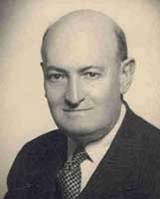
Key Facts
- Real Name: Gustavo Adolfo Martínez Zuviría.
- Pseudonym: Hugo Wast, first used in 1911.
- Major Achievement: Recipient of the National Literary Prize for Desierto de piedra.
- Political Roles: Member of the Argentine Chamber of Deputies (1916) and Minister of Public Instruction (1943).
- Institutional Leadership: Director of the National Library of Argentina from 1931 to 1955.
Literary Career and Commercial Success
Martínez Zuviría first achieved commercial success in 1911 with the publication of Flor de Durazno (Peach Blossom), the novel that introduced the world to his pen name, Hugo Wast. His writing style often leaned toward realism, a trait exemplified in his award-winning novel Desierto de piedra (Stone Desert).
Over several decades, Wast produced an immense body of work, ranging from early pieces like Alegre (1905) to later reflections such as Autobiografía del Hijito que no Nació (1963). His popularity was such that many of his works were translated into English, including The House Of The Ravens and Black Valley.
Political Influence and Ideology
Beyond literature, Wast was deeply embedded in the political and religious currents of his time. In 1916, he was elected to the Argentine Chamber of Deputies as a Conservative. He was a proponent of integrisme, a Catholic nationalist doctrine associated with the National Front that sought to integrate Catholic principles into the state.
His ideological convictions often manifested in inflammatory ways. He was known for his antisemitism, most notably expressed in his work Oro (Gold). This blend of religious fervor and nationalism defined much of his public persona.
Impact on Argentine Education
In 1943, Wast was appointed Minister of Public Instruction under the military government of General Pedro Ramírez. During his tenure, he made a significant impact by reinstating religious education in public schools, effectively ending a sixty-year tradition of secularism in the Argentine educational system.
Institutional Leadership and Final Years
Wast served as the director of the National Library of Argentina starting in 1931. He held this prestigious position for over two decades; however, his tenure ended in 1955. His dismissal was the result of a deterioration in relations between the Catholic Church and President Juan Perón.
Gustavo Adolfo Martínez Zuviría passed away in Buenos Aires in 1962, leaving behind a complex legacy as both a literary master and a polarizing political figure.
Summary of Life and Works
| Category | Details |
|---|---|
| Lifespan | October 23, 1883 – March 28, 1962 |
| Education | Law Degree, University of Santa Fe (1907) |
| Notable Novels | Flor de Durazno, Desierto de piedra, Oro |
| Key Positions | Director of National Library, Minister of Public Instruction |
| Ideology | Conservative, Catholic Nationalist (Integrisme) |
Frequently Asked Questions
Who was Hugo Wast?
Hugo Wast was the pseudonym of Gustavo Adolfo Martínez Zuviría, a famous Argentine novelist, scriptwriter, and politician who served as the director of the National Library of Argentina.
What was Wast's most successful early work?
His first major commercial success was the 1911 novel Flor de Durazno (Peach Blossom).
How did Hugo Wast influence Argentine education?
As Minister of Public Instruction in 1943, he reinstated religious education in public schools, breaking a sixty-year secular tradition.
What is "integrisme" in the context of Wast's life?
Integrisme refers to a Catholic nationalist doctrine associated with the National Front, which Wast followed and integrated into his ideological views.
Why was he removed from the National Library?
He was dismissed as Director of the National Library in 1955 due to the souring of relations between President Juan Perón and the Catholic Church.