House of Lords
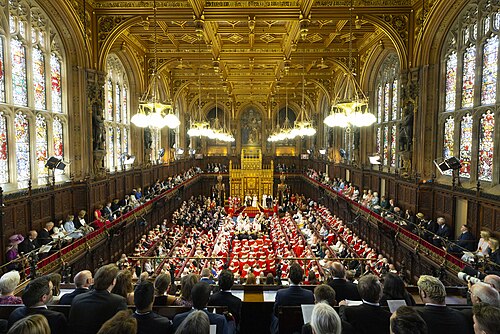
The House of Lords serves as the upper house of the Parliament of the United Kingdom. Based in the Palace of Westminster in London, it plays a critical role in the UK's bicameral system, providing a layer of scrutiny and revision to legislation proposed by the House of Commons. Unlike the elected lower house, the House of Lords is composed of appointed and ex officio members, reflecting a complex blend of historical tradition and modern democratic reform.
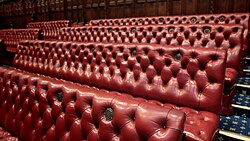
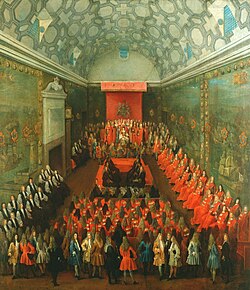
The chamber is visually distinct, characterized by its red benches, which contrast with the green benches of the House of Commons.
Key Facts
- Current Membership: 770 members (as of May 2026).
- Leadership: Led by the Lord Speaker (Lord Forsyth of Drumlean since February 2026).
- Composition: Consists of Lords Spiritual (bishops) and Lords Temporal (life peers).
- Term Length: Life peers serve for life; Lords Spiritual serve for the duration of their tenure as diocesan bishops.
- Hereditary Peers: Completely abolished as of 2026.
Structure and Membership
The membership of the House of Lords is not fixed, meaning the number of peers can fluctuate. As of May 2026, the house contains 770 sitting members. These members are divided into two primary categories: the Lords Spiritual and the Lords Temporal.
Lords Spiritual
The Lords Spiritual are senior bishops of the Church of England. There are currently 23 bishops who hold seats in the house by virtue of their ecclesiastical office.
Lords Temporal
The Lords Temporal make up the vast majority of the house. This group primarily consists of life peers—individuals appointed to the house for their lifetime based on merit or political contribution. The political distribution among Lords Temporal includes:
- Conservative Party: 244 members
- Labour Party: 216 members
- Crossbenchers: 154 members (independent peers who do not align with a political party)
- Liberal Democrats: 74 members
- Non-affiliated: 44 members
- Other smaller groups including the DUP, UUP, Green Party, and Plaid Cymru.
Historical Evolution and Reform
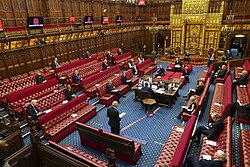
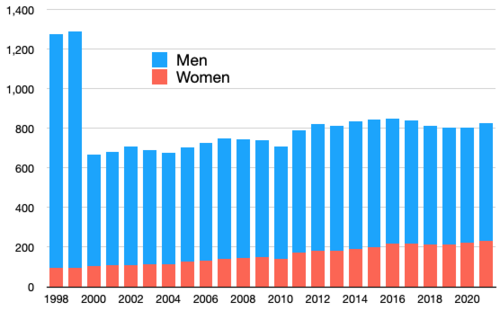
The House of Lords has undergone significant transformations to align with the advent of democratic politics in the United Kingdom. Historically, the chamber was dominated by hereditary peers—those who inherited their titles. However, this was increasingly viewed as an anachronism.
The Shift from Hereditary Power
Major reforms began with the Reform Acts between 1832 and 1928. A pivotal moment occurred with the Parliament Act 1911, which limited the power of the Lords to veto legislation, following a political crisis sparked by the rejection of the "People's Budget" in 1909.
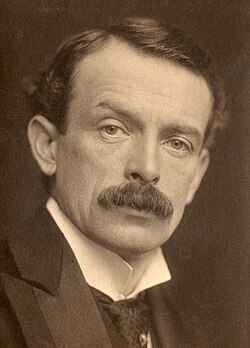
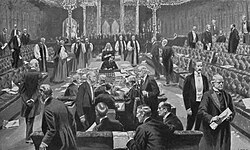
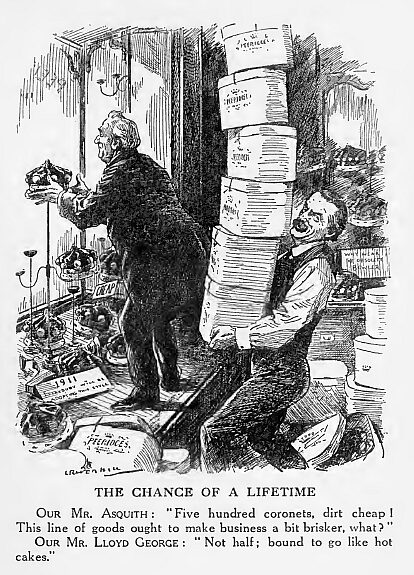
In 1999, the House of Lords Act drastically reduced the number of hereditary peers, limiting them to just 92. This remaining group was eventually abolished entirely in 2026, completing the transition to a house primarily composed of appointed life peers.
Modern Reforms and Governance
Recent decades have seen further refinements, including the House of Lords Reform Act 2014 and the House of Lords (Expulsion and Suspension) Act 2015, the latter of which provided mechanisms to remove members for misconduct. Efforts to introduce a fully elected chamber, such as the 2012 Reform Bill proposed by Nick Clegg, were abandoned due to internal political opposition.
Functions and Leadership
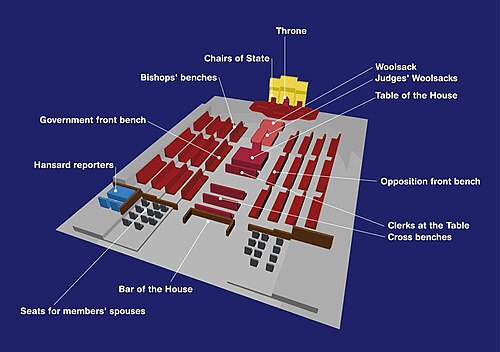
The House of Lords focuses on legislative scrutiny, acting as a revising chamber that suggests amendments to bills. While it cannot permanently block legislation passed by the Commons, it can delay it and force the government to reconsider specific clauses.
Leadership Roles
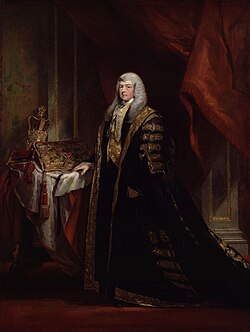
The house is presided over by the Lord Speaker. Other key roles include the Leader of the House (currently Baroness Smith of Basildon) and the Government Chief Whip. The Lord Chancellor historically presided over the house in distinctive black-and-gold robes.
The Royal Connection
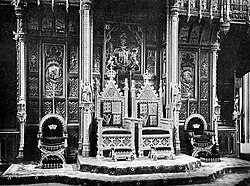
The Sovereign remains a central part of the constitutional concept known as the King-in-Parliament. During the State Opening of Parliament, the Monarch addresses the house from the royal thrones, where the Sovereign's throne is positioned slightly higher than the consort's.
Summary of House of Lords Composition
| Category | Member Type | Approx. Count | Term Length |
|---|---|---|---|
| Lords Spiritual | Bishops | 23 | Tenure as Bishop |
| Lords Temporal | Life Peers | 747 | For Life |
| Hereditary Peers | Inherited Titles | 0 | Abolished 2026 |
Frequently Asked Questions
How are members of the House of Lords appointed?
Most members are appointed as life peers based on their contributions to public life or political service. A small number of seats are held by senior bishops of the Church of England (Lords Spiritual).
Can the House of Lords block a law?
The House of Lords primarily acts as a revising chamber. While it can suggest amendments and delay legislation, it generally cannot permanently block a bill that the House of Commons is determined to pass.
What happened to the hereditary peers?
The majority of hereditary peers were removed in 1999. A small number of 92 remained until 2026, at which point hereditary membership was abolished entirely.
What is the difference between a Life Peer and a Crossbencher?
A life peer is anyone appointed for life; a Crossbencher is a specific type of life peer who chooses not to affiliate with any political party, remaining independent during votes and debates.
Who leads the House of Lords?
The house is presided over by the Lord Speaker, while the government's business is managed by the Leader of the House of Lords.