Hong Kong Social and Political Tensions: A History of Mainland Relations
Over the past decade, the relationship between Hong Kong and mainland China has been marked by a series of complex social, economic, and political frictions. These tensions often stem from differing cultural perspectives, disputes over resource allocation, and concerns regarding the city's autonomy and legal protections.
Key Facts
- Parallel Trading: Increased imports of infant formula and household goods led to government export restrictions in 2013.
- Birth Tourism: Over 170,000 births occurred between 2001 and 2011 where both parents were mainlanders.
- Legal Disputes: High-profile abductions and the 2019 extradition bill sparked mass protests.
- Border Issues: Significant contraband seizures, including frozen meat, highlight porous border controls.
- Religious Pressure: Recent efforts toward the "Sinicization" of religion have raised concerns over religious freedom.
Social and Economic Friction
Consumer Conflicts and Parallel Trading
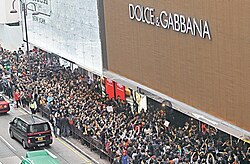
Tensions often manifest in daily commerce. In January 2012, a controversy erupted when reports surfaced that only Hong Kong citizens were prevented from photographing window displays at Dolce & Gabbana outlets. This sparked protests and speculation that the ban was requested by wealthy mainland officials wishing to avoid corruption investigations.
Simultaneously, the rise of parallel traders—individuals who buy goods in Hong Kong to export them to the mainland—created local shortages. This was most evident with infant formula, leading the government to restrict exports to 2 cans (or 1.8 kg) per person per trip starting March 1, 2013.
The "Anchor Baby" Phenomenon
Until 2012, many pregnant mainland women traveled to Hong Kong to give birth so their children could obtain the right of abode (the legal right to live and work in the city) and access social welfare. This put significant pressure on the medical system, leading some locals to use derogatory terms like "locusts" to describe the influx. Between 2001 and 2011, over 170,000 such births occurred. In response, Chief Executive-elect CY Leung implemented a "zero" quota for mainland mothers.
Political and Legal Confrontations
Civil Unrest and the 2019 Protests
Political tensions peaked in mid-2019 following a proposed extradition bill that would have allowed dissidents to be transferred to mainland China. On June 16, 2019, organizers claimed two million people marched in protest.
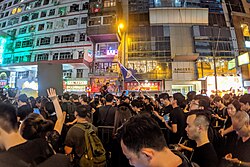
These protests involved frequent clashes between police and citizens. While the COVID-19 pandemic suspended mass gatherings in early 2020, the subsequent introduction of the 2020 national security law significantly reduced the frequency of sporadic protests.
Abductions and Legal Sovereignty
Concerns over the rule of law were heightened by several alleged abductions by mainland authorities. Notable cases include Gu Zhuoheng in May 2015, Lee Bo in December 2015, and businessman Xiao Jianhua in January 2017. These incidents suggested that mainland authorities could operate within Hong Kong's borders without following standard legal or immigration protocols.
Institutional and Cultural Clashes
Cultural friction has extended to academia and sports. In 2017, "Democracy walls" at the Chinese University of Hong Kong and other institutions became flashpoints for debates over Hong Kong independence. In sports, the Chinese Football Association faced backlash in 2015 for posters that appeared to mock the ethnic diversity of the Hong Kong football team.
Border Security and Governance
Smuggling and Porous Borders
As a free port, Hong Kong is a hub for smuggling into mainland China to avoid tariffs. Customs officers have seized massive quantities of contraband, including 1,050 tonnes in 2019 and 2,500 tonnes of frozen meat in the first half of 2020. These operations are dangerous; in January 2020, three customs officers died when their boat capsized during an anti-smuggling mission.
Government Property and Religious Freedom
The Central People's Government has faced criticism for its property acquisitions, such as the secret opening of a radar station at Tai Mo Shan and the purchase of residential housing via Newman Investment, which avoided stamp duties. Furthermore, the push for Sinicization—the adoption of "Chinese characteristics" in religion—has led to tensions within the Catholic Church, including the 2022 arrest of retired Cardinal Joseph Zen.
| Category | Key Issue | Impact/Outcome |
|---|---|---|
| Economic | Parallel Trading | Milk powder export limits (2013) |
| Social | Anchor Babies | Zero quota for mainland mothers |
| Political | Extradition Bill | Mass protests in 2019 |
| Legal | Abductions | Erosion of trust in legal autonomy |
| Security | Smuggling | High contraband seizures; officer fatalities |
Frequently Asked Questions
What were "anchor babies" in the Hong Kong context?
Anchor babies were children born in Hong Kong to mainland Chinese parents. The goal was to secure the right of abode and access to social welfare, which caused strain on the city's healthcare system.
Why did the 2019 protests occur?
The protests were primarily triggered by a proposed extradition bill that would have allowed the transfer of individuals to mainland China, which many feared would be used to target political dissidents.
What is "parallel trading"?
Parallel trading involves individuals buying goods (such as infant formula) in Hong Kong to sell them in mainland China, taking advantage of the lack of customs tariffs in Hong Kong.
What does "Sinicization" of religion mean?
Sinicization refers to the process of aligning religious practices and beliefs with "Chinese characteristics" and the views of the Chinese Communist Party.
How did the government handle the milk powder shortage?
Starting March 1, 2013, the government limited the amount of milk powder a person could carry across the border or on the MTR to 2 cans or 1.8 kg per trip.