Lufsig: The IKEA Wolf That Became a Political Symbol
In the world of retail, few products transition from a simple children's toy to a potent political statement as rapidly as Lufsig. Originally designed as a cuddly companion for children, this IKEA stuffed wolf unexpectedly became a focal point of political dissent in Hong Kong, blending fairy tale inspiration with real-world geopolitical tension.
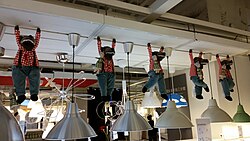
Lufsig was created by German designer Silke Leffler, drawing inspiration from the classic fairy tale "Little Red Riding Hood." The toy depicts the Big Bad Wolf wearing a red checked shirt and braces, featuring a small grandmother figure that fits inside the wolf's belly. Beyond its design, Lufsig was part of IKEA's 10th annual Soft Toys for Education campaign, an initiative where a portion of profits from toys and storybooks is donated to UNICEF and Save the Children.
Key Facts
- Designer: Silke Leffler (Germany).
- Meaning: The name "Lufsig" comes from the Swedish verb lufsa, meaning "to lumber."
- Charity: Sold as part of the Soft Toys for Education campaign benefiting UNICEF and Save the Children.
- Political Role: Became a symbol of opposition to former Hong Kong Chief Executive Leung Chun-ying.
- Naming Convention: IKEA names children's products after animals, birds, insects, or descriptive words.
The Transformation into a Protest Symbol
The shift from toy to symbol occurred in December 2013. At the time, Leung Chun-ying, the Chief Executive of Hong Kong, faced significant criticism and low approval ratings. His critics had nicknamed him "the Wolf," a pun on his surname and a reference to his perceived cunning nature.
On December 7, 2013, during a town hall meeting, a protester threw a Lufsig plush toy at Leung. This singular act sparked a massive surge in the toy's popularity. Lufsig quickly sold out at all three IKEA locations in Hong Kong and began disappearing from shelves in other international markets, including Singapore, Taipei, and cities like Toronto and Vancouver in Canada.
The Linguistic Controversy
The popularity of the toy was further amplified by a linguistic coincidence. In mainland China, the toy was transliterated as "路姆西" (Lù mǔ xi). When pronounced in Cantonese (louh móuh sāi), the name sounded remarkably similar to a vulgar profanity referring to a mother's anatomy. Specifically, the phrase "throw your Lufsig" became a coded pun for a highly offensive Cantonese insult.
Market Frenzy and Aftermath
The "Lufsig fever" led to significant secondary market activity. On the Chinese platform Taobao, some sellers flipped the dolls for CN¥ 188, more than triple the official retail price of CN¥ 59. In Hong Kong, some dolls were auctioned for HK$ 689, a symbolic number representing the votes Leung received during his election.
IKEA eventually addressed the linguistic issue, calling the pun "unfortunate." They renamed the toy in Chinese to "路福西" (Lufuxi), incorporating a character that means "good fortune." Interestingly, Leung Chun-ying responded to the trend on December 11, 2013, by posting a photo of a Lufsig he bought for his daughter, praising the creativity of the Hong Kong people.
Lufsig Product Summary
| Feature | Details |
|---|---|
| Origin | IKEA (Swedish furniture chain) |
| Design Inspiration | Little Red Riding Hood |
| Key Components | Wolf in checked shirt and braces; removable grandmother |
| Original Chinese Name | 路姆西 (Lù mǔ xi) |
| Revised Chinese Name | 路福西 (Lufuxi) |
| Primary Symbolism | Anti-government protest in Hong Kong (2013) |
Frequently Asked Questions
What does the name Lufsig mean?
Lufsig is derived from the Swedish verb "lufsa," which means "to lumber." This fits IKEA's naming convention for children's products, which often use descriptive words or animals.
Why was Lufsig thrown at Leung Chun-ying?
Leung Chun-ying had been nicknamed "the Wolf" by his critics due to his perceived cunningness and as a pun on his surname. The Lufsig toy, being a wolf, became a physical manifestation of this nickname during a protest.
Why was the toy's name changed in China?
The original Cantonese transliteration of Lufsig sounded like a vulgar profanity. IKEA changed the name to include a character meaning "good fortune" to remove the unintended offensive connotation.
Was Lufsig sold for charity?
Yes, Lufsig was part of the Soft Toys for Education campaign. IKEA donated a portion of the profits from these toys to UNICEF and Save the Children.
Where else did the toy become popular besides Hong Kong?
Due to the political events in Hong Kong, the toy saw a surge in demand and sold out in several international locations, including Taipei, Singapore, and IKEA stores in Toronto and Vancouver, Canada.