IKEA: The Global Evolution of Ready-to-Assemble Furniture
Founded on July 28, 1943, by Ingvar Kamprad in Sweden, IKEA has grown from a small business into a global retail powerhouse. By pioneering the concept of ready-to-assemble (RTA) furniture—often referred to as flatpack—IKEA revolutionized how people furnish their homes, combining functional design with affordability and accessibility.
Today, the company operates as a private entity under a complex corporate structure involving the Inter IKEA Group and INGKA Holding. With a massive global footprint, IKEA continues to adapt its business model to meet the needs of diverse urban environments and a growing demand for sustainable living.

Key Facts
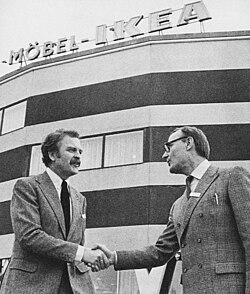
- Founded: 1943 in Sweden by Ingvar Kamprad.
- Global Reach: 504 locations worldwide as of 2025.
- Financials: Reported revenue of €44.6 billion in 2025.
- Workforce: Employs approximately 220,000 people.
- Core Product: Ready-to-assemble furniture and homeware.
- Sustainability: Consumes roughly 21 million cubic meters of wood annually, focusing on responsibly managed forests.
Global Expansion and Store Formats
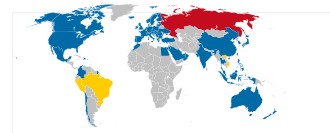
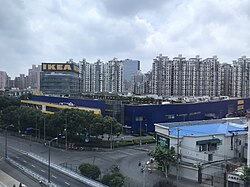
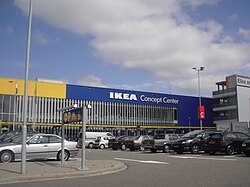
IKEA's journey of international expansion began in 1958 in its home country of Sweden. Over the decades, it expanded across Europe, North America, and Asia. While the traditional large-scale warehouse remains a staple, the company has diversified its store formats to reach more customers.
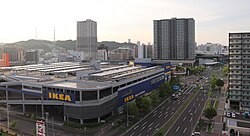
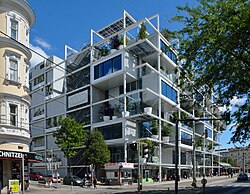
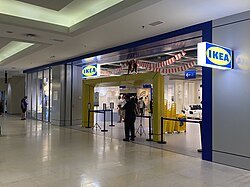
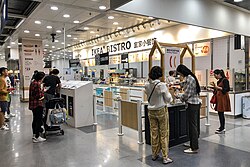
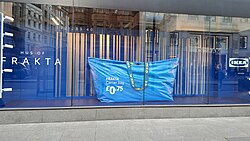
These formats include inner-city stores designed for urban dwellers, small-sized stores, and specialized planning studios. For example, the company has adapted its approach in the Japanese market and introduced integrated greenery in city-center locations like Vienna.
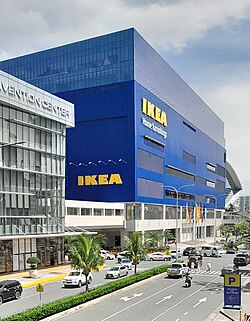
Store Distribution Highlights
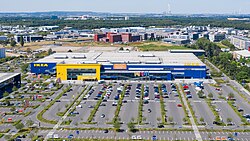
From the world's largest store in Pasay, Metro Manila, Philippines, to compact city-center outlets in Southampton, England, IKEA's physical presence is strategically varied.
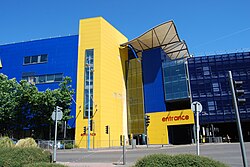
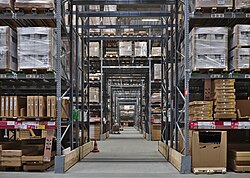
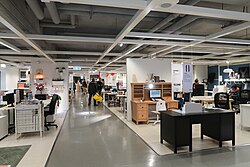
The shopping experience is characterized by a curated path through showrooms, leading to the self-service warehouse where customers collect their flatpacked items.
Products, Services, and the "IKEA Effect"
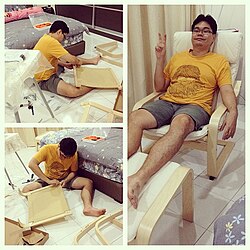
IKEA is best known for its furniture and homeware, but its influence extends to psychology through the "IKEA Effect," a phenomenon where consumers place a higher value on products they partially created themselves through assembly.
Naming and Smart Home Integration
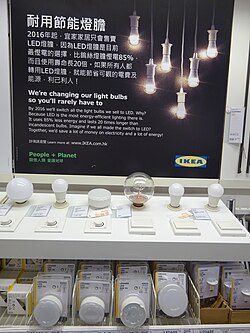
The company uses a unique naming system for its products, often utilizing Swedish words to maintain its cultural identity. Beyond traditional furniture, IKEA has ventured into smart home technology, evolving its product lines from the Trådfri gateway to the newer Dirigera system, alongside various smart plugs, bulbs, and sensors.

Beyond Furniture: Food and Services
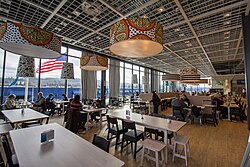
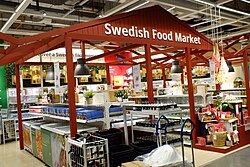
The IKEA experience is incomplete without its food offerings. The IKEA restaurant and Swedish Food Market are integral to the store visit, famously serving Swedish meatballs and other regional delicacies.

Sustainability and Environmental Initiatives
Given its massive consumption of raw materials, IKEA has implemented several environmental initiatives to reduce its ecological footprint. The company focuses on the product life cycle, from sourcing wood from responsibly managed forests to implementing recycling programs.
![IKEA consumes roughly 21 million cubic meters of wood annually[294]](/images/34/41/344190e0859c2eaff14a7cac4ca11e89f41c6a0deb9e6db8aee1045d847ef246.jpg)
Green Innovations
- Waste Reduction: Producing roughly 100 million pencils annually from leftover wood scraps.
- Material Science: Creating the OGLA chair from 100% post-consumer plastic waste and minimizing the use of formaldehyde and acid-curing lacquers.
- Logistics: Transitioning to electric delivery vans to reduce carbon emissions.
- Reforestation: Funding the INIKEA Forest Rehabilitation Project in Sabah, Malaysia.

Corporate Overview
| Category | Details |
|---|---|
| Headquarters | Älmhult & Malmö (Sweden), Delft (Netherlands) |
| Key Leadership | Jesper Brodin (INGKA Holding), Jon Abrahamsson Ring (Inter IKEA Holding) |
| Revenue | €44.6 Billion |
| Employee Count | 220,000 |
| Primary Industry | Retail / Home Furnishings |
Marketing and Cultural Impact
For 70 years, the IKEA print catalogue was a global icon of home design before being retired in 2021. The company now leverages digital tools like the IKEA Place app and the IKEA Family loyalty program to engage customers.

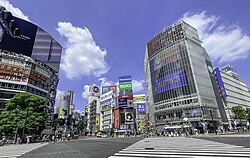
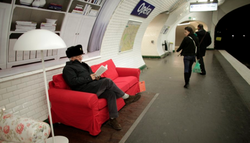
IKEA's marketing is visible worldwide, from the Shibuya Crossing in Tokyo to the Paris Métro, cementing its status as a cultural touchstone in modern interior design.
Frequently Asked Questions
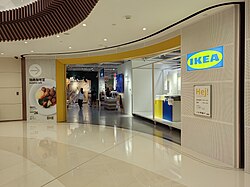
![The first US Planning Studio located in Manhattan, United States, in 2019, which closed in January 2022[190]](/images/c1/ac/c1acd6ac38a2f20a9c69835621aba436c65c66ab6939e72456e867b3881c2230.jpg)




Who founded IKEA and when?
IKEA was founded by Ingvar Kamprad on July 28, 1943, in Sweden.
What is the "IKEA Effect"?
The IKEA Effect is a cognitive bias in which consumers place a disproportionately high value on products they helped create, such as furniture they assembled themselves.
How does IKEA handle environmental sustainability?
IKEA uses wood from responsibly managed forests, produces items from post-consumer plastic waste, utilizes wood scraps to make pencils, and employs electric vehicles for deliveries.
Where is the largest IKEA store located?
The world's largest IKEA store is located in Pasay, Metro Manila, Philippines.
Does IKEA still produce a print catalogue?
No, IKEA retired its print catalogue in 2021 after a 70-year run, shifting its focus toward digital platforms.