Honeysuckle: A Comprehensive Look at the Lonicera Genus
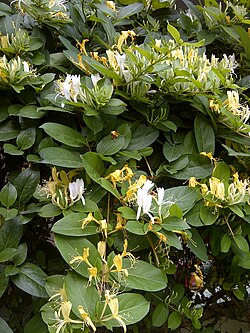
Honeysuckles are captivating plants known for their arching shrubs, twining vines, and intoxicating fragrances. Belonging to the genus Lonicera within the family Caprifoliaceae, these plants are native to the northern latitudes of North America, Eurasia, and North Africa. With 158 accepted species, the genus ranges from delicate garden ornamentals to aggressive ecological invaders.
The name "honeysuckle" refers to the sweet, edible nectar found within its tubular flowers, while the scientific name Lonicera honors Adam Lonicer, a botanist from the Renaissance era.
Key Facts
- Genus: Lonicera (158 accepted species).
- Distribution: Native to North America, Eurasia, and North Africa.
- Growth Habit: Primarily hardy twining climbers, though some are shrubby.
- Key Species: Includes L. japonica (Japanese honeysuckle) and L. sempervirens (coral honeysuckle).
- Ecological Impact: Several species are highly invasive in North America, Europe, and Australia.
- Uses: Ornamental gardening, traditional Chinese medicine, and tea scenting.
Botanical Description
Most Lonicera species are hardy climbers, though a minority exhibit a shrubby habit. While most are deciduous, some species remain evergreen. Their leaves are simple, oval, and opposite, typically measuring between 1 and 10 cm in length. A few species, such as L. hildebrandiana and L. etrusca, are tender and restricted to subtropical zones.
The flowers are often bilaterally symmetrical and highly fragrant, typically appearing in clusters of two. This characteristic has earned some North American species the common name "twinberry." The stems are strongly fibrous, a trait that has historically made them useful for textiles and binding.
The fruit consists of spherical or elongated berries in shades of red, blue, or black. While most honeysuckle berries are mildly poisonous, certain species like Lonicera caerulea produce edible berries grown for commercial and home use.
Invasive Species and Ecological Impact
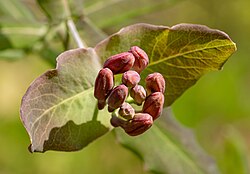
Due to their attractiveness to wildlife and aggressive growth patterns, several honeysuckle species have become invasive outside their native ranges. Lonicera japonica (Japanese honeysuckle) is a primary example; introduced to North America in 1806, it was widely cultivated by the 1860s and recognized as invasive in Ontario forests by 2007.
Other invasive species include L. maackii, L. morrowii, L. tatarica, and the hybrid L. × bella. As of 2026, these plants are established across 25 American states and throughout Canada, from Alberta to Atlantic Canada.
Cultivation and Commercial Uses
Gardeners value honeysuckles for their ability to cover walls and outbuildings with profuse early-summer blooms. For optimal growth, hardy climbing types require shade for their roots and sunlight or light shade for their flowering tops. The small-leaved L. nitida is frequently used to create low, narrow hedges.
Beyond ornamentation, L. japonica is cultivated as a commercial crop for traditional Chinese medicine. Additionally, since the Qing dynasty, honeysuckle has been used to scent Chinese teas, similar to the process used for Jasmine tea.
Award-Winning Hybrids
The Royal Horticultural Society has granted the Award of Garden Merit to several hybrids, including:
- L. × heckrottii 'Gold Flame'
- L. 'Mandarin'
- L. × purpusii 'Winter Beauty'
- L. × tellmanniana
Phytochemicals and Biological Interactions
Research into the edible Lonicera caerulea var. kamtschatica has revealed a complex chemical profile. The berries contain iridoids, anthocyanins, flavonols, flavanonols, flavones, flavan-3-ols, and phenolic acids. While sugars provide sweetness, organic acids and polyphenols create the characteristic tartness.
Honeysuckles also maintain vital relationships with insects. Many Lepidoptera (butterflies and moths) rely on them as a food source. For instance, the nocturnal elephant hawk moth (Deilephila elpenor) is specifically attracted to the nectar of honeysuckle flowers at night.
| Species Name | Common Name | Key Characteristic |
|---|---|---|
| L. japonica | Japanese Honeysuckle | Aggressive generalist; invasive in many regions. |
| L. sempervirens | Coral/Trumpet Honeysuckle | Attracts hummingbirds; ornamental. |
| L. caerulea | Blue-berried Honeysuckle | Produces edible berries for commerce. |
| L. periclymenum | Common Honeysuckle/Woodbine | Widely known European species. |
| L. ciliosa | Orange Honeysuckle | Highly attractive to hummingbirds. |
Frequently Asked Questions
Are all honeysuckle berries edible?
No. In most species, the berries are mildly poisonous. However, a few species, most notably Lonicera caerulea, produce berries that are edible and grown for home and commercial use.
Why is Japanese honeysuckle considered invasive?
Lonicera japonica is an aggressive generalist species. Because its berries are attractive to wildlife, it spreads rapidly outside its native Asian range, displacing native flora in North America, Europe, and other continents.
What attracts hummingbirds to honeysuckle?
Hummingbirds are attracted to the tubular flowers of certain species, particularly L. sempervirens and L. ciliosa, which provide accessible nectar.
How should I plant honeysuckle in my garden?
For hardy climbing varieties, it is best to keep the roots in the shade while ensuring the flowering tops receive sunlight or very light shade.
What is the origin of the name Lonicera?
The genus name Lonicera is derived from Adam Lonicer, a botanist who lived during the Renaissance.