Homo: The Evolutionary Journey of the Human Genus
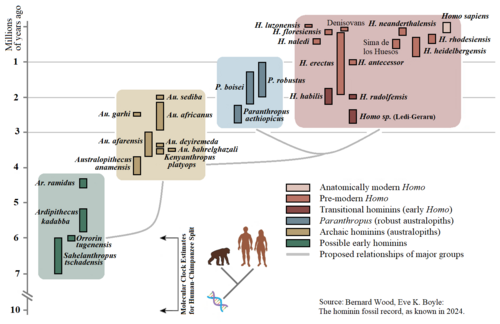
The genus Homo represents the lineage of modern humans and our closest extinct relatives. Spanning from approximately 2.8 million years ago to the present, this group is characterized by a trend toward increasing brain size, the development of complex tool use, and a wide-ranging dispersal across the globe. From the early pioneers in Africa to the diverse species that once inhabited Europe and Asia, the story of Homo is one of adaptation and survival.
Taxonomically, the genus belongs to the subtribe Hominina. The name was first coined by Carl Linnaeus in 1758, with Homo sapiens serving as the type species. Over the centuries, the discovery of fossils such as H. neanderthalensis (1864) and H. erectus (1892) has expanded our understanding of the human family tree.
Key Facts
- Temporal Range: Approximately 2.8 million years ago (Piacenzian) to the present.
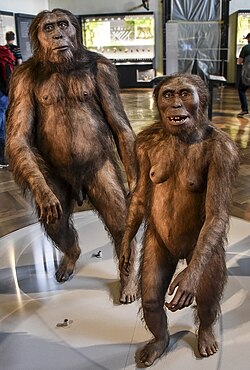
- Origin: The genus emerged from earlier hominins, specifically within the lineage of Australopithecus.
- Diversity: Includes numerous extinct species such as H. erectus, H. neanderthalensis, and H. floresiensis.
- Key Traits: General trends include increased cranial capacity (brain volume) and bipedalism.
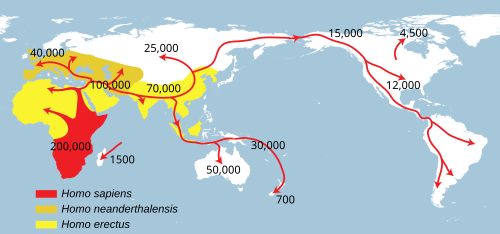
- Global Reach: While originating in Africa, species like H. erectus and H. sapiens successfully migrated into Eurasia and beyond.
The Evolutionary Path of the Genus Homo
The transition from Australopithecus (early bipedal hominins) to the genus Homo marks a significant shift in human evolution. This transition is characterized by a move toward larger brains and more sophisticated survival strategies.

Early Ancestors: H. habilis and H. rudolfensis
Some of the earliest members of the genus, such as Homo habilis and Homo rudolfensis, appeared between 2.1 and 1.5 million years ago. H. habilis, found in Tanzania, is often associated with early stone tool use, though its membership within the genus Homo is sometimes debated by researchers. These early species possessed cranial capacities ranging from 510 to 700 cm³.
The Global Pioneer: Homo erectus
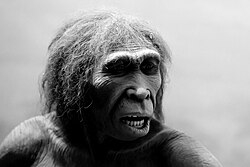
Homo erectus represents a major leap in evolution, appearing roughly 2 million years ago. This species was the first to exhibit body proportions similar to modern humans, with adult heights reaching up to 180 cm. H. erectus was also the first hominin to disperse widely out of Africa into Eurasia.
A closely related African form, Homo ergaster, is often viewed as the African version of H. erectus, with a cranial capacity between 700 and 850 cm³.
Middle Pleistocene Transitions
As the genus evolved, Homo heidelbergensis emerged between 600,000 and 300,000 years ago. This species is often seen as a common ancestor to both modern humans and Neanderthals. Evidence suggests H. heidelbergensis may have evolved from H. ergaster, possibly following a population bottleneck between 800,000 and 900,000 years ago.

The Rise of Modern Humans and Cousins
The later stages of the Homo lineage saw the emergence of specialized species. Homo neanderthalensis adapted to the cold climates of Europe and Western Asia, possessing a large, robust build and a cranial capacity that often exceeded that of modern humans (up to 1,900 cm³). Meanwhile, Homo sapiens emerged approximately 300,000 years ago, eventually becoming the sole surviving member of the genus.
Comparative Analysis of Homo Lineages
The following table summarizes the physical and temporal characteristics of key species within the genus Homo.
| Species | Temporal Range (kya) | Primary Habitat | Cranial Capacity (cm³) | Adult Height |
|---|---|---|---|---|
| H. habilis | 2,100–1,500 | Tanzania | 510–660 | 110–140 cm |
| H. erectus | 2,000–140 | Africa, Eurasia | 850–1,100 | ~180 cm |
| H. antecessor | 1,200–800 | Western Europe | 1,000 | ~175 cm |
| H. floresiensis | 1,000–50 | Indonesia | 400 | ~100 cm |
| H. heidelbergensis | 600–300 | Europe, Africa | 1,100–1,400 | ~180 cm |
| H. neanderthalensis | 240–40 | Europe, W. Asia | 1,200–1,900 | ~170 cm |
| H. sapiens | 300–Present | Worldwide | 950–1,800 | 150–190 cm |
Frequently Asked Questions
What is the difference between Homininae and Hominini?
Homininae is a subfamily that includes humans, chimpanzees, and gorillas. Hominini is a more specific tribe within that subfamily, which separates the lineage leading to humans (Hominina) and chimpanzees (Panina) from the gorillas (Gorillini).
Why is the classification of Homo habilis debated?
Some researchers argue that the adaptive coherence of the genus Homo is compromised if H. habilis is included, suggesting that the genus actually began with H. erectus.
Which Homo species had the largest brain?
Based on the fossil record, Homo neanderthalensis exhibited the highest cranial capacity, with some individuals reaching up to 1,900 cm³, which is larger than the average for modern Homo sapiens.
How did Homo species disperse across the world?
Dispersal occurred in successive waves. Homo erectus was the first to move into Eurasia, followed later by Homo neanderthalensis in Europe and Western Asia, and finally Homo sapiens, who expanded worldwide.
What was Homo floresiensis?
Homo floresiensis was a small-bodied species found in Indonesia, characterized by a height of about 100 cm and a small cranial capacity of approximately 400 cm³, surviving as recently as 50,000 years ago.