Animal Monogamy: Mating Systems and Evolutionary Patterns
In the diverse world of animal behavior, mating systems vary wildly across different species. While many animals are polygamous, some engage in monogamy—a pair bond between two adult animals of the same species. These bonds allow pairs to cohabitate within a specific territory and, in many instances, cooperate to raise their offspring.
Monogamy is not a one-size-fits-all behavior. It can be short-term, lasting only a few breeding seasons, or long-term, extending for many years or even an entire lifetime. To understand how this works in nature, biologists distinguish between the social structure of a pair and their actual genetic output.
Key Facts
- Social Monogamy refers to a pair bond where two animals live together and cooperate, regardless of whether they are each other's only sexual partners.
- Genetic Monogamy occurs when a pair reproduces exclusively with one another.
- Approximately 90% of bird species are socially monogamous, though many are not genetically monogamous.
- Monogamy is rare in mammals, occurring in only 3% to 9% of species.
- Sexual dimorphism (physical differences between males and females) is typically minimal in monogamous species.
Social vs. Genetic Monogamy
One of the most critical distinctions in evolutionary biology is the difference between social and genetic monogamy. Social monogamy involves the behavioral bond—sharing a nest, defending a territory, and caring for young. However, this does not always guarantee that the offspring are sired by the social partner.
For example, in the cichlid fish species Variabilichromis moorii, a monogamous pair will work together to care for their eggs and young. Despite this social bond, genetic testing reveals that not all eggs in the brood are fertilized by the male providing the care.
This phenomenon is particularly common in birds. While roughly 90% of avian species are socially monogamous, researchers have found that most do not practice genetic monogamy.

The Impact of Mating Systems on Physical Traits
Sexual Dimorphism
Sexual dimorphism refers to the systematic difference in form between individuals of different sex in the same species. This is often most visible in body size.
In polygynous species (where one male mates with multiple females), males must compete aggressively for sexual access. This competition favors larger, stronger males, who are more likely to pass their genes to a greater number of offspring. Consequently, polygynous males are often 1.5 to 2.0 times larger than females.
In contrast, monogamous species exhibit little to no sexual dimorphism. Because males and females have more equal access to mates, there is less evolutionary pressure for one sex to be significantly larger than the other.
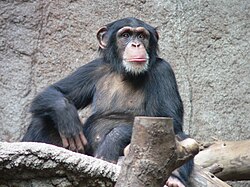
The Evolution of Human Ancestors
Some researchers use sexual dimorphism to trace the evolution of human mating systems. Evidence suggests that Australopithecus, a human ancestor from 2 to 5 million years ago, exhibited significant sexual dimorphism, suggesting a polygamous mating system.
This dimorphism began to decrease over time, reaching levels similar to modern humans around the era of Homo erectus (0.5 to 2 million years ago). This suggests a transition from polygamy toward monogamy during this window, although this theory remains a subject of scientific controversy.
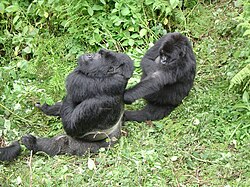
Comparative Monogamy Across Taxa
The prevalence of monogamy varies significantly across different animal groups. While it is a dominant social strategy in birds, it is an outlier in mammals and very rare in amphibians and fish.
| Animal Group | Estimated Prevalence of Social Monogamy | Notes |
|---|---|---|
| Birds | ~90% | High social monogamy; low genetic monogamy. |
| Mammals | 3% – 9% | Relatively rare across the class. |
| Fish & Amphibians | Very Rare | Occurs only in a select few species. |
Frequently Asked Questions
What is the difference between social and genetic monogamy?
Social monogamy is a behavioral relationship where two animals pair up to live together and raise offspring. Genetic monogamy is the biological reality where the pair reproduces exclusively with each other, with no outside mating.
Why are monogamous animals usually similar in size?
Because there is less intense competition between males for access to multiple females, there is no strong evolutionary drive for males to evolve a much larger body size than females, resulting in low sexual dimorphism.
Are most birds genetically monogamous?
No. While about 90% of bird species are socially monogamous, most of them engage in extra-pair copulations, meaning they are not genetically monogamous.
How does sexual dimorphism relate to human evolution?
Researchers believe that the decrease in size differences between males and females from Australopithecus to Homo erectus indicates a shift from a polygamous mating system to a more monogamous one.
Is monogamy common in mammals?
No, it is quite rare in mammals, appearing in only 3% to 9% of mammalian species.