A Comprehensive Guide to Hollyhocks: Exploring the Genus Alcea
Known for their towering presence and vibrant blooms, hollyhocks are a staple in many gardens around the world. Belonging to the Malvaceae (mallow) family, the genus Alcea comprises over 80 different species of flowering plants. While they are often associated with cottage gardens, these plants possess a rich botanical history and a diverse range of characteristics that make them fascinating to both gardeners and scientists alike.
Botanical Characteristics of Alcea
Hollyhocks are highly adaptable plants, appearing as annuals, biennials, or perennials. Most species grow in an erect, unbranched form, reaching upward to create a striking vertical element in landscaping. The foliage is typically covered in a coating of star-shaped hairs, and the leaf blades are often characterized by lobed or toothed edges. These leaves are held by long petioles, which are the stalks that connect the leaf blade to the main stem.
Flowers and Fruit
The flowers of the hollyhock are a primary draw for gardeners. They may appear individually or be arranged in fascicles (small clusters) or racemes (unbranched clusters of flowers along a central stem). The petals are typically notched and can exceed three centimeters in width. While color variety is significant, common hues include pink, white, purple, and yellow.
Once the flowering period concludes, the plant produces a fruit known as a schizocarp. This is a type of dry fruit that, upon maturity, divides into more than 15 distinct sections, each containing a seed. This efficient method of seed dispersal helps ensure the continued presence of the species in their natural habitats.
Species and Varieties
While the genus Alcea is native to Europe and Asia, it is important to note that the "streambank wild hollyhock" found in western North America belongs to a different genus, Iliamna rivularis. Within the true Alcea genus, there is immense variety. The most widely recognized is Alcea rosea, the common hollyhock.
Through selective breeding, many unique cultivars of Alcea rosea have been developed to suit different aesthetic preferences. Some notable examples include:
- 'Chater's Double': A variety featuring double-layered petals.
- 'Creme de Cassis': Known for its distinct raspberry color.
- 'The Watchman': A striking cultivar with dark, nearly black, maroon flowers.
Summary of Notable Alcea Types
| Species/Cultivar | Common Name/Type | Distinguishing Feature |
|---|---|---|
| Alcea rosea | Common Hollyhock | Most widely cultivated species |
| Alcea setosa | Bristly Hollyhock | Distinctive textured appearance |
| Alcea ficifolia | Antwerp Hollyhock | Specific regional variety |
| 'The Watchman' | Cultivar | Dark maroon, nearly black flowers |
Gardening, Uses, and Cultural Significance
Hollyhocks are highly valued as ornamental plants because they are relatively easy to grow from seed. Gardeners often plant red-flowered varieties specifically to attract pollinators such as butterflies and hummingbirds. Beyond their beauty, hollyhocks have practical applications; their stems can be utilized as firewood, and their roots have a history of medicinal use.
The plant also holds a place in human culture. In Kyoto, Japan, the Aoi Matsuri (Hollyhock Festival) is one of the city's three major festivals. Furthermore, during the Victorian era, the hollyhock was used in the "language of flowers" to symbolize both fecundity (fruitfulness) and ambition.
Pests and Plant Health
While beautiful, hollyhocks are part of a complex ecosystem and can attract various insects. Some species, such as the Painted Lady butterfly (Vanessa cardui) and Bucculatrix quadrigemina, rely on hollyhocks as food plants for their larvae. However, other insects can act as pests. The mallow flea beetle (Podagrica fuscicornis) is known to create tiny holes in the leaves, while aphids, cutworms, and capsid bugs may feed on the plants during hot, dry conditions.
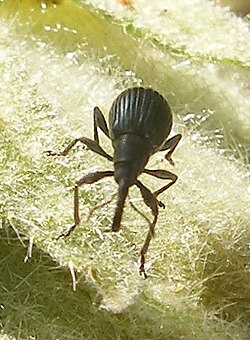
Weevils also frequently target Alcea rosea. Common species include Alocentron curvirostre, Aspidapion validum, and Rhopalapion longirostre.
In addition to insect pests, hollyhocks are susceptible to hollyhock rust, a disease caused by the pathogenic fungus Puccinia malvacearum.
Key Facts
- Genus: Alcea (part of the Malvaceae family).
- Native Range: Primarily Asia and Europe.
- Growth Habit: Erect, unbranched annuals, biennials, or perennials.
- Pollinators: Attracts butterflies and hummingbirds, especially red varieties.
- Common Pests: Mallow flea beetles, various weevils, and hollyhock rust (fungus).
- Symbolism: Represents ambition and fecundity in Victorian flower language.
Frequently Asked Questions
Are all hollyhocks part of the Alcea genus?
No. While most common hollyhocks belong to the genus Alcea, the streambank wild hollyhock found in western North America belongs to the genus Iliamna.
What colors can I expect from hollyhock flowers?
Hollyhock flowers are most commonly found in shades of pink, white, purple, and yellow.
How do hollyhocks reproduce?
Hollyhocks produce a fruit called a schizocarp, which is a dry disc that splits into more than 15 sections, each containing a seed.
What are the main threats to hollyhock health?
Plants can be affected by various pests like the mallow flea beetle and several species of weevils, as well as the fungal disease known as hollyhock rust.
Can hollyhocks be used for anything other than decoration?
Yes. Historically, hollyhock stems have been used as firewood, and their roots have been used for medicinal purposes.