Hollyhocks: A Comprehensive Look at the Alcea Genus
The hollyhock, scientifically known as Alcea, is a striking genus of flowering plants within the mallow family, Malvaceae. Native primarily to Europe and Asia, these plants are beloved by gardeners worldwide for their towering stature and vibrant blooms. While most hollyhocks belong to the Alcea genus, it is important to note that the streambank wild hollyhock found in the Americas belongs to a separate genus entirely.
Key Facts
- Genus: Alcea, containing over 80 accepted species.
- Origin: Native to Asia and Europe.
- Growth Habit: Annual, biennial, or perennial erect plants.
- Flower Colors: Commonly pink, white, purple, or yellow.
- Cultural Significance: Featured in Kyoto's Aoi Matsuri festival.
- Common Pests: Mallow flea beetle, aphids, and various weevils.
Botanical Description
Hollyhocks are characterized by their erect, unbranched growth form. Their herbage is typically covered in star-shaped hairs, a common trait in many mallow species. The leaves are borne on long petioles (the stalks that join a leaf to a stem) and often feature lobed or toothed edges.
The flowers are a primary draw, appearing either as solitary blooms or arranged in fascicles (small bundles) or racemes (unbranched flower clusters). These flowers feature notched petals that typically exceed three centimeters in width. Once pollination occurs, the plant produces a schizocarp—a type of dry fruit that splits into more than 15 distinct sections containing the seeds.
Species and Varieties
The Alcea genus is diverse, with over 80 recognized species. Some of the most notable include Alcea rosea (the common hollyhock), Alcea setosa (the bristly hollyhock), and Alcea ficifolia (the Antwerp hollyhock). Among the vast list of species, Alcea rosea has been the primary subject of cultivation, leading to several popular garden cultivars:
- 'Chater's Double': Known for its double-flowered appearance.
- 'Creme de Cassis': Distinguished by its raspberry color.
- 'The Watchman': Features dark, nearly black, maroon flowers.
| Feature | Description |
|---|---|
| Family | Malvaceae |
| Native Range | Asia and Europe |
| Life Cycle | Annual, Biennial, or Perennial |
| Fruit Type | Schizocarp (dry disc) |
| Primary Use | Ornamental gardening |
Gardening and Practical Uses
Hollyhocks are popular ornamental plants because they are easily grown from seed. Beyond their aesthetic value, red-flowered varieties are particularly effective at attracting butterflies and hummingbirds. Historically, the plants have served more utilitarian purposes: the stems have been used as firewood, and the roots have been utilized for medicinal applications.
Pests, Diseases, and Challenges
Despite their hardiness, Alcea species face several biological threats. They serve as food sources for various Lepidoptera larvae, including the painted lady (Vanessa cardui) and Bucculatrix quadrigemina. In hotter, drier climates, the plants are often targeted by aphids, capsid bugs, and cutworms.
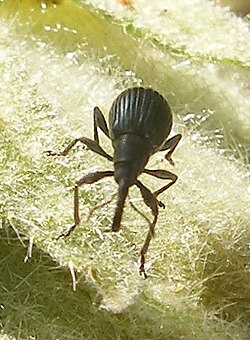
Specific pests include the mallow flea beetle (Podagrica fuscicornis), which creates tiny holes in the foliage. Additionally, several weevil species, such as Rhopalapion longirostre, Alocentron curvirostre, and Aspidapion validum, use A. rosea as a host plant.
The most significant fungal threat is hollyhock rust, caused by the pathogen Puccinia malvacearum, which can severely impact the health and appearance of the foliage.
Cultural Significance
The hollyhock holds a place of honor in various cultures. In Kyoto, Japan, the Aoi Matsuri (Hollyhock Festival) remains one of the city's three most important festivals. In the Victorian era, the "language of flowers" attributed meanings of fecundity and ambition to the hollyhock. Today, the diversity of the genus is preserved in collections such as the UK National Collection held by Jonathan Sheppard in Lincolnshire.
Frequently Asked Questions
Are hollyhocks native to North America?
No, the Alcea genus is native to Asia and Europe. While there is a streambank wild hollyhock in western North America, it belongs to a different genus.
What colors can hollyhock flowers be?
Hollyhock petals are typically pink, white, purple, or yellow, with some cultivars reaching deep maroon or nearly black hues.
What is hollyhock rust?
Hollyhock rust is a disease caused by the pathogenic fungus Puccinia malvacearum, which affects the plant's leaves.
Which animals are attracted to hollyhocks?
Red-flowered hollyhocks are particularly attractive to hummingbirds and butterflies.
How are hollyhocks typically grown?
They are popular garden ornamentals that are easily grown from seed and can be annuals, biennials, or perennials.