Hoechst AG: The Evolution of a German Chemical and Life Sciences Giant
Hoechst AG was a cornerstone of the German industrial landscape, evolving from a specialized dye manufacturer into a global powerhouse in chemicals and life sciences—a sector combining biology and biotechnology to develop pharmaceuticals and healthcare products. Based in Höchst, Frankfurt, the company's trajectory mirrors the broader history of the 20th-century chemical industry, marked by rapid expansion, wartime controversy, and eventual consolidation into the modern pharmaceutical giant Sanofi.
Throughout its existence, Hoechst transitioned through several identities, eventually merging with France's Rhône-Poulenc S.A. in 1999 to form Aventis, which later became part of Sanofi-Aventis (now Sanofi) in 2004.
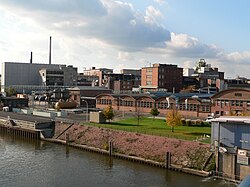
Key Facts
- Founded: 1863 as Teerfarbenfabrik Meister, Lucius & Co.
- Industry: Chemicals and Pharmaceuticals.
- Peak Workforce: 96,967 employees as of December 31, 1998.
- Major Mergers: Merged with Rhône-Poulenc (1999) to form Aventis; later absorbed by Sanofi.
- Legacy: A founding member of the IG Farben conglomerate.
The Early Years and the Rise of IG Farben
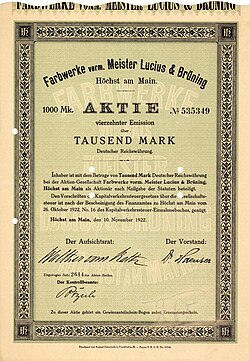
The company began in 1863 under the name Teerfarbenfabrik Meister, Lucius & Co. in Höchst, near Frankfurt. It later evolved into Teerfarbenfabrik Meister Lucius & Brüning before becoming a stock company in 1880 as Farbwerke vorm. Meister Lucius & Brüning AG. To better appeal to international markets, the name was eventually simplified to Farbwerke Hoechst AG.
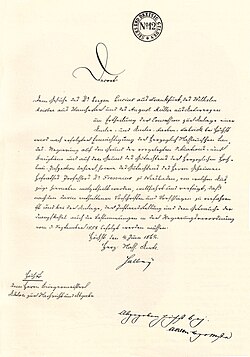
By 1916, Hoechst AG became a co-founder of IG Farben, which initially served as an advocacy group to consolidate industrial power within Germany's chemical sector during and after World War I. In 1925, this group transitioned into a massive industrial conglomerate, and Hoechst ceased to be an independent entity.
World War II and Legal Reckoning
The era of IG Farben was marked by significant turmoil. During World War II, several Hoechst facilities were targeted and bombed during the Oil Campaign. Following the war, the company's leadership faced severe legal scrutiny. During the Nuremberg trials, specifically the IG Farben trial, managers were prosecuted for their roles in testing drugs on concentration camp prisoners and the exploitation of enslaved laborers.
Postwar Reconstruction and Global Expansion
Hoechst AG was re-established as an independent company on December 7, 1951, following the dissolution of IG Farben. Starting with an initial capitalization of 100,000 Deutsche Mark, the company entered a period of aggressive growth and acquisition.
Strategic Acquisitions and Partnerships
Between 1953 and the 1980s, Hoechst expanded its portfolio by acquiring various entities and forming international alliances:
- Early 1950s: Acquired parts of Wacker Chemie, Ruhr Chemie, Behring Werke, Kalle AG, and Knapsack-Griesheim.
- South Korea: Established a technical cooperation contract (1957) and a joint venture (1964) with Handok Pharmaceuticals.
- Global Reach: Acquired Cassella (1969), Berger, Jenson and Nicholson Ltd (1970), and Foster Grant (1974).
- US Market: Acquired the American chemical company Celanese in 1987, forming Hoechst Celanese.
The Shift Toward Life Sciences
In the 1990s, Hoechst pivoted toward the pharmaceutical sector. In 1995, it merged with Marion Merrell Dow to create the U.S. subsidiary Hoechst Marion Roussel (HMR). By 1997, the company began a realignment, spinning off various businesses into independent companies such as Clariant and Nutrinova.
The Path to Sanofi
The final chapter of Hoechst AG as a distinct entity began in 1999 with its merger with Rhône-Poulenc S.A. to form Aventis, headquartered in Strasbourg, France. This merger involved the demerger of several industrial businesses, including the engineering polymers business Ticona, which returned to an independent Celanese. The merger also required a settlement with the U.S. Federal Trade Commission regarding antitrust concerns.
In 2005, the company became a wholly owned subsidiary of Sanofi-Aventis, now known simply as Sanofi.
Corporate Summary
| Period/Year | Entity Name/Status | Key Event |
|---|---|---|
| 1863 | Teerfarbenfabrik Meister, Lucius & Co. | Company founded |
| 1925 | IG Farben | Became part of the conglomerate |
| 1951 | Hoechst AG | Re-founded after IG Farben split |
| 1999 | Aventis | Merged with Rhône-Poulenc S.A. |
| 2005 | Sanofi | Became a wholly owned subsidiary |
Frequently Asked Questions
Who founded the company that became Hoechst AG?
The company was founded in 1863 by Wilhelm Meister as Teerfarbenfabrik Meister, Lucius & Co.
What was Hoechst's relationship with IG Farben?
Hoechst was a co-founder of IG Farben in 1916. By 1925, it ceased to be independent and became part of the IG Farben conglomerate until the company was split again after World War II.
When did Hoechst merge to become Aventis?
Hoechst AG merged with the French company Rhône-Poulenc S.A. in 1999 to form Aventis.
What happened to Hoechst AG after the Aventis merger?
Aventis later merged with Sanofi-Synthélabo in 2004, and by 2005, the entity became a wholly owned subsidiary of Sanofi-Aventis (now Sanofi).
Did Hoechst operate outside of Germany?
Yes, Hoechst had a significant international presence, including a joint venture with Handok Pharmaceuticals in South Korea and the creation of Hoechst Celanese in the United States.