Hispano-Argentines: The Legacy of Spanish Heritage in Argentina
The identity of Argentina is deeply intertwined with its Spanish roots. Hispano-Argentines are Argentine citizens who are predominantly or entirely of Spanish descent. This demographic influence began during the colonial era and was reinforced by massive waves of immigration in the late 19th and early 20th centuries. Today, this heritage is so pervasive that approximately 43.4% of the population claims Spanish ancestry.
From the language and religion to the very surnames that dominate the national registry, the Spanish imprint is visible across every province, from the bustling streets of Buenos Aires to the remote reaches of Patagonia.
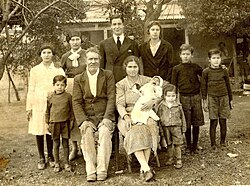
Key Facts
- Population: Approximately 20 million people of Spanish ancestry (2015) and 68,748 born in Spain (2023).
- Demographic Reach: Spanish ancestry is present throughout the Pampas, New Cuyo, the Littoral, the Northwest, and Patagonia.
- Primary Origins: The majority of post-colonial immigrants arrived from Galicia, the Basque Country, Cantabria, and Catalonia.
- Cultural Impact: The 20 most common surnames in Argentina are of Spanish origin.
- Language: While Spanish is the majority language, minority languages include Galician, Catalan, and Basque.
Historical Foundations
The Spanish presence in Argentina began in the 16th century. By 1580, Spain established a permanent colony in Buenos Aires, though early settlement was largely influenced by overland routes from Peru. The strategic importance of the region grew in 1776 with the creation of the Vice Royalty of Rio de la Plata, transforming Buenos Aires into a flourishing port and a vital hub for the Spanish Empire in South America.
During the colonial period, a distinct social hierarchy emerged. Criollos (people of Spanish descent born in the Americas) formed a substantial population in the cities. Over time, these settlers mixed with indigenous peoples to become Mestizos, with sub-Saharan African descendants to become Mulattoes, or with other Europeans. Many modern Argentines are identified as Criollos or Castizos (individuals of Spanish descent with a smaller degree of non-European mixture).
The Path to Independence
The relationship between Spain and Argentina shifted dramatically during the independence movement. The push for autonomy began in Buenos Aires on May 25, 1810, culminating in the formal declaration of independence on July 9, 1816, in San Miguel de Tucumán. During this transition, those who supported the movement began to identify as Argentines, while those loyal to the crown remained identified as Spaniards.
Waves of Spanish Immigration
Following independence, Argentina experienced a massive influx of Europeans between 1857 and 1960. During this period, roughly 2.2 million Spaniards emigrated to Argentina. While immigrants arrived from across the peninsula—including Extremadura in the south—the majority came from northern regions.
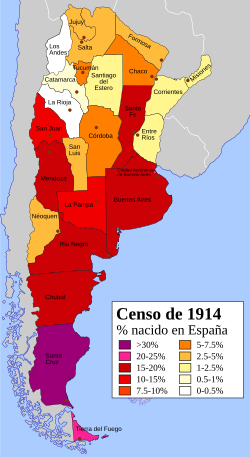
The Galician Influence
Galicians represent 70% of the post-colonial Spanish immigrant population. This influence is so profound that Buenos Aires is the second-largest Galician city in the world. In Argentine culture, the term gallego (Galician) became a generic label for all Spaniards, regardless of their actual region of origin. This has also given rise to a local stereotype depicting "gallegos" as stubborn, dull, or stingy.
Basque and Other Regional Identities
Basque Argentines, including those of both Spanish and French descent, make up roughly 10-15% of the population. Many maintain their heritage through cultural centers in major cities. Interestingly, some of Basque origin prefer to identify as "French-Basques," as French culture was historically viewed as more fashionable in Argentina than Spanish culture.

Modern Identity and Bilateral Relations
In the modern era, Argentine culture has evolved into a unique hybrid. While it shares the Spanish language and Roman Catholicism with Spain, it has integrated other Mediterranean and European influences, making it distinct from traditional Spanish culture. This evolution is similar to how American or Australian cultures differ from British culture.

Diplomatic relations between Madrid and Buenos Aires have remained strategically important but have faced periods of tension. Despite efforts to revitalize ties—such as celebrations surrounding the 500th anniversary of the discovery of America—a lingering "syndrome of betrayal" and economic constraints have prevented a full return to previous levels of trust.
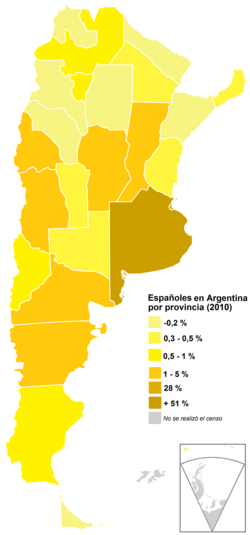
Demographic Distribution
Data from the 2010 census highlights that the Spanish-born population is heavily concentrated in the urban centers of the east coast, particularly in the Buenos Aires province and the capital city.
| Rank | Province/City | Population Born in Spain | Percentage |
|---|---|---|---|
| 1 | Buenos Aires Province | 48,019 | 51.06% |
| 2 | Buenos Aires (CABA) | 26,282 | 28.00% |
| 3 | Mendoza | 4,130 | 4.39% |
| 4 | Santa Fe | 3,292 | 3.50% |
| 5 | Córdoba | 3,256 | 3.46% |
Frequently Asked Questions
Why are all Spaniards called "gallegos" in Argentina?
Because Galicians made up 70% of the post-colonial Spanish immigrant population, the term became a colloquial shorthand for any person of Spanish origin, regardless of whether they were actually from Galicia.
What is the difference between a Criollo and a Castizo?
A Criollo is a person of Spanish descent born in the Americas. A Castizo refers to someone of Spanish descent who has a smaller degree of non-European mixture compared to a Mestizo.
How many Argentines have Spanish ancestry?
According to 2015 data, approximately 20 million Argentines—about 43.4% of the population—have Spanish ancestry.
Which Spanish regions contributed most to Argentine immigration?
The majority of immigrants arrived from northern Spain, specifically Galicia, the Basque Country, Cantabria, and Catalonia.
How does modern Argentine culture differ from Spanish culture?
While sharing foundational elements like language and religion, Argentine culture is a hybrid that incorporates various 20th-century European and Latin Mediterranean influences, creating a distinct national identity separate from that of Spain.