Highland Brigade: A History of Scotland's Elite Soldiers in the British Army
The Highland Brigade represents a storied tradition within the British Army, serving as a specialized unit recruited from the rugged Highlands of Scotland. Rather than a single permanent entity, the Brigade was formed and reformed across different eras to deploy the distinct fighting capabilities of Scottish regiments in global conflicts.
Key Facts
- Recruited exclusively from the Highlands of Scotland.
- Played pivotal roles in the Crimean War, the Egyptian Rebellion, and the Second Boer War.
- Suffered significant casualties at the Battle of Tel-El-Kebir and the Battle of Magersfontein.
- Comprised various renowned regiments, including the Black Watch and the Gordon Highlanders.
The Crimean War (1854–1856)
During the Crimean War, the Highland Brigade served as part of the 1st Division. Initially under the command of Major-General Sir Colin Campbell (Lord Clyde), the unit became well-known for its significant contributions during the Battle of Alma.
The composition of the Brigade during this conflict included three primary units:
- 42nd (Royal Highland) Regiment of Foot
- 79th (The Queen's Own Cameron Highlanders) Regiment of Foot
- 93rd (Sutherland Highlanders) Regiment of Foot
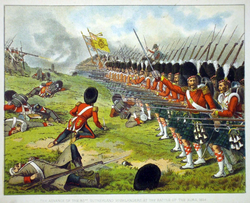
The Egyptian Rebellion (1882–1885)
In 1882, a Highland Brigade was deployed to Egypt during the Egyptian Rebellion. Commanded by Major General Archibald Alison, the Brigade formed the left wing of the army led by General Sir Garnet Wolseley.
The unit saw intense action at the Battle of Tel-El-Kebir. The cost of the engagement was high; the Highland Brigade suffered 243 casualties out of a total of 339 casualties sustained by Wolseley's entire force.
The regiments involved in the Egyptian campaign were:
- 1st Battalion, Black Watch (Royal Highlanders)
- 1st Battalion, Cameron Highlanders
- 1st Battalion, Gordon Highlanders
- 2nd Battalion, Highland Light Infantry
The Second Boer War (1899–1902)
The Highland Brigade returned to service in South Africa for the Second Boer War. Initially commanded by Major General Andrew Gilbert Wauchope, the Brigade faced a devastating encounter at the Battle of Magersfontein, where General Wauchope himself was among the severe losses.
Following this loss, command was transferred to Major General Hector MacDonald, who led the Brigade for the remainder of the conflict. Under MacDonald, the unit fought at the Battle of Paardeberg. On February 18, 1900—a day remembered as "Bloody Sunday"—the Brigade once again suffered heavy casualties.
The Brigade's composition evolved during the war. At its formation in 1899, it consisted of:
- 1st Battalion, Argyll and Sutherland Highlanders
- 1st Battalion, Highland Light Infantry
- 2nd Battalion, Black Watch
- 2nd Battalion, Seaforth Highlanders
In February 1900, the Highland Light Infantry transferred to the 19th Brigade under Major-General Horace Smith-Dorrien, and the Gordon Highlanders joined the Highland Brigade to fill the vacancy.
Summary of Highland Brigade Deployments
| Conflict | Key Commander(s) | Major Battles | Notable Regiments |
|---|---|---|---|
| Crimean War | Sir Colin Campbell | Battle of Alma | 42nd, 79th, 93rd Foot |
| Egyptian Rebellion | Archibald Alison | Battle of Tel-El-Kebir | Black Watch, Cameron, Gordon Highlanders, Highland Light Infantry |
| Second Boer War | Andrew Wauchope, Hector MacDonald | Magersfontein, Paardeberg | Black Watch, Seaforth, Argyll and Sutherland, Gordon Highlanders |
Frequently Asked Questions
Who recruited the men for the Highland Brigade?
The Highland Brigade recruited its soldiers from the Highlands of Scotland.
Which battle in the Egyptian Rebellion saw the highest casualties for the Brigade?
The Battle of Tel-El-Kebir was the most costly, with the Highland Brigade suffering 243 casualties.
What happened to the Highland Brigade at the Battle of Magersfontein?
The Brigade suffered severe losses during the battle, including the death of its commander, Major General Andrew Gilbert Wauchope.
What is "Bloody Sunday" in the context of the Highland Brigade?
Bloody Sunday refers to February 18, 1900, during the Battle of Paardeberg in the Second Boer War, when the Highland Brigade sustained heavy casualties.
How did the Brigade's composition change during the Second Boer War?
In February 1900, the Highland Light Infantry left the Brigade to join the 19th Brigade, and the Gordon Highlanders joined the Highland Brigade in their place.