Hermaphroditism in Nature: Biology, Evolution, and Diversity
In the diverse world of biological reproduction, most people are familiar with gonochoric species—organisms where individuals are strictly male or female. However, nature frequently employs a different strategy: hermaphroditism. A hermaphrodite is a sexually reproducing organism capable of producing both male and female gametes (sex cells).
While rare in mammals and birds, this reproductive flexibility is widespread among invertebrates and flowering plants. From the depths of the ocean to the soil beneath our feet, the ability to produce both types of gametes offers unique evolutionary advantages in survival and reproduction.
Key Facts
- Definition: An organism that produces both male and female gametes.
- Prevalence: Approximately 65,000 animal species are hermaphroditic (about 5% of all animal species, or 33% when excluding insects).
- Common Groups: Tunicates, mollusks, earthworms, and the vast majority of angiosperms (flowering plants).
- Exclusions: No known hermaphroditic species exist among mammals or birds; insects are almost exclusively gonochoric.
- Plant Systems: Most flowering plants are hermaphrodites, often utilizing self-fertilization.
Hermaphroditism in Animals
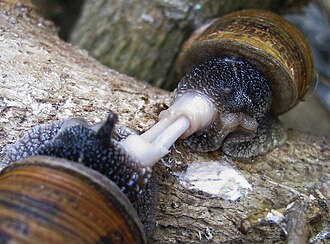
In the animal kingdom, hermaphroditism is primarily found among invertebrates. For many mollusks and earthworms, this is the normal biological condition, allowing either partner in a mating pair to act as the male or female.
Simultaneous Hermaphrodites
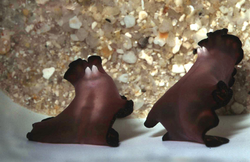
Simultaneous hermaphrodites possess both sets of functional reproductive organs at the same time. This allows for maximum flexibility during mating. Some species, such as certain Turbellarians, engage in "penis fencing" to avoid the energetic cost of producing eggs by attempting to inject sperm into their partner first.
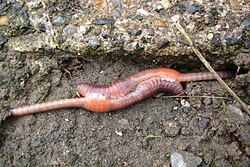
Earthworms are another classic example of simultaneous hermaphroditism, maintaining both male and female organs throughout their lives.
Sequential Hermaphrodites
Sequential hermaphrodites change their sex at some point during their life cycle. This transition is often triggered by social cues or size advantages within a population.
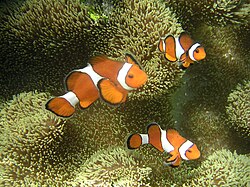
- Protandry: Individuals start life as males and later transition to females. For example, in certain clownfish populations, the largest fish in a group becomes the female.
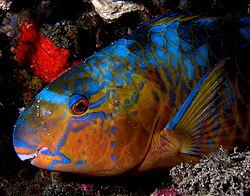
- Protogyny: Individuals start as females and later transition to males, a common trait in many parrotfish species.
Hermaphroditism in Plants
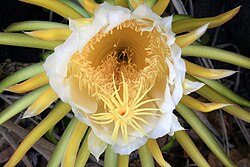
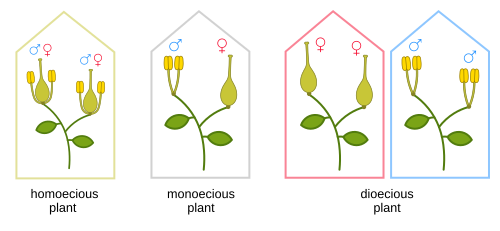
The vast majority of angiosperms (flowering plants) are hermaphrodites. In botany, the terminology differs slightly from zoology. Plants that have separate male and female individuals are called dioecious.
Floral Sexual Systems
Plants exhibit various ways of organizing their reproductive organs:
- Monoecy: A single plant has separate male and female flowers on the same individual.
- Andromonoecy: A plant bears both bisexual flowers and exclusively male flowers.
- Gynomonoecy: A plant bears both bisexual flowers and exclusively female flowers.
Self-Fertilization and Compatibility
Many hermaphroditic plants can self-fertilize. To prevent the genetic pitfalls of inbreeding, some use gametophytic self-incompatibility. In this process, the pollen detects the genotype of the plant; if it is self-pollinating, the pollen is broken down by S-RNase enzymes to prevent fertilization.
Summary of Reproductive Systems
| Term | Definition | Common Examples |
|---|---|---|
| Gonochoric | Individuals are strictly male or female | Mammals, Birds, Insects |
| Simultaneous Hermaphrodite | Produces both gametes at the same time | Earthworms, Garden Snails |
| Sequential Hermaphrodite | Changes sex during life cycle | Clownfish, Parrotfish |
| Dioecious | Plant species with separate male/female individuals | Certain tree/shrub species |
| Monoecious | One plant with separate male and female flowers | Various angiosperms |
Human Context and Terminology
Historically, the term "hermaphrodite" was applied to humans born with ambiguous genitalia or variations in sex characteristics. However, modern medical and scientific communities have moved away from this usage.
![1860 photograph by Nadar of a person displaying ambiguous genitalia, one of a nine-part series. The series may be the earliest medical photographic documentation of an intersex person.[76]: 358](/images/d9/b3/d9b3d8807921368619b8ea2c2a65277f874ce85b1cc4a25a02f9c41a460d18f9.jpg)
In humans, the term intersex is used instead. Biologically, true hermaphroditism—possessing two fully functional sets of reproductive organs—is a physiologic impossibility in humans. Consequently, terms like "hermaphrodite" or "pseudohermaphrodite" are now considered misleading and stigmatizing in a clinical context.
Cultural interpretations have varied, from the Greek myth of Hermaphroditus to the Anitist rituals of the Philippines dedicated to the deity Lakapati, who presided over fertility.
![The Obando Fertility Rites in the Philippines, before becoming a Catholic festival, was initially an Anitist ritual dedicated to the hermaphrodite deity, Lakapati, who presided over fertility.[75]](/images/29/f7/29f744d6b6fb4a669e6e6a978a5b54f4c69c62add930631ff18e538f3d5237f0.jpg)
Frequently Asked Questions
What is the difference between a hermaphrodite and a gonochoric organism?
A hermaphrodite can produce both male and female gametes, whereas a gonochoric organism is strictly one sex (either male or female) for its entire life.
Can animals change their sex?
Yes, sequential hermaphrodites can change sex. Some start as males and become females (protandry), while others start as females and become males (protogyny).
Why do some plants prevent self-pollination?
Plants use mechanisms like gametophytic self-incompatibility to avoid inbreeding, which ensures greater genetic diversity and healthier offspring by favoring cross-pollination.
Are humans hermaphrodites?
No. While some humans are born with intersex traits or ambiguous genitalia, they do not possess two fully functional sets of reproductive organs. The term "intersex" is the correct scientific and social descriptor.
Which animal groups are never hermaphroditic?
There are no known hermaphroditic species among mammals or birds, and insects are almost exclusively gonochoric.