Heresy: The History of Religious Dissent and Persecution
Heresy is defined as any belief or theory that stands in strong variance with established customs or accepted beliefs, particularly the religious laws of a formal organization. A person who advocates for such beliefs is known as a heretic. While the term is most frequently associated with theology, it describes the tension between orthodoxy (authorized or correct belief) and deviation.
Throughout history, religious institutions in Judaism, Christianity, and Islam have responded to heresy with varying degrees of severity. Censure has ranged from social ostracization and excommunication—the formal exclusion from participation in the sacraments and community—to the death penalty.
Key Facts
- Heresy is a deviation from established religious law or accepted organizational beliefs.
- The Catholic Inquisition is estimated to have burned approximately 7,000 people at the stake over nearly seven centuries.
- In 16th-century England, heresy laws were repeatedly repealed and reintroduced depending on the monarch's religious leanings.
- Persecution was not exclusive to one group; for example, Arian Vandals once used heresy laws to prosecute orthodox Catholics.
- The term is sometimes used in non-religious contexts to describe ideas that challenge a dominant scientific or social paradigm.
Heresy in Early Christianity
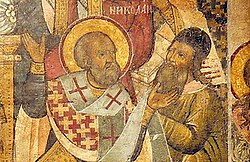
In the early centuries of the faith, the boundaries of orthodoxy were often contested. Tertullian (c. AD 155–240) suggested that early Christian heresy was heavily influenced by Jewish discussions, specifically regarding the nature of Jesus as the Christ. Tertullian viewed Christianity not as a new religion, but as the fulfillment of the Jewish messianic promise.
One of the most famous early conflicts involved Arius, who preached that Jesus was created by God and therefore held a lower status than the Father. This view was deemed a heresy in Trinitarianism.
The Catholic Church and the Inquisition
The Catholic Church established formal mechanisms to identify and punish heresy. The Inquisition became the primary tool for maintaining doctrinal purity. While the Church provided official judgments, some heretics were killed by enraged local populations in acts of vigilante justice without official state or church sanction.
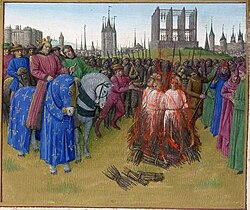
The scope of persecution was vast. For instance, the pantheistic Amalricians were burned in 1210 in the presence of King Philip II Augustus.
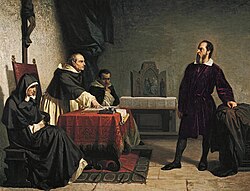
Even scientific inquiry could be labeled as heresy. Galileo Galilei was tried by the Roman Inquisition for defending the heliocentric model—the theory that the sun is the center of the world and the earth moves around it—which was declared contrary to Holy Scripture.
The English Reformation and Protestant Persecution
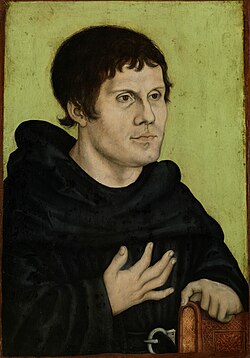
The 16th-century English Reformation demonstrated how the charge of heresy could be used as a political weapon. Under Henry VIII, approximately 60 heretics (mostly Protestants) were executed, while many Catholics were executed for treason for refusing the king's supremacy over the Church.
The pendulum swung violently under Mary I, who restored papal jurisdiction and saw around 290 people burned at the stake between 1555 and 1558. Elizabeth I later restricted the use of heresy laws, though about 180 Catholics were executed during her reign, often viewed as members of a "subversive fifth column." The final execution for heresy in England occurred in 1612 under James VI and I.
Persecution also occurred within Protestant colonies. In the Massachusetts Bay Colony, Anglican Puritans seeking a "purer absolute theocracy" executed members of the Quaker sect, whom they perceived as heretical.
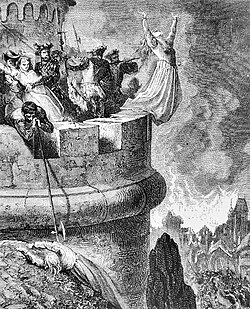
Global and Cross-Religious Perspectives
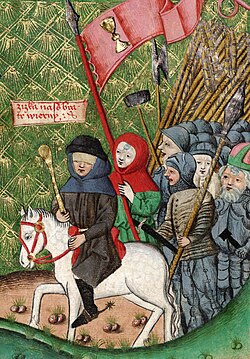
Heresy is not limited to Western Christianity. In the Hussite wars (1420–1431), Hussite heretics successfully defeated five anti-Hussite Crusades ordered by the Pope.
In other traditions, such as Buddhism, the process of addressing non-believers or those with differing views often took the form of philosophical debate. Tibetan paintings depict the philosopher Bhāviveka converting a tirthika (non-Buddhist) through such intellectual discourse.
![A Tibetan style painting depicting the Buddhist philosopher Bhāviveka converting a tirthika (non-Buddhist) through debate.[75]](/images/50/0d/500df22b16d4dde41424a844e82fb412d81c2b920b77c1dcb6dd50f87756d86f.jpg)
Summary of Historical Heresy Trends
| Group/Period | Primary Target | Common Penalties | Key Driver |
|---|---|---|---|
| Catholic Inquisition | Various dissenters | Excommunication, Burning | Doctrinal Purity |
| Tudor England | Protestants/Catholics | Execution, Burning | Political Supremacy |
| Massachusetts Bay | Quakers | Execution | Theocratic Vision |
| Vandals (Germanic) | Orthodox Catholics | Torture, Slavery | Arian Doctrine |
Frequently Asked Questions
What is the difference between heresy and blasphemy?
While often overlapping, heresy is specifically the belief in a doctrine that contradicts established religious law, whereas blasphemy is generally the act of insulting or showing contempt for a deity or sacred things.
Was the Catholic Church the only entity to execute heretics?
No. Protestant rulers in England and the Massachusetts Bay Colony, as well as the Arian Vandals, all used the charge of heresy to justify executions and persecution.
How did the trial of Galileo relate to heresy?
Galileo was suspected of heresy because he held the belief that the Earth moves and the Sun is the center of the world, a position the Inquisition declared false and contrary to Holy Scripture.
What happened to the Hussites?
Between 1420 and 1431, the Hussite heretics managed to defeat five separate anti-Hussite Crusades that had been ordered by the Pope.
Is the term "heresy" used outside of religion?
Yes, it is used in non-religious contexts to describe any theory or opinion that deviates from a widely accepted norm, such as in science or social conventions.