Kingdom of England
The Kingdom of England existed as a sovereign entity from 927 until 1707. Its journey from a collection of fragmented petty kingdoms to a centralized European power is a saga of conquest, legal revolution, and political unification. This period saw the rise of the English monarchy, the birth of parliamentary governance, and the eventual merger with Scotland to form the Kingdom of Great Britain.
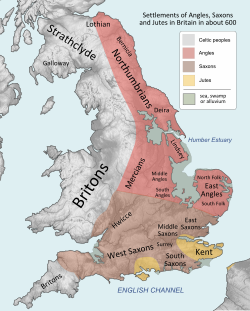
The unification process began in earnest in 886 when Alfred the Great reclaimed London from Danish Vikings, styling himself King of the Anglo-Saxons. This authority was expanded by his successors, culminating in 927 when Æthelstan conquered York, becoming the first ruler of the entire English territory.
Key Facts
- Duration: 927–1707 (with a republican Interregnum from 1649–1660).
- Capitals: Winchester (927–1066) and London (1066–1707).
- Key Legal Milestone: The Magna Carta (1215), which limited the power of the monarchy.
- Major Dynasties: Norman/Angevin, Plantagenet, Tudor, and Stuart.
- Final Act: The Acts of Union 1707, which merged England and Scotland into Great Britain.
The Middle Ages: Conquest and Consolidation
The Norman Conquest and High Middle Ages
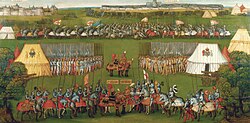
The trajectory of England changed forever on October 14, 1066, with the Battle of Hastings. The Norman Conquest shifted the capital from Winchester to Westminster and introduced a new ruling class. During this era, England expanded its influence, including the Anglo-Norman invasion of Ireland starting in 1169.
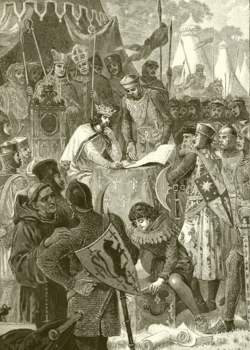
A pivotal moment in global governance occurred on June 15, 1215, when King John signed the Magna Carta at Runnymede. This document established the principle that the king was not above the law, laying the groundwork for future constitutional liberties.
The Late Middle Ages and the Hundred Years' War
Under Edward III, England became a formidable military power. However, this period was marked by the Hundred Years' War (1337–1453), a protracted conflict over claims to the French throne. Despite early victories, England eventually lost most of its continental holdings, retaining only Calais by 1453.

Domestically, the era was characterized by the evolution of the English Parliament and the internal strife of the Wars of the Roses (beginning in 1455), which eventually paved the way for the Tudor dynasty.
The Tudor and Stuart Eras
The Tudor Renaissance and Reformation
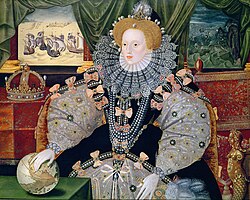
The Tudor period saw the full legal incorporation of Wales through the Laws in Wales Acts 1535–1542. Henry VIII initiated the English Reformation, breaking away from the Roman Catholic Church, while Elizabeth I established the Elizabethan Religious Settlement and expanded English influence through the colonization of the Americas.
The Stuart Dynasty and the English Civil War
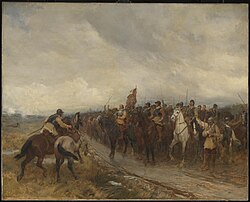
The Union of the Crowns in 1603 placed James VI of Scotland on the English throne as James I. However, tensions between the Stuart monarchs and Parliament over taxation and authority led to the English Civil War (1641–1645). This resulted in the execution of Charles I in 1649 and the establishment of the Commonwealth of England, a republic led by Oliver Cromwell.
The monarchy was restored in 1660 with the return of Charles II, but the political landscape had shifted. The Glorious Revolution of 1688 legally cemented the concept of a constitutional monarchy, ensuring the sovereign could not govern without parliamentary consent.
The Path to Great Britain
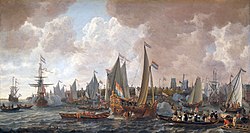
By the early 18th century, strategic and financial pressures drove England and Scotland toward a formal union. The English were particularly concerned with ensuring a Protestant succession via the House of Hanover. On May 1, 1707, the Acts of Union abolished the separate parliaments of England and Scotland, creating the Kingdom of Great Britain.
| Category | Details |
|---|---|
| First Monarch | Æthelstan (927–939) |
| Last Monarch | Anne (1702–1707) |
| Official Languages | English, Anglo-Norman French, Latin |
| Legislature | Parliament (House of Lords & House of Commons) |
| Currency | Pound sterling |
| Successor State | Kingdom of Great Britain |
Frequently Asked Questions
Who was the first King of all England?
Æthelstan is recognized as the first Anglo-Saxon ruler of the whole of England after he conquered the Viking kingdom of York in 927.
What was the Commonwealth of England?
The Commonwealth was a republican period from 1649 to 1660 during which the monarchy and House of Lords were abolished following the execution of Charles I, with Oliver Cromwell serving as a dominant figure.
How did the Magna Carta change English government?
Signed in 1215, the Magna Carta established that the monarch's power was not absolute and that the law applied to everyone, including the king.
When did England and Scotland unite?
England and Scotland formally united on May 1, 1707, under the Acts of Union, which created the Kingdom of Great Britain.
What was the significance of the Union of the Crowns?
The Union of the Crowns occurred in 1603 when James VI of Scotland became James I of England, meaning one monarch ruled three separate kingdoms: England, Scotland, and Ireland.