Heraldic Helmets: Symbolism, Rank, and Global Traditions
In the complex language of heraldry, the helmet (or helm) serves as a critical bridge between the shield and the crest. Positioned above the shield, the helmet supports the torse (a twisted wreath of fabric) and the crest, acting as a visual indicator of the bearer's social standing and rank. While the shield tells the story of the family or entity, the helmet often defines the status of the individual.
The evolution of these armorial helmets closely mirrored the development of actual military and jousting armor. As protective gear shifted from the heavy, immobile designs of the 13th century to the specialized equipment of the Renaissance, heraldic art adapted to reflect these changes. Today, while no longer tied to functional armor, these styles persist as strict conventions of tradition.
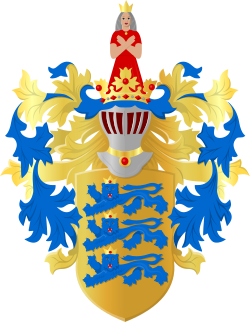
Key Facts
- Rank Indicator: Open-visored or barred helmets are generally reserved for high nobility, while closed helms are used by lesser nobility and burghers.
- Regional Variation: German and Nordic traditions may use multiple helmets to represent different fiefs.
- Ecclesiastical Shift: Clergy replace the belligerent imagery of the helmet with hats, such as the mitre or galero.
- Historical Peak: The most complex combinations appeared in the 18th century, with some achievements featuring up to 13 helmets.
- Modern Flexibility: Some jurisdictions, like Canada, allow non-traditional helmets, including astronaut helmets.
The Evolution of the Heraldic Helm
The integration of helmets into coats of arms began in the first half of the 14th century. Early examples, such as those in the Codex Manesse, featured the great helm—a heavy, bucket-like helmet without a movable visor. As jousting evolved into a specialized courtly sport during the 15th and 16th centuries, heraldic helmets became more diversified to reflect this dedicated armor.
By 1615, a clear system emerged to indicate rank through the visor. As jousting with lances was replaced by tourneying with maces—where the goal was to knock the opponent's crest off—helmets evolved to have larger visual openings protected by bars. These barred helmets were strictly regulated by the imperial chancellery in Vienna, reserved for nobility and high-ranking doctors of law or theology.
From Function to Convention
By the early 17th century, jousting ceased to be a common courtly practice. Consequently, the shapes of heraldic helmets stopped evolving alongside military technology and became purely symbolic. While later manuals attempted to assign meaning to the direction the helmet faces or the number of bars on the grille, these were not standard practices during the period of their origin.
Regional Traditions and Rank Systems
United Kingdom
British heraldry employs a strict hierarchy of materials and styles:
- Royal Family: Gold helmet with bars.
- Peers: Silver helmet with gold bars.
- Scottish Feudal Barons (non-peerage): Steel helmet with gold bars.
- Knights and Baronets: Open steel helmet shown affronté (facing forward).
- Scottish Clan Chiefs: Steel tournament helm.
- Esquires and Gentlemen: Closed steel helmet.
Continental Europe: France, Belgium, and Poland
In France, helmets were sometimes turned to the left to denote bastards, while kings used open golden helmets to symbolize that the sovereign "must see and know everything." In Belgium, barred helms with gold trim are common and are not exclusively reserved for nobility.
Polish heraldry viewed the helmet as an indispensable element of noble arms. It transitioned from the 13th-century bucket helm to the 15th-century tournament helmet, eventually favoring the barred helmet. It was not until the 17th century that the shield alone, topped with a crown and crest, became a common representation.
Russia and the East
Russian heraldry blends Western traditions with "ethnic" styles. Alongside Western open and closed helmets, Russian families used the yerikhonka (a conical Slavic helmet) and the misyurka (a rounder helmet used by non-Slavic Asian noble families). These followed a unique color system: non-titled nobles used steel with silver details, while knyaz families used silver with gold details.
Canada's Modern Approach
Canadian heraldry is notably flexible. Because helmets are not formally blazoned (described in the official written record), armigers can choose styles that reflect their personal history. This has led to the inclusion of nasal helmets, Corinthian helmets, and even an astronaut's helmet in the arms of former Governor General Julie Payette.
Ecclesiastical Heraldry
Because the helmet is viewed as too belligerent for those in holy orders, the Roman Catholic and Anglican traditions replace it with ecclesiastical headgear.
| Rank | Hat Type | Tassels (per side) | Color |
|---|---|---|---|
| Cardinal | Galero | 15 | Gules (Red) |
| Archbishop | Galero | 10 | Vert (Green) |
| Bishop | Galero | 6 | Vert (Green) |
| Priest | Galero | 1 | Sable (Black) |
Frequently Asked Questions
What is the difference between a barred helmet and a closed helm?
A barred helmet features an open visor with vertical bars and is typically reserved for the higher nobility. A closed helm (or tilting helm) is fully enclosed and is generally used by lesser nobility, esquires, gentlemen, or burghers.
Can a coat of arms have more than one helmet?
Yes, particularly in German and Nordic heraldry. Multiple helmets may be used to represent different fiefs to which the bearer has a right. In some extreme 18th-century cases, as many as 13 helmets have been used in a single achievement.
Why do bishops use hats instead of helmets?
In ecclesiastical heraldry, the helmet is considered a symbol of war and aggression, which is inappropriate for clergy. Therefore, they use the galero or mitre to signify their spiritual rank.
Does the direction the helmet faces have a specific meaning?
While some later manuals suggest that the direction (such as affronté or turned to the side) carries special significance, this was not a standard practice during the period when these heraldic traditions were established.
What is a yerikhonka?
A yerikhonka is a traditional conical Slavic helmet used in Russian heraldry. It serves as an "ethnic" alternative to the Western European helmet and follows its own distinct system of colors and metals to denote rank.