Henry Wadsworth Longfellow: The Life and Legacy of an American Literary Icon
Henry Wadsworth Longfellow stands as one of the most celebrated figures in 19th-century American literature. Known for his lyrical poetry and mastery of translation, Longfellow bridged the gap between European tradition and a burgeoning American identity. His life was marked by profound academic achievement, international exploration, and deep personal tragedies that frequently informed his most poignant works.
Key Facts
- Born: February 27, 1807, in Portland, Maine.
- Education: Graduated from Bowdoin College in 1825, ranking fourth in his class.
- Academic Career: Served as a professor of modern languages at both Bowdoin College and Harvard University.
- Major Works: Author of Voices of the Night, Ballads and Other Poems, and the epic poem Evangeline.
- Linguistic Skill: Fluent in French, Italian, Spanish, Portuguese, German, and several Scandinavian languages.
- Death: Passed away on March 24, 1882, due to peritonitis.
Early Life and Academic Foundations
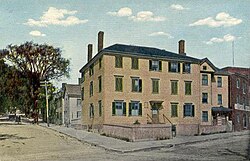
Born to Stephen and Zilpah Longfellow in Portland, Maine, Henry was the second of eight children. He grew up in a family with deep roots in New England; his ancestors included Mayflower Pilgrims such as Richard Warren, William Brewster, and John and Priscilla Alden. His early education began at a dame school and continued at the private Portland Academy, where he developed a passion for reading and became fluent in Latin.
Longfellow's literary ambitions surfaced early. At age 13, he published his first poem, "The Battle of Lovell's Pond," in the Portland Gazette. In 1822, he enrolled at Bowdoin College, where he formed a lifelong friendship with fellow student Nathaniel Hawthorne. During his college years, Longfellow expressed a burning desire for literary eminence, publishing nearly 40 minor poems before graduating in 1825 as a member of Phi Beta Kappa.
European Exploration and Professorships
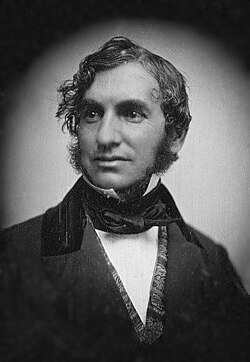
Following graduation, Longfellow accepted a position as a professor of modern languages at Bowdoin. To prepare, he spent three years (1826–1829) touring Europe, visiting France, Spain, Italy, Germany, and England. During this time, he acquired fluency in multiple languages, often through self-instruction, and was encouraged in his writing by the author Washington Irving.
After returning to the U.S., Longfellow taught at Bowdoin before accepting the Smith Professorship of Modern Languages at Harvard University in 1836. He resided in the Craigie House in Cambridge, a historic site that had served as George Washington's headquarters during the Siege of Boston.
Personal Tragedy and Early Success
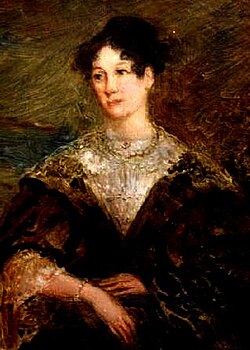
Longfellow's personal life was marked by early loss. His first wife, Mary Storer Potter, whom he married in 1831, died in 1835 following a miscarriage during a trip to Europe. This tragedy deeply affected him, later inspiring poems such as "Footsteps of Angels." Professionally, however, he began to rise in prominence. His 1841 collection Ballads and Other Poems, featuring "The Village Blacksmith" and "The Wreck of the Hesperus," brought him instant popularity.
The Courtship and Life with Frances Appleton
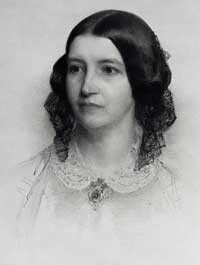
Longfellow's second marriage was the result of a persistent courtship of Frances "Fanny" Appleton, the daughter of industrialist Nathan Appleton. Despite her initial reluctance, the two married in 1843. As a wedding gift, Nathan Appleton purchased the Craigie House for the couple.
The marriage was a period of great happiness and productivity. Longfellow and Fanny had six children. During this era, Longfellow published Evangeline (1847) and began to see a significant increase in his literary income. In 1854, he retired from Harvard to devote himself entirely to his writing.
The Tragedy of 1861
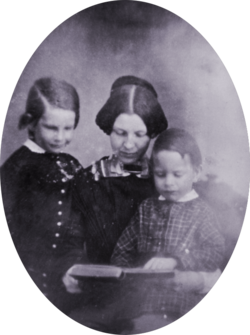
In July 1861, a devastating accident occurred when Frances's dress caught fire while she was sealing envelopes with wax. Longfellow attempted to extinguish the flames with his own body, sustaining severe facial burns that led him to grow his trademark beard. Frances died the following morning. Longfellow struggled with profound grief for the remainder of his life, occasionally using laudanum and ether to cope with the loss.
Later Years and Literary Contributions
In his later years, Longfellow focused heavily on translation. He formed the "Dante Club" in 1864 with friends like James Russell Lowell to refine his translation of Dante Alighieri's Divine Comedy, published in 1867. He also became a voice for reconciliation between the North and South following the American Civil War, a sentiment captured in his poem "Christmas Bells."
Longfellow's financial success grew immensely; by 1868, his annual income exceeded $48,000. In 1874, he sold "The Hanging of the Crane" for $3,000, the highest price ever paid for a poem at that time.
| Category | Details |
|---|---|
| Primary Education | Portland Academy & Bowdoin College |
| Academic Posts | Professor of Modern Languages (Bowdoin & Harvard) |
| Key Literary Works | Evangeline, Voices of the Night, Divine Comedy (Translation) |
| Spouses | Mary Storer Potter (m. 1831), Frances Appleton (m. 1843) |
| Cause of Death | Peritonitis |
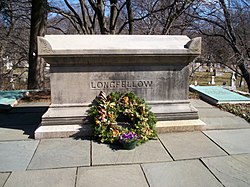
Longfellow passed away on March 24, 1882, surrounded by his family. He is buried alongside both of his wives at Mount Auburn Cemetery.
Frequently Asked Questions
Why did Longfellow start wearing a beard?
Longfellow began wearing a beard to cover severe facial burns he sustained while attempting to save his second wife, Frances Appleton, from a fire in 1861.
What was the "Dante Club"?
The Dante Club was a group of literary friends, including James Russell Lowell and William Dean Howells, who met every Wednesday starting in 1864 to help Longfellow perfect his translation of Dante's Divine Comedy.
Which of Longfellow's poems was the most expensive of its time?
The poem "The Hanging of the Crane" was sold to The New York Ledger in 1874 for $3,000, which was the highest price ever paid for a single poem at that time.
What was Longfellow's stance on abolitionism?
Longfellow supported abolitionism, publishing Poems on Slavery in 1842. While some critics found the work too mild, the New England Anti-Slavery Society reprinted it for wider distribution.
Where is Henry Wadsworth Longfellow buried?
He is buried at Mount Auburn Cemetery in Cambridge, Massachusetts, where he is interred with both of his wives.