Henry I, Duke of Brabant: The Courageous Ruler of the House of Reginar
Known to history as "The Courageous," Henry I was a pivotal figure in the medieval landscape of the Low Countries. As a member of the House of Reginar, he served as the first official Duke of Brabant, reigning from 1183/84 until his death in 1235. His life was defined by a relentless pursuit of territorial expansion, strategic marital alliances, and participation in the great religious wars of his era.
Henry's ascent to power was not immediate; he began his political life as a co-ruler alongside his father, Godfrey III, Count of Leuven. This early exposure to governance prepared him for a career marked by both diplomatic agility and military conflict.
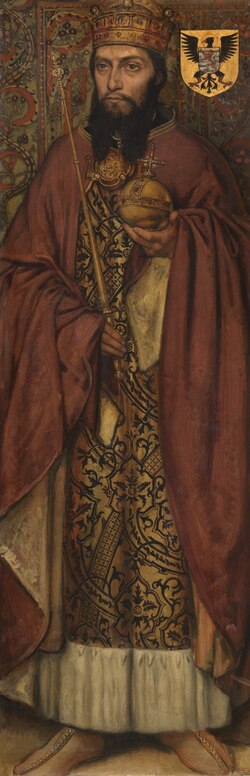
Key Facts
- Full Name: Henry I (Hendrik/Henri), known as "The Courageous."
- Reign: First Duke of Brabant (1183/84–1235).
- Dynasty: House of Reginar.
- Key Conflicts: Battle of Bouvines (1214) and the Battle of Steppes (1213).
- Crusades: Participated in the Crusade of Henry VI, the Fifth Crusade, and the Stedinger Crusade.
- Burial Site: St. Peter's Church, Leuven.
Early Life and Rise to Power
Born around 1165, likely in Leuven, Henry was the son of Count Godfrey III of Louvain and Margaret of Limburg. His father held a variety of prestigious titles, including landgrave of Brabant and duke of Lower Lorraine. Henry's entry into independent administration began in 1180 when he married Matilda of Boulogne and received the County of Brussels.
His leadership capabilities were tested early when he served as regent from 1182 to 1184 while his father undertook a pilgrimage to Jerusalem. By 1183, Henry had assumed the title of Duke of Brabant. Following his father's death in 1190, King Henry VI confirmed the elevation of Brabant and created the title of Duke of Lothier, effectively abolishing the Duchy of Lower Lorraine.
Political Career and Military Campaigns
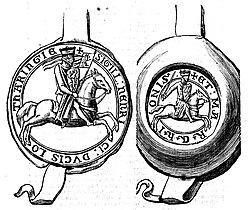
Henry I was an ambitious ruler who frequently clashed with neighboring lords, including Count Baldwin V of Hainaut, Duke Henry III of Limburg, and Count Otto I of Guelders. His political loyalties shifted according to the volatile climate of the Holy Roman Empire.
Crusades and International Diplomacy
Henry was a dedicated crusader. In 1197, he joined the Crusade of Henry VI, contributing to the recapture of Beirut and serving as regent in Acre until the arrival of Aimery of Cyprus. He later participated in the Fifth Crusade to Egypt between 1217 and 1218, and the Stedinger Crusade in 1234.
Imperial Struggles and Defeats
In the struggle for the imperial throne, Henry initially supported Otto IV (who was betrothed to Henry's daughter, Maria). However, he switched his allegiance to Philip of Swabia in 1204 with the backing of King Philip II of France. After Philip's assassination in 1208, Henry was proposed as a successor but eventually reconciled with Emperor Otto IV. This alliance led him to the 1214 Battle of Bouvines, where he suffered a significant defeat.
His military fortunes were further tested in 1213 at the Battle of Steppes, where he faced a heavy defeat against the Bishopric of Liège.
Town Planning and Sovereignty
Beyond the battlefield, Henry I was a visionary in town policy. He used the establishment of new towns as a tool for political organization and the extension of his sovereignty. By granting city rights and trade privileges, he fostered economic growth in regions such as Eindhoven and 's-Hertogenbosch.
Marriages and Legacy
Henry's strategic marriages helped cement his influence. His first marriage to Matilda of Boulogne produced six children, including Maria, who became Holy Roman Empress, and Henry II, his successor as Duke. His second marriage in 1213 was to Marie of France, daughter of King Philip II, which further linked the House of Reginar to the French crown.
| Category | Details |
|---|---|
| Lifespan | c. 1165 – September 5, 1235 |
| Primary Title | Duke of Brabant |
| Spouses | Matilda of Boulogne; Marie of France |
| Major Cities Founded/Privileged | 's-Hertogenbosch, Eindhoven |
| Final Mission | Escorting Isabella Plantagenet to Germany |
Death and the Monument at Leuven
In 1235, Emperor Frederick II commissioned Henry to travel to England to retrieve his fiancée, Isabella, daughter of King John. While returning from this mission, Henry fell ill and died in Cologne.
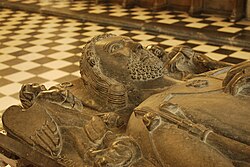
He was buried in St. Peter's Church in Leuven. His tomb is a significant piece of Late Romanesque art, depicting the duke as an idealized, smiling young man wearing a long robe and cloak, holding a sceptre. The monument features archangels Raphaël and Michael waving censers over his head.
The tomb has a turbulent history: it was moved during the 15th-century transition to a Gothic church, destroyed during the French occupation in the 18th century, and restored in the mid-19th century. After his remains were exhumed in 1929 and re-interred in 1998, the monument was finally returned to its original place of honor in front of the high altar.
Frequently Asked Questions
Who was Henry I of Brabant?
Henry I, known as "The Courageous," was the first Duke of Brabant and a member of the House of Reginar, reigning from 1183/84 until 1235.
Which major battles did Henry I participate in?
He fought in the Battle of Bouvines in 1214 and the Battle of Steppes in 1213, both of which resulted in defeats for the Duke.
How did Henry I contribute to the development of cities?
He used town planning as a political instrument, granting city rights and trade privileges to locations like Eindhoven and 's-Hertogenbosch to extend his sovereignty.
What happened to Henry I's tomb?
Located in St. Peter's Church in Leuven, the tomb was destroyed during the French occupation in the 18th century but was restored in the 19th century and eventually returned to its original position before the high altar.
Why did Henry I travel to England shortly before his death?
He was commissioned by Emperor Frederick II to escort the Emperor's fiancée, Isabella Plantagenet, from England to Germany.