Henry George Liddell: The Scholar, Dean, and Lexicographer of Oxford
Henry George Liddell (1811–1898) was a towering figure of Victorian academia, leaving an indelible mark on the study of classical languages and the administration of one of the world's most prestigious universities. A man of stately presence and intellectual rigor, Liddell is perhaps best remembered today for two distinct legacies: his monumental contribution to Greek lexicography and his role as the father of Alice Liddell, the inspiration for Lewis Carroll's Alice's Adventures in Wonderland.
Educated at Charterhouse and Christ Church, Oxford, Liddell demonstrated early academic brilliance, earning a double first degree in 1833. After serving as a college tutor and being ordained in 1838, he embarked on a career that would bridge the gap between rigorous scholarship and institutional leadership.
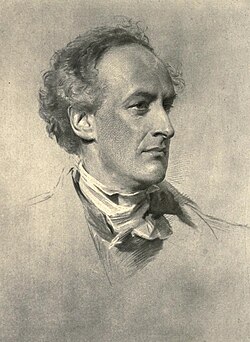
Key Facts
- Major Work: Co-authored the A Greek–English Lexicon (known as "Liddell and Scott"), the standard reference for students of Greek.
- Academic Leadership: Served as the Dean of Christ Church, Oxford (1855–1891) and Vice-Chancellor of Oxford University (1870–1874).
- Educational Impact: Headmaster of Westminster School from 1846 to 1855.
- Literary Connection: Father of Alice Liddell, the muse for Lewis Carroll's most famous work.
- Historical Contribution: Authored A History of Rome (1855).
Academic Career and the Great Lexicon
Liddell's most enduring scholarly achievement began as early as 1834. In collaboration with Robert Scott, he worked on a comprehensive Greek-English dictionary based on the German research of Franz Passow. The first edition of the Liddell and Scott Lexicon was published in 1843, quickly establishing itself as the definitive resource for the language. The work was so successful that it reached its 8th edition by 1897.
Beyond lexicography, Liddell was a historian of the ancient world. In 1855, he published A History of Rome from the Earliest Times to the Establishment of the Empire, a work that served as the basis for later publications, including The Student's Rome (1865) and Life of Julius Caesar (1860).
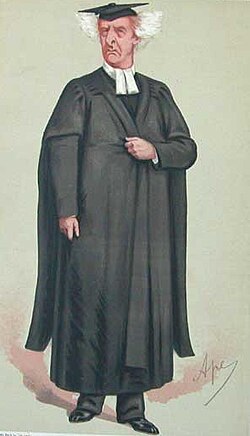
Leadership at Westminster and Oxford
From 1846 to 1855, Liddell served as the Headmaster of Westminster School. While his tenure was marked by significant success, it was also challenged by outbreaks of cholera and fever among the students. In 1855, he transitioned to the deanery of Christ Church, Oxford, where he remained for over three decades.
As Dean, Liddell was instrumental in navigating Christ Church through a period of cultural transition. He helped shift the institution from the traditionalist views held by figures like Pusey toward a more liberal and broad academic environment, doing so with minimal friction. His administrative contributions included the construction of new classrooms and a choir school for the Christ Church Cathedral School.
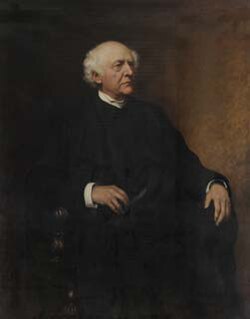
Liddell's influence extended beyond administration. Alongside Sir Henry Acland, he promoted the study of art at Oxford, earning the respect and friendship of the renowned critic John Ruskin. His stature—both physical and social—made him a symbol of Oxford life; he was described by journalist George W. E. Russell as "majestic," often seen in scarlet robes with a halo of white hair.
Family and Personal Life
On July 2, 1846, Henry married Lorina Reeve. Together they had ten children, several of whom achieved their own distinctions. Their daughter, Alice Pleasance Liddell, became the inspiration for the whimsical world of Wonderland. Other children included Sir Frederick Francis Liddell, the First Parliamentary Counsel, and sisters Rhoda and Violet, both of whom were awarded MBEs in 1920 for their orthopedic work at Netley Red Cross Hospital.
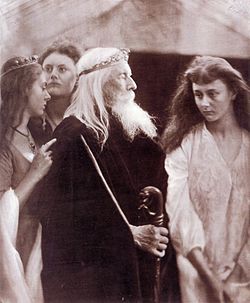
Liddell resigned his deanery in 1891 due to his advancing age and spent his final years in Ascot, where he passed away on January 18, 1898. Today, the town of Ascot honors the connection between Liddell and Lewis Carroll through the naming of Liddell Way and Carroll Crescent.
Summary of Major Works and Roles
| Role/Work | Period/Year | Key Detail |
|---|---|---|
| Headmaster of Westminster School | 1846–1855 | Led the school through a period of success and health crises. |
| Dean of Christ Church, Oxford | 1855–1891 | Modernized the college and expanded cathedral school facilities. |
| Vice-Chancellor of Oxford University | 1870–1874 | Served as the chief administrative officer of the university. |
| A Greek–English Lexicon | 1843 (1st Ed) | Co-authored with Robert Scott; based on Franz Passow's work. |
| A History of Rome | 1855 | Comprehensive history from early times to the Empire. |
Frequently Asked Questions
What is the "Liddell and Scott" dictionary?
It is a monumental Greek-English lexicon co-authored by Henry George Liddell and Robert Scott. Based on the work of Franz Passow, it became the standard reference for students and scholars of the Greek language.
How was Henry Liddell connected to Lewis Carroll?
Henry Liddell was the father of Alice Liddell. Lewis Carroll wrote the classic children's story Alice's Adventures in Wonderland specifically for her.
What was Liddell's impact on Christ Church, Oxford?
As Dean, Liddell guided the college through a transition toward more liberal values and oversaw the construction of new choir school and staff classrooms on their current site.
What other books did Henry George Liddell write?
Besides the lexicon, he wrote A History of Rome from the Earliest Times to the Establishment of the Empire, as well as derived works such as Life of Julius Caesar and The Student's Rome.
Where can the legacy of Henry Liddell be seen today?
In addition to the continued use of his lexicon, a house at Westminster School is named after him, and two roads in Ascot—Liddell Way and Carroll Crescent—commemorate his life and his relationship with Lewis Carroll.