Christ Church Oxford: A Legacy of Architecture, Power, and Scholarship
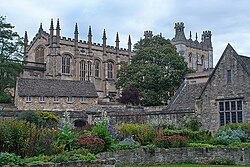
Standing as one of the most prestigious and visually stunning institutions within the University of Oxford, Christ Church is more than just a college; it is a unique hybrid of an academic society and a cathedral. Known for its sprawling grounds, cinematic architecture, and a history intertwined with the English monarchy, it attracts nearly half a million visitors annually, making it the most popular college for tourists in Oxford.
From its role as a seat of parliament during the English Civil War to its modern status as a hub for global leaders and scholars, Christ Church embodies the intersection of faith, politics, and education.
Key Facts
- Established: 1546 by King Henry VIII.
- Unique Status: Serves as both a college of the University of Oxford and the cathedral of the Diocese of Oxford.
- Architectural Highlights: Home to Tom Quad (the largest quadrangle in Oxford) and Tom Tower, designed by Sir Christopher Wren.
- Endowment: Valued at £787,114,000 as of 2024.
- Notable Alumni: Thirteen British prime ministers and figures such as Lewis Carroll and John Locke.
A Turbulent History: From Wolsey to Henry VIII
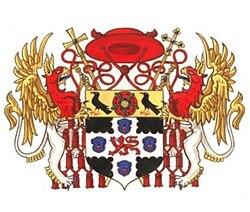
The origins of Christ Church are rooted in the ambition of Cardinal Thomas Wolsey. In 1525, Wolsey suppressed St Frideswide's Priory to found Cardinal College. However, his fall from grace in 1529 left the project unfinished for over a century.
The institution underwent several transformations: it was suppressed in 1531, refounded as King Henry VIII's College in 1532, and finally established as Christ Church in 1546. This final refounding was part of Henry VIII's broader reorganization of the Church of England following his break from the Catholic Church. During this process, the former priory church was designated as both the college chapel and the cathedral for the newly created Diocese of Oxford.
Architectural Grandeur and Traditions
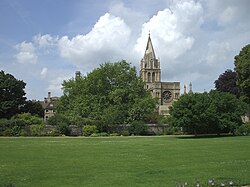
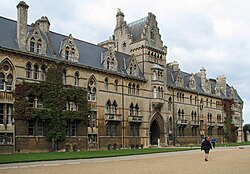
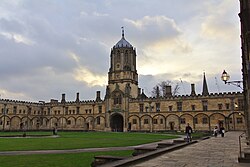
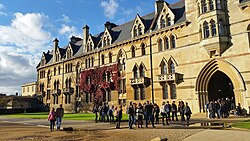
The college is renowned for its Grade I listed buildings and expansive grounds, covering approximately 175 acres. The centerpiece is the Great Quadrangle, commonly known as Tom Quad, which is the largest of its kind in Oxford.
Tom Tower and the Great Tom Bell
The quadrangle is crowned by Tom Tower, a masterpiece designed by Sir Christopher Wren. The tower houses the famous bell, Great Tom. Every night at 9:00 pm (measured by Oxford time), the bell is rung 101 times—once for each of the college's 100 original scholars, plus one additional stroke added in 1664.
The Great Hall and Cinematic Influence
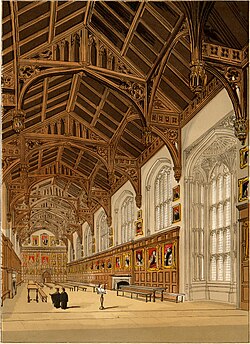
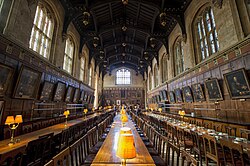
The Great Dining Hall is not only an architectural marvel but a site of historical significance, having served as the seat of parliament for King Charles I during the English Civil War. In recent years, the hall and surrounding architecture have gained global fame as inspirations for film sets in Harry Potter and The Golden Compass.
The Cathedral and the Arts
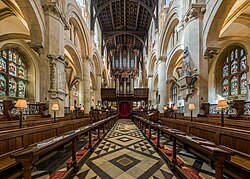
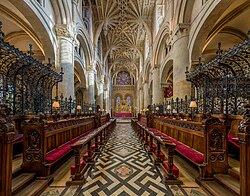
The Christ Church Cathedral remains a focal point of the college's spiritual and cultural life. Its choir is internationally recognized, having collaborated with composer Howard Goodall on themes for popular television shows like Mr. Bean and Vicar of Dibley.
The Picture Gallery
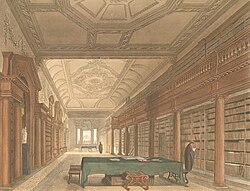
Beyond its academic and religious roles, the college is a guardian of fine art. The Christ Church Picture Gallery houses one of the UK's most significant private collections of drawings, featuring works by Leonardo da Vinci, Raphael, and Michelangelo. Much of this collection was bequeathed by General John Guise, contributing to the establishment of the first public art gallery in Britain.
Grounds and Natural Heritage
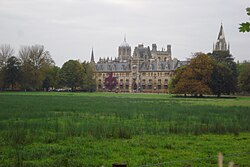
The college's land includes the public-access Christ Church Meadow, inhabited by English Longhorn cattle. This meadow is a site of historical firsts; in October 1783, James Sadler performed the first hot air balloon ascent in Britain from this location.
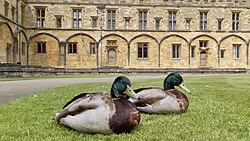
The grounds are also home to resident animals, including the well-known ducks, Tom and Peck, who are frequently spotted in Tom Quad.
Institutional Overview
The following table summarizes the key administrative and demographic details of Christ Church.
| Category | Detail |
|---|---|
| Full Name | The Dean and Chapter of the Cathedral Church of Christ in Oxford of the Foundation of King Henry the Eighth |
| Current Dean | Sarah Foot |
| Student Population (2022) | 661 students |
| Sister College | Trinity College, Cambridge |
| Visitor | Charles III (ex officio) |
Frequently Asked Questions
Why is the bell rung 101 times?
The bell, Great Tom, is rung 101 times to commemorate the 100 original scholars of the college, with one extra stroke added in 1664.
Who founded Christ Church?
While Cardinal Thomas Wolsey began the project as Cardinal College in 1525, it was officially refounded as Christ Church by King Henry VIII in 1546.
Which famous people attended Christ Church?
Notable alumni include philosopher John Locke, founder of Methodism John Wesley, author Lewis Carroll, and thirteen British prime ministers, including Sir Robert Peel and William Ewart Gladstone.
Is the college open to the public?
Yes, the college is a major tourist destination, and the Christ Church Meadow is open to the public year-round.
What is the relationship between the college and the cathedral?
Christ Church is unique because it functions as both a constituent college of the University of Oxford and the cathedral for the Diocese of Oxford.