Heart Transplantation: The Evolution of Life-Saving Cardiac Surgery
The quest to replace a failing human heart has evolved from a theoretical possibility into a sophisticated medical reality. For patients suffering from advanced heart failure, a transplant represents the ultimate intervention to restore quality of life and longevity. This journey has been marked by daring firsts, ethical debates, and groundbreaking pharmacological discoveries.
The conceptual foundation for this procedure was laid as early as 1907 by American researcher Simon Flexner. In his paper "Tendencies in Pathology," Flexner posited that surgery would one day allow for the replacement of diseased organs, specifically mentioning the heart, kidneys, stomach, and arteries.
Key Facts
- First Human-to-Human Transplant: Performed by Christiaan Barnard on December 3, 1967.
- Xenotransplantation: The process of transplanting organs between different species (e.g., pig to human).
- Allotransplantation: The transplant of an organ between non-genetically identical individuals of the same species.
- Critical Breakthrough: The 1983 introduction of cyclosporine significantly reduced organ rejection.
- Current Scale: Approximately 5,000 heart transplants are performed globally each year.
The Early Era of Experimental Surgery
Before the first successful human-to-human transplant, surgeons experimented with xenotransplantation—the transfer of organs between different species. In January 1964, James D. Hardy at the University of Mississippi Medical Center transplanted a chimpanzee heart into a dying patient, Boyd Rush. While the heart beat for 60 to 90 minutes, the patient never regained consciousness and passed away.
Other early attempts included work by Dr. Dhaniram Baruah in India, who performed the first pig-to-human heart transplant, though the recipient did not survive. These early efforts, while unsuccessful in the long term, paved the way for the technical refinements needed for human donors.
The First Human-to-Human Successes
The medical world reached a milestone on December 3, 1967, when South African surgeon Christiaan Barnard performed the first human-to-human heart transplant at Groote Schuur Hospital. Utilizing techniques developed by American surgeons Norman Shumway and Richard Lower, Barnard transplanted the heart of 25-year-old Denise Darvall into Louis Washkansky. Although historic, the outcome was short-lived; Washkansky died of pneumonia 18 days later.
The late 1960s saw a surge in attempts. On December 6, 1967, Adrian Kantrowitz performed the first pediatric heart transplant in Brooklyn, though the infant's heart stopped after seven hours. By 1968, the first adult transplant in the U.S. was completed by Norman Shumway at Stanford University Hospital, and the first U.K. transplant was led by Donald Ross. These procedures were allotransplants, meaning they occurred between members of the same species.
Overcoming Rejection and Expanding Capabilities
Early transplant success rates were low; in 1968, only one-third of patients survived beyond three months. The turning point arrived in 1983 with the widespread use of cyclosporine. This drug provided a "corticosteroid-sparing" effect, allowing doctors to use smaller amounts of corticosteroids to prevent the body from rejecting the new organ.
This pharmacological leap enabled more successful pediatric cases, such as the 1984 transplant of 4-year-old JP Lovette IV, led by Dr. Eric A. Rose. Innovation continued with the 1988 introduction of the "domino" heart transplant, where a patient needing a lung transplant receives a heart-lung unit, and their healthy original heart is then passed on to another waiting patient.
Modern Advancements and Future Frontiers
Today, heart transplantation is a global operation, with over half of the roughly 5,000 annual procedures occurring in the United States. Vanderbilt University Medical Center currently stands as one of the highest-volume centers globally.
To address the shortage of human donors—especially for the 800,000 people with NYHA Class IV advanced heart failure—research has returned to xenotransplantation. In January 2022, Bartley P. Griffith at the University of Maryland Medical Center performed the first successful pig-to-human heart transplant. Shortly after, David Bennett became the first person to receive a gene-edited pig heart to avoid immediate rejection, though he passed away two months later.
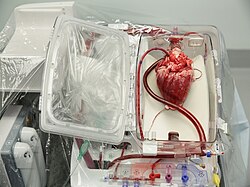
Recent technical milestones include the adoption of donation after circulatory death (DCD) to reduce waitlists and the first beating-heart transplants from cardiac death donors, performed by Stanford Medicine surgeons in April 2023.
Summary of Heart Transplant Milestones
| Year | Milestone | Key Figure/Institution |
|---|---|---|
| 1907 | First theoretical proposal | Simon Flexner |
| 1964 | First chimpanzee-to-human transplant | James D. Hardy |
| 1967 | First human-to-human transplant | Christiaan Barnard |
| 1983 | Introduction of Cyclosporine | Medical Community |
| 1988 | First "domino" transplant | Medical Community |
| 2022 | First gene-edited pig heart transplant | University of Maryland |
Frequently Asked Questions
What is the difference between an allotransplant and a xenotransplant?
An allotransplant is a transplant between two individuals of the same species who are not genetically identical. A xenotransplant is the transplantation of an organ or tissue from one species to another, such as from a pig to a human.
How did cyclosporine change heart transplantation?
Introduced in 1983, cyclosporine allowed surgeons to significantly reduce the amount of corticosteroids needed to prevent organ rejection, which greatly improved patient survival rates.
What is a "domino" heart transplant?
A domino transplant occurs when a patient who needs a lung transplant but has a healthy heart receives a heart-lung transplant; their healthy heart is then transplanted into a second patient who needs only a heart.
What happens to the nerves during a heart transplant?
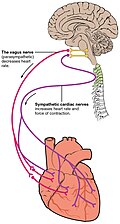
During the procedure, the vagus nerve is severed, which removes the parasympathetic influence over the myocardium (heart muscle). However, some limited return of sympathetic nerves has been observed in human patients.
What is DCD in the context of heart transplants?
DCD stands for donation after circulatory death. This method helps increase the transplant rate and reduce patient waitlist times by expanding the criteria for viable donor hearts.