Organs: The Biological Building Blocks of Multicellular Life
In the complex hierarchy of biological organization, an organ serves as a critical bridge between simple tissues and complete organ systems. In any multicellular organism, an organ is defined as a collection of tissues joined into a structural unit to perform a specific, common function. While tissues are composed of similar cells working together, organs combine different types of tissues to execute more complex biological tasks.
For example, the wall of the intestine is not made of a single material; it integrates epithelial tissue and smooth muscle tissue to facilitate digestion and movement. When two or more organs collaborate to perform a major body function, they form an organ system (also known as a biological or body system).
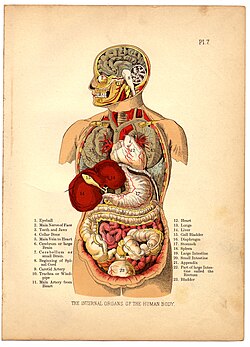
The Composition of an Organ
To understand how an organ functions, biologists divide its tissues into two primary categories:
- Parenchyma: The functional tissue that performs the organ's primary job. In a gland, for instance, the parenchyma is the tissue that produces hormones.
- Stroma: The structural tissue that provides support. This includes connective tissues for anchoring, blood vessels for nourishment and waste removal, and nerves that provide innervation.
Most organs develop from tissues with common embryologic origins, typically arising from the same germ layer. While humans have approximately 79 organs—though the exact number is a subject of ongoing scientific debate—the concept of organs extends across the animal and plant kingdoms. In single-celled eukaryotes, the functional equivalent of an organ is the organelle.
Key Facts
- Hierarchy: Cells → Tissues → Organs → Organ Systems.
- Human Count: There are roughly 79 organs in the human body.
- Plant Organs: Divided into vegetative (roots, stems, leaves) and reproductive (flowers, seeds, fruits).
- Viscera: A term referring specifically to the internal organs of the thoracic, abdominal, and pelvic cavities.
- Evolution: The gut and brain are among the oldest organs, appearing 650–700 million years ago.
Animal Organ Systems
Except for placozoans, multicellular animals possess various organ systems. Many of these systems overlap in function. For example, the hypothalamus serves both the nervous and endocrine systems, leading scientists to study them together as the neuroendocrine system. Similarly, the muscular and skeletal systems are often grouped as the musculoskeletal system.
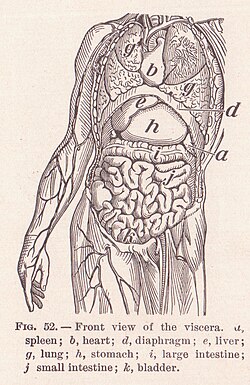
Major Human Organ Systems
- Cardiovascular: Heart, blood, and vessels; pumps and channels blood.
- Digestive: Salivary glands, esophagus, stomach, liver, gallbladder, pancreas, intestines, colon, mesentery, rectum, and anus.
- Endocrine: Hypothalamus, pituitary, pineal, thyroid, parathyroids, and adrenals; uses hormones for communication.
- Excretory: Kidneys, ureters, bladder, and urethra; manages fluid and electrolyte balance.
- Lymphatic and Immune: Lymph nodes, vessels, leukocytes, tonsils, adenoids, thymus, and spleen; defends against disease.
- Integumentary: Skin, hair, and nails (mammals); scales (fish, reptiles, birds); feathers (birds).
- Muscular: Muscles; enables movement.
- Nervous: Brain, spinal cord, and nerves; processes information.
- Reproductive: Ovaries, uterus, vagina, testicles, prostate, and penis.
- Respiratory: Pharynx, larynx, trachea, bronchi, lungs, and diaphragm.
- Skeletal: Bones, cartilage, ligaments, and tendons; provides support and protection.
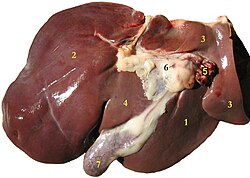
Viscera and Splanchnology
In anatomy, viscera (singular: viscus) refers to the internal organs located within the pelvic, thoracic, and abdominal cavities. The study of these organs is known as splanchnology.
Abdominal organs are further categorized by their structure:
- Solid Organs: Liver, pancreas, spleen, kidneys, and adrenal glands.
- Hollow Organs: Stomach, intestines, gallbladder, bladder, and rectum.
The heart is a notable example of a hollow, muscular organ located in the thoracic cavity. Anatomists often contrast the term "visceral" (relating to the organ) with "parietal" (relating to the wall of a cavity or organ) when describing membranes.
Evolutionary Origins
Organ-level organization first appeared in flatworms and bilaterians. Simpler taxa, such as Porifera (sponges) and Cnidaria (jellyfish), do not have tissues unified into organs.
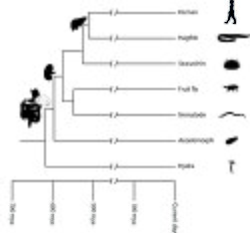
Evolutionary timelines show that the gut and brain emerged approximately 650–700 million years ago in ancestors shared by vertebrates, insects, and molluscs. The heart and liver evolved later, roughly 500–550 million years ago in chordates. Researchers often study the placenta as a model for organ evolution because it has evolved independently more than 100 times across vertebrates, demonstrating how existing tissues can be repurposed for new functions.
Plant Organs and Morphology
Plant organs are studied under plant morphology and are categorized into two main types: vegetative and reproductive.
Vegetative Organs
Roots, stems, and leaves are essential for the plant's survival. In non-epiphytes, everything above ground is collectively termed the shoot organ system. These organs handle vital functions like photosynthesis.
Reproductive Organs
These vary by plant type. Flowering plants (angiosperms) use flowers, seeds, and fruits. Conifers use cones, while other divisions use strobili (as seen in Lycopodiophyta) or gametophores (in mosses).


Medical Advancements and Ethics
Since the 20th century, organ transplantation has become a vital medical practice. Because the demand for organs exceeds the supply, this field involves complex ethical considerations regarding distributive justice and donor sourcing.
Transplanting large solid organs often requires immunosuppression to prevent the body from rejecting the graft. To solve the shortage of human donors, scientists have explored xenotransplantation—the use of animal organs. While heart valves from animals have been used since the 1960s, modern research is moving toward human clinical trials using porcine (pig) xenografts. Additionally, there is significant global interest in developing artificial or laboratory-grown organs.
Historical and Cultural Perspectives
The word "organ" entered English in the 12th century, originally referring to musical instruments before expanding to describe body parts. Aristotle viewed organs as "tools" (from the Greek organon) that allowed the body to function.
| System/Tradition | Association/Element | Example Organ |
|---|---|---|
| Alchemical (Planetary) | Sun | Heart |
| Alchemical (Planetary) | Moon | Brain |
| Chinese Medicine (Wood) | Yin | Liver |
| Chinese Medicine (Wood) | Yang | Gallbladder |
| Chinese Medicine (Fire) | Yin | Heart |
Frequently Asked Questions
What is the difference between an organ and an organ system?
An organ is a structural unit made of different tissues working together for a specific function (e.g., the stomach). An organ system is a group of organs working together to perform a broader body function (e.g., the digestive system).
What are the two main types of tissues in an organ?
The two types are parenchyma, which is the functional tissue that performs the organ's primary task, and stroma, which is the structural tissue providing support, blood supply, and innervation.
How do plant organs differ from animal organs?
Plant organs are divided into vegetative structures (roots, stems, leaves) and reproductive structures (flowers, cones, strobili). They have far fewer organ systems than animals and focus heavily on photosynthesis and asexual or sexual reproduction.
What is xenotransplantation?
Xenotransplantation is the process of transplanting organs or tissues from one species to another, such as using porcine (pig) organs to treat human organ failure.
What is the difference between visceral and parietal?
Visceral refers to the internal organs themselves, while parietal refers to the wall of a body cavity or organ. These terms are often used to describe the opposing sides of a membrane.