Hawk of Quraish: The Symbolic Legacy of Arab Heraldry
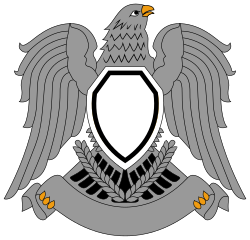
In the rich tapestry of Arab iconography, few symbols carry as much historical weight and prestige as the Hawk of Quraish (Arabic: صقرُ قُريْشٍ, romanized: ṣāqr Quraysh). Appearing on various flags, seals, and coats of arms across the Arab world, this emblem serves as a powerful link between modern statehood and ancient tribal lineage.
The symbol is rooted in the traditions of the Quraysh, the prominent clan of Prophet Muhammad, which historically utilized the falcon as a clan symbol. Today, the Hawk of Quraish stands as a significant heraldic counterpart to the Eagle of Saladin, representing a distinct thread of political and cultural identity.
The Historical Origin: Abd ar-Rahman I
The specific appellation "Hawk of Quraish" is inextricably linked to Abd ar-Rahman I, the founder and first Umayyad Emir of Córdoba. His journey from a fugitive to a powerful ruler is one of the most dramatic narratives in medieval history.
Following the violent Abbasid Revolution, which saw the fall of the Umayyad dynasty in Damascus, Abd ar-Rahman I was one of the few surviving heirs to flee the Abbasid onslaught. He eventually established a new Umayyad stronghold in the Iberian Peninsula.
Interestingly, the title Saqr Quraish was not self-bestowed. Medieval chroniclers record that it was given to him by his great rival, the Abbasid Caliph al-Mansur. Given that both the Abbasids and Umayyads belonged to the Quraysh clan, the Caliph's use of this term was a gesture of profound respect for the resilience and nobility of the last surviving Umayyad heir.
Cultural Significance in the Arabian Peninsula
Beyond the specific political history of the Umayyads, the hawk and falcon hold deep cultural resonance throughout the Gulf Arab countries. In the Arabian Peninsula, particularly along the coast of the Persian Gulf, falconry is a traditional expertise passed down through generations.
In these societies, falcons and hawks are more than just birds of prey; they are regarded as status symbols and are common domesticated animals among ethnic Arabs, symbolizing strength, vision, and nobility.
Key Facts
- Symbolism: Represents the Quraysh clan and is used in various Arab national emblems and flags.
- Historical Figure: Associated with Abd ar-Rahman I, the first Umayyad Emir of Córdoba.
- Origin of Name: The title was bestowed upon Abd ar-Rahman I by his rival, Caliph al-Mansur.
- Cultural Context: Reflects the deep-rooted tradition of falconry in the Arabian Peninsula.
- Heraldic Rivalry: Often viewed as a symbolic alternative or rival to the Eagle of Saladin.
Summary of the Hawk of Quraish
| Category | Details |
|---|---|
| Arabic Name | ṣāqr Quraysh (صقرُ قُريْشٍ) |
| Primary Association | Quraysh clan and Abd ar-Rahman I |
| Regional Usage | Various Arab states and Gulf countries |
| Symbolic Meaning | Nobility, resilience, and tribal heritage |
Frequently Asked Questions
What is the Hawk of Quraish?
The Hawk of Quraish is a heraldic symbol used on the flags, coats of arms, and emblems of several Arab states, originating from the clan symbol of the Quraysh.
Who was the first person called the Hawk of Quraish?
Abd ar-Rahman I, the first Umayyad Emir of Córdoba, was known as the Hawk of Quraish (Saqr Quraish).
Who gave Abd ar-Rahman I this title?
The title was given to him by the Abbasid Caliph al-Mansur, who was one of his primary rivals, as a sign of respect.
How does the Hawk of Quraish differ from the Eagle of Saladin?
While both are prominent avian symbols in Arab heraldry, the Hawk of Quraish is specifically linked to the Quraysh clan and the Umayyad legacy, whereas the Eagle of Saladin represents a different historical and political lineage.
Why are hawks and falcons important in Gulf Arab countries?
They are important due to the long-standing tradition of falconry in the region, where these birds serve as both domesticated animals and symbols of high social status.