Hawaiian Music History: From Royal Courts to Global Influence
The sonic landscape of Hawaii is a vibrant tapestry woven from indigenous roots and centuries of global migration. While formal documentation of Hawaiian music begins in the late 18th century with the arrival of non-Hawaiians (haoles), the evolution of its sound reflects a unique process of acculturation. From the sacred chants of the monarchy to the worldwide craze of the early 20th century, Hawaiian music has continuously adapted, absorbing European, American, and Asian influences to create something entirely distinct.
Key Facts
- Global Roots: Influences include Protestant hymns (himeni), Mexican cowboy traditions, and Portuguese instruments.
- The Ukulele: Evolved from the Portuguese braguinha, a small four-stringed instrument.
- Hapa Haole: A style of "half-white" music featuring English lyrics and superficial Hawaiian elements.
- Steel Guitar: Invented by Joseph Kekuku around 1889, later leading to the invention of the electric lap steel guitar.
- Royal Patronage: Queen Liliʻuokalani and King David Kalakaua were pivotal in composing and promoting Hawaiian musical culture.
The Evolution of Hawaiian Musical Eras
Music historian Elizabeth Tatar categorizes the development of Hawaiian music into seven distinct periods. The journey began between 1820 and 1872 with the arrival of European musical cultures. By the late 19th century, a modern Hawaiian style emerged as European instruments became widespread across the islands.
From 1900 to 1915, the music entered the American popular consciousness. This era saw the birth of hapa haole songs—tracks written in English that utilized Hawaiian motifs. The recording industry took root in 1906 when the Victor Talking Machine Company produced the first 53 recordings in the territory, bringing the sounds of the islands to the American mainland by 1912.
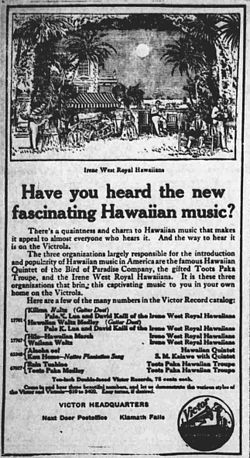
Between 1915 and 1930, Hawaiian music became a global phenomenon, though often in a commercialized form that stripped away authentic complexities. However, the period from 1930 to 1960 is regarded as the "Golden Age of Hawaiian music." This era was defined by the radio show Hawaii Calls, hosted by Webley Edwards, which broadcast authentic and orchestral Hawaiian styles to millions of listeners, catapulting stars like Sol Hoʻopiʻi and Lani McIntire to fame.
Royal Influence and Composition
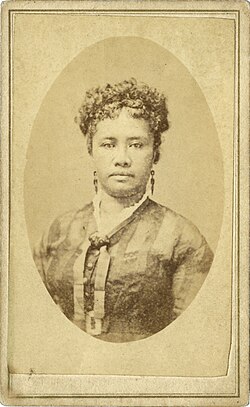
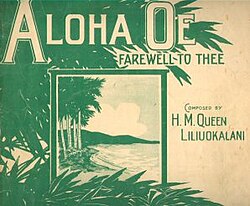
The Hawaiian monarchy played a central role in the formalization of the islands' music. King David Kalakaua actively promoted cultural revival, while his successor, Queen Liliʻuokalani, became one of Hawaii's most prolific composers. She is most famous for the timeless piece "Aloha 'Oe."
The royal family's musical education was heavily influenced by European masters. Henri Berger, a Prussian military bandleader sent by the Kaiser, documented folk music while guiding royal composers in German musical traditions. Similarly, William Mersberg was brought from Germany in 1847 to lead "The Kings Own Band," now known as the Royal Hawaiian Band.
Instrumental Innovations: From Braguinha to Steel Guitar
The instruments that define the Hawaiian sound arrived via various waves of immigration. Mexican cowboys (paniolos) introduced the guitar and potentially the technique of falsetto singing. Portuguese immigrants brought the braguinha, a variant of the cavaquinho, which evolved into the ukulele. Legend suggests the name ukulele ("jumping flea") refers to the swift finger movements of musician João Fernandes.
One of the most significant technical breakthroughs occurred around 1889 when Joseph Kekuku began sliding a piece of steel across guitar strings, creating the steel guitar (kika kila). This slide style became so popular in the 1920s that it directly inspired George Beauchamp to invent the electric lap steel guitar (the "frying pan") in 1931 to ensure the sound could be heard over large bands.
Slack-Key Guitar (Kī Ho`alu)
Slack-key guitar is a fingerpicked style where strings are loosened (slacked) to create open chords. Common tunings include the "taro patch" (G major) and "wahine" (major 7th). Once guarded as family secrets, these techniques were shared during the Hawaiian Renaissance of the 1970s by masters such as Keola Beamer and Leonard Kwan to prevent the style from disappearing.
Global Popularization and the Modern Era
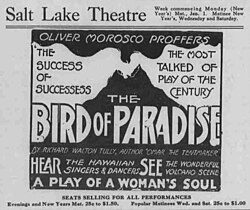
The early 20th century saw Hawaiian music conquer the U.S. mainland. The 1912 Broadway show The Bird of Paradise and the 1915 Panama–Pacific International Exposition in San Francisco sparked a massive trend. By 1916, indigenous Hawaiian recordings were outselling all other U.S. musical genres.
This popularity influenced the development of American country and blues. Musicians like Sol Hoʻopiʻi helped establish the "Nashville sound" through his work with the pedal steel guitar. Later, during World War II, the influx of American servicemen led to a fusion of Hawaiian sounds with Western swing, exemplified by bands like Fiddling Sam and his Hawaiian Buckaroos.
After a decline in the 1960s due to the rise of rock and soul, the 1970s saw a cultural rebirth known as the Hawaiian Renaissance. This led to the modern era, where traditional sounds coexist with indie rock, Jawaiian, and Hawaiian Rap (Na mele paleoleo).
The Kamehameha Schools Song Contest
A cornerstone of contemporary cultural preservation is the annual Kamehameha Schools Song Contest. Held every spring at the Neal Blaisdell Center, this competition involves high school classes performing a cappella choral arrangements of mele (Hawaiian songs).
The event is more than a competition; it is a celebration of heritage. The program includes the oli hoʻokipa (opening chant), the national anthem Hawaiʻi Ponoʻi, and the Hōʻike—a half-time exhibition featuring both hula ʻauana (modern hula) and hula kahiko (traditional hula).
| Period/Influence | Key Contribution | Notable Instruments/Styles |
|---|---|---|
| European/Missionary | Introduction of harmony and hymns | Himeni (hymns) |
| Mexican (Paniolo) | Folk guitar and vocal techniques | Guitar, Falsetto |
| Portuguese | Small stringed instruments | Braguinha, Ukulele |
| Hapa Haole Era | Commercialization for US markets | English lyrics, Steel guitar |
| Golden Age (1930-60) | Global radio broadcasting | Orchestral Hawaiian, Big Band |
| Modern Era (1970s+) | Cultural revival and fusion | Jawaiian, Hawaiian Rap |
Frequently Asked Questions
What is hapa haole music?
Hapa haole, meaning "half white," refers to music that uses the English language and incorporates superficial elements of Hawaiian music, often designed for mainstream American audiences.
How did the ukulele originate in Hawaii?
The ukulele evolved from the braguinha, a small four-stringed instrument brought to the islands by Portuguese immigrants from Madeira in the late 19th century.
What is slack-key guitar?
Known as kī ho`alu, slack-key is a fingerpicked style where the guitar strings are loosened to create open chords, often mimicking the vocal breaks and falsettos of traditional Hawaiian singing.
Who was Queen Liliʻuokalani in the context of music?
She was the last Queen of Hawaii and a prolific composer, most famous for writing the song "Aloha 'Oe." Her work represents the intersection of royal patronage and Hawaiian musical identity.
What is the significance of the Kamehameha Schools Song Contest?
It is an annual tradition that preserves the repertoire of Hawaiian music and culture through a cappella choral competitions and hula exhibitions performed by students.