Hawaiian Kingdom: The Rise and Fall of a Pacific Sovereignty
The Hawaiian Kingdom (known in Hawaiian as Ke Aupuni Hawai‘i) was a sovereign archipelagic nation that existed from 1795 to 1893. Spanning the inhabited islands of the Pacific, it evolved from a collection of chiefdoms into a recognized international state with diplomatic ties to the world's great powers. Its history is a complex narrative of unification, cultural transformation, and a contentious struggle for independence against foreign encroachment.
The kingdom was defined by two primary ruling dynasties: the House of Kamehameha and the House of Kalākaua. Throughout its existence, the nation transitioned from an absolute monarchy to a constitutional one, reflecting the shifting political landscapes of the 19th century.
Key Facts
- Established: 1795 by Kamehameha I.
- Government: Absolute monarchy (1795–1840); Constitutional monarchy (1840–1893).
- Motto: Ua Mau ke Ea o ka ʻĀina i ka Pono ("The life of the land is perpetuated in righteousness").
- Dynasties: House of Kamehameha and House of Kalākaua.
- End of Sovereignty: Overthrown in 1893; annexed by the United States in 1898.
- Population Decline: Dropped from an estimated 400,000–800,000 in 1780 to 89,990 by 1890 due to introduced diseases.
The Unification and the Kamehameha Dynasty
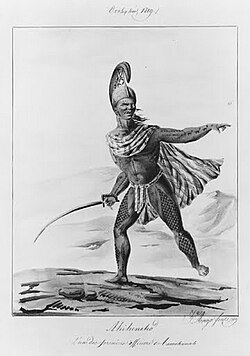
Before the kingdom's inception, Hawaiian society was stratified, with each island ruled by an aliʻi nui (supreme chief). These rulers claimed descent from Papa, the earth mother goddess of the Hawaiian religion. The unification process began in May 1795 when Kamehameha I conquered Oʻahu, Maui, Molokaʻi, and Lānaʻi.
By March or April 1810, the islands of Kauaʻi and Niʻihau voluntarily joined, completing the unification of the archipelago. The House of Kamehameha ruled until 1874, with five family members bearing the name Kamehameha. This era saw the introduction of international trade, most notably the export of sandalwood to China, which integrated the islands into a global monetary economy.
Diplomacy and Foreign Relations
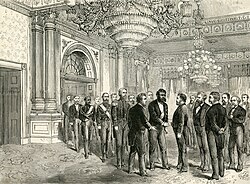
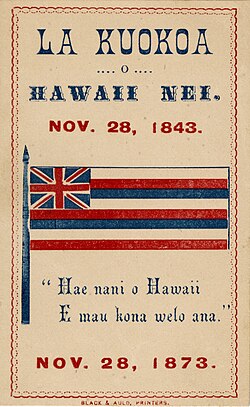
To protect its independence from European and American interests, King Kamehameha III sought formal diplomatic recognition. In 1842, a delegation including Timoteo Haʻalilio, William Richards, and Sir George Simpson secured assurances of independence from U.S. President John Tyler, followed by formal recognition from King Louis Philippe of France in March 1843 and Queen Victoria of the United Kingdom in April 1843.
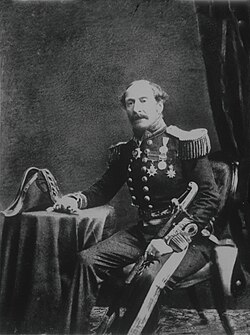
However, this sovereignty was frequently tested. In 1843, the Paulet Affair occurred when Lord George Paulet of the United Kingdom partially occupied the islands. Sovereignty was restored on July 31, 1843, after an apology from Rear Admiral Richard Darton Thomas. This event is still celebrated as Lā Hoʻihoʻi Ea (Sovereignty Restoration Day).
Further territorial expansions occurred under later monarchs. King Kamehameha IV annexed Johnston Atoll (1858) and Palmyra Atoll (1862), while King Kalākaua annexed Kure Atoll in 1886.
The Kalākaua Dynasty and the Path to Overthrow
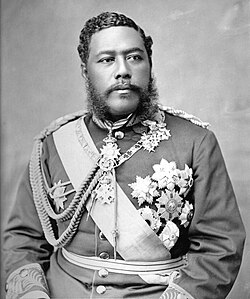
The House of Kalākaua took power in 1874. During this period, the kingdom faced increasing pressure from American settlers. In 1887, King Kalākaua was forced to sign the "Bayonet Constitution" following a coup by the Honolulu Rifles, a volunteer unit of American settlers, which severely limited the monarch's power.
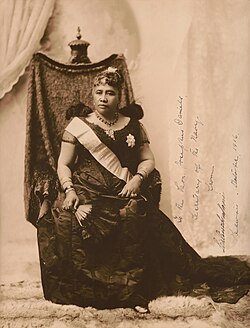
When Queen Liliʻuokalani ascended the throne in 1891, she attempted to abrogate the Bayonet Constitution to restore power to the monarchy and the native people. This move triggered a coup on January 17, 1893, engineered by the Committee of Safety—a group primarily of American descent—and supported by the U.S. military via the USS Boston.
![USS Boston's landing force on duty at the Arlington Hotel, Honolulu, at the time of the overthrow, January 1893.[32]](/images/6e/3e/6e3e654ab3f99c07157e50a0e27a9a6f45418f4fedeb2224fa78e9315ae8b89e.jpg)
Annexation and Legacy
Following the overthrow, a Provisional Government was established, which later became the Republic of Hawaii. Despite efforts by U.S. President Grover Cleveland to restore the Queen, the islands were annexed by the United States on July 7, 1898, via the Newlands Resolution.
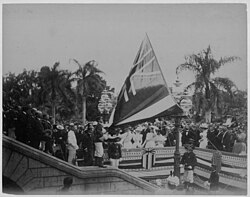
In 1993, the U.S. Senate passed the Apology Resolution, acknowledging that the overthrow occurred with the participation of U.S. agents and that Native Hawaiians never relinquished their claims to sovereignty. This recognition continues to fuel the Hawaiian sovereignty movement today.
![Kawaiahaʻo Church is known as the Westminster Abbey of Hawaiʻi,[citation needed] the site of coronations, royal christenings and funerals.](/images/3f/e7/3fe7c4ed0318f4240d3acbfa21696e7c94bb2d05deddb4170f277d0ffdb87cf6.jpg)
| Category | Details |
|---|---|
| Founding Monarch | Kamehameha I (1795) |
| Last Monarch | Queen Liliʻuokalani (1891–1893) |
| Capitals | Waikīkī/Honolulu/Kailua-Kona $\rightarrow$ Lāhainā $\rightarrow$ Honolulu |
| Official Languages | Hawaiian, English |
| Currency | Hawaiian dollar (from 1847) |
| Key Dynasties | House of Kamehameha, House of Kalākaua |
Frequently Asked Questions
How was the Hawaiian Kingdom unified?
The kingdom was established in 1795 when Kamehameha I conquered Oʻahu, Maui, Molokaʻi, and Lānaʻi. The unification was completed in 1810 when Kauaʻi and Niʻihau voluntarily joined the kingdom.
What was the "Bayonet Constitution"?
It was a constitution forced upon King Kalākaua in 1887 by the Honolulu Rifles, a military unit of American settlers. This document stripped the monarch of much of his authority and shifted power toward the settlers.
Who was responsible for the overthrow of Queen Liliʻuokalani?
The overthrow was engineered by the Committee of Safety, a group of Hawaiian subjects mostly of American descent, with the critical support of the U.S. military, specifically forces from the USS Boston.
What is the significance of the 1993 Apology Resolution?
The resolution was passed by the U.S. Senate to apologize for the 1893 overthrow and to acknowledge that the indigenous Hawaiian people never directly relinquished their claims to sovereignty or their national lands.
Why did the Native Hawaiian population decline so rapidly?
The arrival of European and American explorers, traders, and whalers introduced foreign diseases—including smallpox, measles, tuberculosis, and syphilis—to which the native population had no immunity.