Kānaka Maoli: The History, Culture, and Resilience of Native Hawaiians
The Kānaka Maoli (Native Hawaiians) are the indigenous Polynesian people of the Hawaiian Islands. With a rich heritage spanning millennia, their story is one of profound cultural achievement, devastating loss, and a powerful modern renaissance. From the early days of isolated island societies to their current status within the United States, the Kānaka Maoli continue to preserve their unique identity and fight for their ancestral legacy.
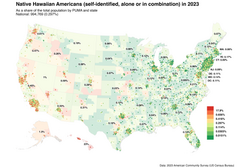
Today, the Native Hawaiian population is widely dispersed. While the heart of the community remains in the islands, the 2010 U.S. census revealed that people with Native Hawaiian ancestry reside in all 50 U.S. states, as well as Washington, D.C., and Puerto Rico.
Key Facts
- Population Peak: Estimated between 250,000 and 800,000 at the time of Captain Cook's arrival in 1778.
- Historical Eras: History is divided into pre-unification, unified monarchy/republic, U.S. territorial, and U.S. statehood periods.
- Language: Native Hawaiian, English, Hawaiian Pidgin, and Hawaiʻi Sign Language (HSL) are spoken.
- Legal Status: Defined by the Native American Programs Act as individuals whose ancestors were natives of the Hawaiian Islands prior to 1778.
- Cultural Revival: A major renaissance began in the 1970s, focusing on the preservation of language and history.
Historical Timeline and Evolution
The history of the Kānaka Maoli is generally categorized into four distinct eras that mark the transition from independent chiefdoms to a modern American state.
Pre-Unification and the Unified Monarchy
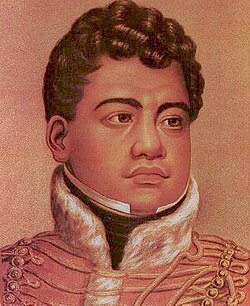
Before approximately 1800, Hawaii existed in a pre-unification state. This evolved into the period of the unified monarchy and republic (c. 1800 to 1898), where a centralized royal government governed the islands.
U.S. Territorial and Statehood Periods
The transition to U.S. control began with the territorial period (1898 to 1959) and culminated in the statehood period (1959 to present). This shift followed the 1893 overthrow of the monarchy, led by Sanford Dole's "Committee of Safety." This event was driven by the Queen's rejection of the 1887 Constitution and tensions regarding the Treaty of Reciprocity and the establishment of the Pearl Harbor military base.
Demographics and the Impact of Contact
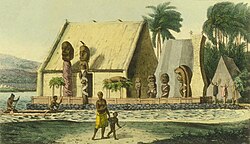
The arrival of foreigners in 1778 brought catastrophic changes to the Native Hawaiian population. Lacking immunity to introduced diseases such as smallpox, measles, and whooping cough, the Kānaka Maoli suffered a massive population decline. This die-off reached a low point around 1950.
Recovery has been steady over the last century. The 1900 U.S. census recorded 37,656 residents of full or partial Native Hawaiian ancestry, which grew to 283,430 by the 2000 census. By 2020, the total population was recorded at 640,442.
Global Diaspora
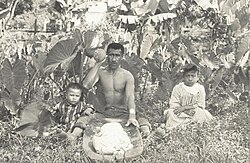
While most Kānaka Maoli live in the U.S., significant populations exist in Canada (3,300), New Zealand (699), and Australia (300). One notable early example of the diaspora was Kiha Kaʻawa, who became the first native Hawaiian to obtain U.S. citizenship in 1873.
Culture, Language, and Revival
Native Hawaiian culture is characterized by a deep connection to the land and a vibrant artistic tradition, most notably hula. After decades of decline, a cultural renaissance began in the 1970s, spurred by the 1978 Hawaiʻi State Constitutional Convention. This movement committed the state government to the study and preservation of Hawaiian history and language.
Language preservation is a cornerstone of this revival. In addition to the traditional Hawaiian language, the community utilizes Hawaiian Pidgin and Hawaiʻi Sign Language (HSL), the latter of which has been recognized as a distinct language.
Legal and Political Developments
The relationship between the Kānaka Maoli and the U.S. government has been marked by both conflict and attempts at reconciliation.
- Native American Programs Act (1974): Amended to include Kānaka Maoli, making them eligible for certain federal assistance programs.
- Apology Resolution (1993): President Bill Clinton signed Public Law 103–150, formally apologizing for the overthrow of the Kingdom of Hawaiʻi.
- Office of Hawaiian Affairs (OHA): An agency dedicated to the betterment of Native Hawaiians.
Efforts for federal recognition, such as the Native Hawaiian Government Reorganization Act of 2009, have faced mixed public opinion and did not pass.
| Region/Category | Population Count | Notes |
|---|---|---|
| United States (Total) | 640,442 | 2020 Census |
| Hawaii State | 135,422 | Native Hawaiian/Pacific Islander alone (2010) |
| Canada | 3,300 | Diaspora population |
| New Zealand | 699 | Diaspora population |
| Australia | 300 | Diaspora population |
Frequently Asked Questions
Who are the Kānaka Maoli?
Kānaka Maoli are the indigenous Polynesian people of the Hawaiian Islands.
What caused the decline of the Native Hawaiian population after 1778?
The population was devastated by immigrant-introduced diseases, including smallpox, measles, and whooping cough, to which the native population had no natural resistance.
What was the Apology Resolution of 1993?
It was a U.S. Public Law signed by President Bill Clinton that offered a formal apology to the Kānaka Maoli for the overthrow of the Kingdom of Hawaiʻi.
When did the Hawaiian cultural renaissance begin?
The revival began in the 1970s, specifically gaining momentum during the 1978 Hawaiʻi State Constitutional Convention.
How is a Native Hawaiian defined for federal programs?
Under Title 45 CFR Part 1336.62, a Native Hawaiian is defined as an individual whose ancestors were natives of the Hawaiian Islands prior to 1778.