Western Swing: The Evolution of the American Southwest's Dance Music
Emerging from the dusty dance halls and ranch parties of the Southwestern United States in the late 1920s, Western swing is a vibrant fusion of musical traditions. It blended the rhythmic drive of swing and Dixieland jazz with the soulful roots of country, blues, polka, and old-time string bands. This high-energy genre transformed the social landscape of the Great Plains, turning small-town gatherings into massive dance events.
Key Facts
- Origins: Developed in the 1920s and 1930s across the lower Great Plains, particularly in Texas and Oklahoma.
- Pioneers: Bob Wills and Milton Brown are credited with founding the first professional Western swing bands.
- Defining Sound: Characterized by the use of amplified string instruments, specifically the steel guitar and harmonizing twin fiddles.
- Cultural Impact: Became the official State Music of Texas in 2011.
- Legacy: Influenced the birth of rockabilly and early rock and roll.
The Beginnings: From Ranch Dances to Radio
Western swing grew organically from house parties and community dances where fiddlers and guitarists provided the soundtrack for dancers. By the late 1920s, groups like Prince Albert Hunt's Texas Ramblers and the East Texas Serenaders began integrating jazz elements into traditional music. In Decatur, Texas, Fred "Papa" Calhoun further pushed these boundaries by adopting the swing style of the Louisiana Five.
The transition to professional music occurred in the early 1930s when Bob Wills and Milton Brown co-founded the Light Crust Doughboys. This ensemble brought the sound to a wider audience through radio broadcasts and dance hall performances.
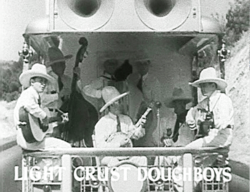
Innovation continued rapidly. In 1932, the Fort Worth Doughboys (credited as Milton Brown and His Musical Brownies) recorded "Sunbonnet Sue" and "Nancy Jane" for Victor Records. Shortly after, the introduction of harmonizing twin fiddles—led by classically trained violinist Cecil Brower—added a sophisticated layer of improvisation and harmony to the genre.
Technological Innovation and the Texas Playboys
In late 1933, Bob Wills organized the Texas Playboys in Waco, Texas. The band's sound was revolutionized by the adoption of amplified instruments. The steel guitar, along with the electrification of the acoustic guitar (pioneered by Bob Dunn around 1934), gave Western swing its distinctive, cutting tone that could be heard over the noise of crowded dance floors.
By the mid-1930s, Fort Worth became a central hub for the genre, with the Crystal Springs Dance Pavilion serving as a premier venue where bands blended slow waltzes and ballads with fast-paced swing numbers.
The Golden Age and West Coast Expansion
Before World War II, Western swing reached a peak of popularity across the West. Radio played a crucial role; the Light Crust Doughboys were featured on 170 stations, while Bob Wills and the Texas Playboys enjoyed a legendary residency at Cain's Ballroom in Tulsa, broadcast via the powerful 50,000-watt KVOO station.
During the war years, the music blossomed on the West Coast. At the Venice Pier Ballroom in Los Angeles, attendance for Bob Wills' performances sometimes exceeded 15,000 people, leading police to halt ticket sales for fear the dance floor would collapse. Other venues, such as the Palomino in North Hollywood and the piers at Redondo Beach, became hotspots for "Western jazz."
| Period | Key Development | Notable Figures/Groups |
|---|---|---|
| Late 1920s - Early 1930s | Fusion of jazz and string band music | Prince Albert Hunt, Fred "Papa" Calhoun |
| Early 1930s | First professional bands and radio play | Light Crust Doughboys, Milton Brown |
| Mid-1930s - 1940s | Electrification and peak popularity | Bob Wills and the Texas Playboys |
| 1940s - 1950s | West Coast expansion and later decline | Spade Cooley, Hank Thompson |
Post-War Decline and the Naming of the Genre
The decline of public dancing in the U.S. was accelerated by a 1944 federal excise tax on nightclubs that featured dancing. This "cabaret tax" led many venues to post "No Dancing Allowed" signs, reducing the natural habitat of Western swing bands.
Interestingly, the term "Western swing" was not used from the start. Early recordings were marketed as "hillbilly," "old-time music," or "Texas swing." The specific label "Western swing" gained traction around 1942, largely through the promotion of Spade Cooley. After disc jockey Al Jarvis named Cooley the "King of Western Swing" and Billboard magazine began using the term in 1944, the name became the industry standard.
Frequently Asked Questions
What musical styles influenced Western swing?
Western swing is a hybrid genre that combines swing and Dixieland jazz with country, blues, polka, and traditional old-time string band music.
Who were the most influential figures in the genre?
Bob Wills and Milton Brown were pivotal in establishing the first professional bands, while Spade Cooley helped popularize the genre on the West Coast and solidify its name.
How did technology change the sound of Western swing?
The introduction of amplified string instruments, particularly the electric guitar and the steel guitar, allowed the music to be louder and more distinctive, making it ideal for large dance halls.
Why did the popularity of Western swing decline after World War II?
A significant factor was a federal excise tax levied on nightclubs that allowed dancing in 1944, which discouraged venues from hosting dance-centric bands.
What is the official status of Western swing today?
In 2011, the Texas Legislature officially designated Western swing as the State Music of Texas.