Harlan & Hollingsworth: Pioneers of American Iron Shipbuilding
The evolution of American maritime transport was significantly shaped by the innovation of Harlan & Hollingsworth. Transitioning from a foundation in railcars and general ironwork, the firm leveraged its metallurgical expertise to venture into the burgeoning field of iron shipbuilding during the mid-19th century.
The company's journey into marine engineering began in 1842 with the hiring of Alexander Kelly to oversee millwright work—the specialized craft of installing and maintaining industrial machinery. By 1843, the firm expanded into the construction and repair of marine engines, marking its first foray into the sector with the repair of the steamboat Sun.
The Rise of Iron Construction
Between 1841 and 1851, Harlan & Hollingsworth carefully balanced its established railroad-car production with a steady increase in ship construction, completing nine vessels during this decade. To facilitate this growth, the company leased a launching berth on the banks of the Christiana River in 1843. Because the riverfront facilities were limited, the primary fabrication of iron plates, bars, and fasteners continued at their main shop located on Front and West Streets.
The company's launch slipway measured 200 feet in length and could accommodate vessels up to 600 tons, a capacity that met the industry requirements of the era.
Historic Firsts in American Shipping
The firm quickly established itself as a leader in innovation. In 1844, they delivered the Ashland and the Ocean to George Aspinwall of Philadelphia; these were among the first iron steamboats ever constructed in the United States. That same year, the company achieved another milestone by building the Bangor, the first seagoing iron propeller steamship in the country.
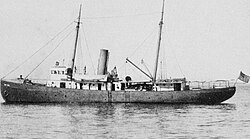
Their commitment to specialized design continued into the late 19th century. In 1897, the firm designed the New York, the first steam pilot boat—a vessel used to guide larger ships into harbor—for the New York harbor.
Industrial Expansion and Growth
By the early 1850s, the company shifted its primary revenue focus away from wooden ships and railcars toward large-scale iron production. The first five years of the decade saw a massive infrastructure expansion, including the addition of boiler shops, blacksmith shops, carpenter sheds, wharves, cranes, office buildings, and machine shops.
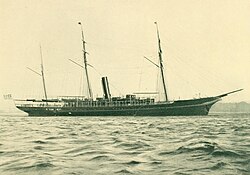
This growth attracted high-profile clients. In 1856, New York shipping magnate Charles Morgan purchased his first vessel from the firm. Morgan would eventually become one of the company's most significant patrons, ordering more than 31 vessels by 1878.
Key Facts
- First Seagoing Iron Propeller: The Bangor (1844) was the first of its kind built in the U.S.
- Production Scale: By 1860, the company had produced 75 iron hulls, primarily steamships and barges.
- Major Client: Charles Morgan ordered over 31 vessels from the firm by 1878.
- Infrastructure: The Christiana River slipway was 200 feet long with a 600-ton capacity.
- Naval Contribution: Built three monitors (Patapsco, Saugus, and Napa) for the U.S. Navy.
Economic Growth (1836–1860)
The company's rapid ascent is reflected in its workforce and revenue growth over a twenty-four-year period.
| Year | Employees | Gross Revenue |
|---|---|---|
| 1836 | 20 | $6,580 |
| 1838 | 45 | $63,374 |
| 1842 | 120 | $40,531 |
| 1850 | 225 | $159,742 |
| 1855 | 280 | $293,662 |
| 1860 | 630 | $580,427 |
The Civil War Era
By the onset of the American Civil War, Harlan & Hollingsworth had become the most prolific iron shipbuilder in the United States and the dominant force in Wilmington. Their expertise led to government contracts for the construction of three monitors—heavily armored warships—named the Patapsco, Saugus, and Napa.
However, the partnership with the U.S. Navy was fraught with difficulty. Frequent last-minute design changes ordered by the Navy delayed completion and reduced the firm's profits. Consequently, the company became reluctant to pursue further government contracts. During this period, in 1863, Jacob Sharp departed the firm to co-found the car-building company Jackson & Sharp with Job Jackson.
Frequently Asked Questions
What was the first ship-related project for Harlan & Hollingsworth?
Their first project in the marine sector was the repair of the cylinder and other machine parts for the steamboat Sun in 1843.
Which vessels were among the first iron steamboats in the U.S.?
The Ashland and the Ocean, delivered to George Aspinwall in 1844, were two of the earliest iron steamboats constructed in the United States.
How did the U.S. Navy contracts affect the company?
While the company built three monitors (Patapsco, Saugus, and Napa), constant last-minute changes from the Navy delayed delivery and eroded profits, making the firm hesitant to bid on future government work.
Who was Charles Morgan?
Charles Morgan was a New York shipping magnate who became one of the firm's largest customers, ordering more than 31 vessels by 1878.
What was the significance of the vessel Bangor?
The Bangor, built in 1844, was the first seagoing iron propeller steamship constructed in the United States.