Hammam al-Nahhasin: The Historic Bathhouse of Aleppo
Located in the heart of the Ancient City of Aleppo, Syria, Hammam al-Nahhasin stands as one of the oldest and largest hammams—traditional Turkish bathhouses—in the region. Situated within the Al-Madina Souq, south of the Great Umayyad Mosque and near Khan al-Nahhasin, this architectural gem has served as a center for hygiene and social gathering for centuries.
Key Facts
- Origin: Built in the 12th century by Aisha bint Salah al-Din al-Ayyubi.
- Meaning: The name translates literally to the "bath of the coppersmiths."
- Architectural Styles: A blend of Mamluk and Ottoman influences.
- Recent History: Damaged during the Battle of Aleppo (2012–2016) and fully restored by 2022.
- Special Feature: Includes a dedicated women's section known as Hammam as-Sitt.
History and Architectural Evolution
The foundations of Hammam al-Nahhasin date back to the 12th century. While it was established under the order of Aisha bint Salah al-Din al-Ayyubi, the structure underwent several renovations during the Mamluk and Ottoman eras. Consequently, much of the current physical building reflects the aesthetic and engineering styles of the Ottoman period.
Despite its longevity, the site suffered significant damage between 2012 and 2016 during the Battle of Aleppo. To preserve this archaeological icon, the Directorate-General of Antiquities and Museums (DGAM) launched a comprehensive restoration project in 2021. This reconstruction was completed in January 2022, and the hammam officially reopened in November 2022 to resume its original purpose.
Interior Layout and Function
The hammam is meticulously organized into three primary sections, each serving a specific stage of the bathing ritual:
- The Internal Section: This area houses the warm rooms, used for initial relaxation, and the hot rooms, which are dedicated to steam baths and full-body washing.
- The Central Section: This transitional space is specifically designated for massages following the body wash.
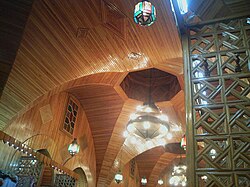
- The External Section: The largest portion of the facility, this area features marble floors and traditional wooden decorations. It serves as a final relaxation zone where bathers can rest around a central pond.
To ensure privacy and cultural adherence, the facility includes Hammam as-Sitt, an entirely isolated section reserved exclusively for women.
Summary of Hammam al-Nahhasin
| Attribute | Details |
|---|---|
| Location | Al-Madina Souq, Aleppo, Syria |
| Established | 12th Century |
| Architectural Styles | Mamluk and Ottoman |
| Floor Count | 1 |
| Restoration Period | 2021–2022 |
Frequently Asked Questions
What does the name Hammam al-Nahhasin mean?
The name literally translates to the "bath of the coppersmiths," reflecting its location and the community it served.
Who originally commissioned the bathhouse?
It was built in the 12th century by order of Aisha bint Salah al-Din al-Ayyubi.
How is the interior of the hammam organized?
The interior is divided into an internal section (warm and hot rooms), a central section (massage), and a large external section (relaxation and pond).
Was the hammam damaged during the Syrian conflict?
Yes, the building was damaged during the Battle of Aleppo between 2012 and 2016, but it was subsequently restored by the DGAM and reopened in November 2022.
Is there a separate area for women?
Yes, there is a completely isolated section for women called Hammam as-Sitt.